Loaded Container Handling
How to Specify a 45 Ton Pure Electric Reach Stacker
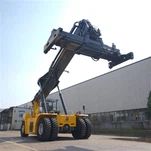
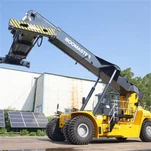
A 45 ton pure electric reach stacker should be selected from the complete yard duty cycle, not from battery capacity alone. The XH-RS45E combines a 45-tonne first-row rating with 31-tonne second-row and 15-tonne third-row capacities, plus a container spreader for ISO 20-foot, 40-foot and 45-foot units.
The two listed CATL battery configurations are intended for different working windows. Before requesting a quote, match container weights, stacking rows, moves per hour, travel distance, gradients, break periods and available electrical supply. This gives the supplier enough information to configure the battery, charger, spreader and delivery scope as one project.

Published Configuration
Technical Data for Initial Project Screening
These values are taken from the current XH-RS45E product information. The final proposal should connect each specification to the agreed container profile and site conditions.
| Specification | XH-RS45E listed value |
|---|---|
| Capacity by stacking row | 45 t first row / 31 t second row / 15 t third row |
| Maximum listed stacking | 5-high for 8'6" and 9'6" ISO containers in the first row |
| Battery type | CATL lithium-ion |
| Battery options | 423 kWh (RS45E1) / 525 kWh (RS45E2) |
| Listed working range | 6–8 hours / 8–10 hours, depending on selected battery and duty conditions |
| Charging arrangement | 320 kW DC dual chargers |
| Listed full-charge time | 90 minutes / 110 minutes |
| Drive motor | CYAN Power AC motor, 200 kW rated / 308 kW peak |
| Container spreader | ISO 20' / 40' / 45' containers; ±800 mm side shift |
| Control architecture | Full CAN-bus with high-definition touch display |
| Service brake | Hydraulic wet-disc system |
| Travel speed | Up to 20 km/h unloaded |
| Outside turning radius | 8,000 mm |
| Gradeability, unloaded / loaded | 32.9% / 20.3% |
| Tire configuration | 18.00-25 40PR heavy-duty tires |
Use the Load Chart Before Fixing the Yard Plan
The 45 / 31 / 15-tonne values apply to different stacking rows. Send the maximum container gross weight, required row, stacking height and pickup arrangement so the proposal can be checked against the applicable load chart.
Battery Selection
Compare the Two Energy Configurations by Working Window
The larger battery is not automatically the better commercial choice. Battery capacity, charging duration, usable breaks and daily work intensity should be evaluated together.
RS45E1: 423 kWh
- Listed operating window: 6–8 hours
- Listed charge time: 90 minutes
- 320 kW DC dual-charger arrangement
- Review against shift breaks and opportunity charging
RS45E2: 525 kWh
- Listed operating window: 8–10 hours
- Listed charge time: 110 minutes
- 320 kW DC dual-charger arrangement
- Review where the working block is longer
Actual working time changes with container mass, travel distance, gradients, acceleration frequency, hydraulic use, ambient temperature and operator pattern. A quotation should therefore show the assumptions used for the recommended battery option.
Charging Infrastructure
Check Site Power Before Confirming the Charger
The charger is part of the equipment project. Its rated output does not by itself confirm that the destination facility can support the installation.
- Available grid voltage and frequency at the site
- Transformer and distribution capacity available for charging
- Protected charger position and machine parking envelope
- Cable route, connector access and traffic separation
- Planned charging windows during breaks or shift changes
- Local electrical installation and acceptance requirements
Data to Send With the Charger Request
Electrical supply
Voltage, frequency, transformer capacity and available connection point
Voltage, frequency, transformer capacity and available connection point
Working schedule
Shift start and finish, breaks, planned charging windows and overnight access
Shift start and finish, breaks, planned charging windows and overnight access
Installation area
Parking position, cable distance, weather exposure and vehicle separation
Parking position, cable distance, weather exposure and vehicle separation
Local requirements
Connector preference, documentation language and electrical acceptance needs
Connector preference, documentation language and electrical acceptance needs
Yard Duty Cycle
Four Checks That Shape the Final Configuration
1
Map container demand
List container lengths, maximum gross weights, daily mix, moves per hour and the number of lifts required in each stacking row.
2
Measure the complete route
Check lane width, gates, overhead limits, road shoulders, turning areas, gradients and surface conditions between pickup and placement.
3
Define the shift pattern
Record working blocks, travel distance, queuing time, planned breaks and seasonal peaks instead of relying only on average daily hours.
4
Set an operating reserve
Allow for traffic delays, weather, changed container weights and charging interruptions when choosing the working-energy margin.


Spreader and Controls
Define the Container Interface in the Quotation
The listed spreader covers ISO 20-foot, 40-foot and 45-foot containers and provides ±800 mm side shift. Buyers should still state the exact container mix, maximum gross mass and required functions.
- Container lengths and corner-casting standard
- Required side-shift, rotation and levelling functions
- First-, second- and third-row working frequency
- Maximum stacking height and visibility conditions
- Control display language and operator interface needs
Acceptance and Handover
Put the Delivered Scope in One Approved Sheet
For a single unit or a fleet order, use one approved configuration document to identify the machine, battery, charger, spreader, tires, cab options and supplied records. The pre-shipment acceptance scope can then be agreed around:
- Identification of major components and selected options
- Functional checks for travel, steering, lifting and spreader controls
- Battery and charger documentation for the supplied configuration
- Operating, maintenance and parts information
- Shipping dimensions, delivery method and destination documents
Quote Preparation
Information Needed for a Practical Proposal
Operating information
- Container type, size and maximum gross mass
- Moves per hour and total daily moves
- Stacking rows and required lift height
- Shift length, breaks and travel distance
Commercial information
- Order quantity and destination country
- Delivery port and site access conditions
- Required spreader and cab options
- Documentation, training and spare-parts scope
The confirmed order quantity and technical scope are also used to quote production scheduling, shipping method and delivery timing. This avoids publishing a generic MOQ or lead time that may not fit a configured port machine.
Related Resources
Continue the Equipment and Yard Review
Procurement FAQ
Questions Buyers Ask Before Ordering
Q1. Which battery should be selected for the 45 ton pure electric reach stacker?
Compare the 423 kWh and 525 kWh options against shift length, moves per hour, loaded travel, gradients, climate and available charging windows. Send the duty-cycle data with the inquiry so the battery and charger can be reviewed together.
Q2. Can it handle 20-foot, 40-foot and 45-foot containers?
The listed spreader covers ISO 20-foot, 40-foot and 45-foot containers with ±800 mm side shift. The final configuration should state the container mix, maximum gross weight, stacking row and required spreader functions.
Q3. What electrical information is needed for the charger?
Provide site voltage, frequency, transformer capacity, available connection point, charger location and planned charging windows. Local installation and acceptance requirements should also be included in the project review.
Q4. How are MOQ and delivery time confirmed?
They are quoted from the confirmed order quantity, battery and charger option, spreader scope, cab requirements, destination and required documentation. Include these details in the inquiry to receive a project-specific commercial schedule.
Q5. What should be included in the overseas handover package?
Request the approved configuration sheet, operating and maintenance documents, battery and charger information, parts list, training scope, shipping data and destination documents. The quotation should identify which items are included or optional.
Project Inquiry
Turn Yard Data Into an Equipment Proposal
Send container weights and sizes, stacking rows, daily moves, shift schedule, route conditions, charging supply and destination. XINGHAO can use this information to prepare an XH-RS45E configuration and commercial quotation.
Hot Tags: 45 ton pure electric reach stacker, XH-RS45E, electric container reach stacker, CATL reach stacker, electric port equipment, 45 ton container handler, electric reach stacker, Container lift spreader, 45 ton diesel container stacker, Heavy duty reach stacker, Energy saving reach stacker, Empty container reach stacker, Fuel reach stacker