Electric Container Handling
Build the Machine Around the Shift and Charging Plan
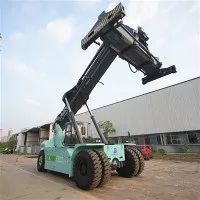
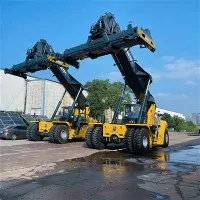
The 45 ton electric gruas reach stacker is presented for loaded-container work in ports, inland terminals, logistics yards and industrial sites. Its listed configuration combines a 45,000 kg rating at a 1,250 mm load center with electric drive and a container-handling attachment for 20-foot to 40-foot units.
For an electric machine, the purchasing decision is not limited to lifting capacity. Shift hours, travel distance, charging windows, site voltage, container mix and daily moves should be reviewed together. This page organizes the available product data around that operating plan.

Published Product Data
Core Rating, Dimensions and Travel Figures
The following values are organized from the current product listing. They give buyers a starting point for checking container weight, yard access and travel space.
| Specification | Listed value |
|---|---|
| Rated load | 45,000 kg at 1,250 mm load center |
| Lift height | 4,000 mm |
| Container attachment range | Adjustable for 20'–40' containers |
| Drive type | Electric, high-capacity battery system |
| Travel speed, unloaded / loaded | 25 / 20 km/h |
| Loaded gradeability | 15–18% |
| Service weight | Approximately 70,000 kg |
| Wheelbase | 4,500 mm |
| Turning radius | 5,200 mm |
| Mast tilt | 5° forward / 12° backward |
| Battery system | 600 V; lithium-ion or lead-acid options |
| Maximum drawbar pull | Approximately 250 kN |
Check the Whole Route, Not Only the Working Bay
Compare the machine envelope with gates, turning areas, road shoulders, overhead limits, drainage channels and the surface between the unloading point and container stack. Use the heaviest container and steepest loaded travel section as part of the review.
Energy Planning
Four Decisions to Make Before Selecting the Battery Direction
A battery name alone does not define whether an electric container handler fits the job. The energy system should be planned from measurable operating conditions.
1
Map the workday
Record shift length, planned breaks, moves per hour, travel distance and the time available between working blocks.
2
Define charging access
State the available site voltage, charger location, cable route and whether the machine can charge during breaks or shift changes.
3
Include the demanding cycles
List the highest container weights, longest loaded routes, gradients, repeated acceleration and seasonal temperature range.
4
Plan the operating reserve
Allow for traffic delays, schedule changes and charging interruptions instead of sizing only for an ideal average shift.
Electric Configuration
Choose the Energy Route From the Site Conditions
The listing identifies a 600 V system with lithium-ion or lead-acid directions and fast-charging availability. The final choice should connect the battery type, charger and expected duty cycle in one configuration.
- Lithium-ion direction: relevant where scheduled opportunity charging and repeated daily cycles are part of the operating plan.
- Lead-acid direction: should be evaluated together with charging time, ventilation, maintenance routine and available battery-handling arrangements.
- Charger integration: should include the incoming power conditions, cable routing, protected parking position and operator procedure.
- Climate planning: should include the lowest and highest working temperatures, storage conditions and seasonal operating pattern.
Information to Put on the Energy Worksheet
Operating demand
Moves per hour, shift length and loaded travel distance
Moves per hour, shift length and loaded travel distance
Charging window
Available minutes, number of windows and overnight access
Available minutes, number of windows and overnight access
Electrical supply
Site voltage, power capacity and charger installation area
Site voltage, power capacity and charger installation area
Environment
Temperature, dust, rain exposure and coastal conditions
Temperature, dust, rain exposure and coastal conditions
Container Interface
Match the Attachment, Load Center and Handling Sequence
The page lists an adjustable 20-foot to 40-foot container attachment. Procurement should define the actual container mix, maximum gross weight, pickup direction and required attachment functions before the controls and hydraulic connections are fixed.
Approach and alignment
Confirm lane direction, sight lines, container position and the space required to align the attachment before lifting.
Lift and travel
Use the listed load center and capacity with the actual container weight, lift height, surface and gradient.
Placement
Record the target position, available clearance and expected stacking pattern so the attachment arrangement matches the task.
Release and repeat
Include daily moves and repeated cycle conditions when reviewing hydraulic response, operator controls and energy demand.
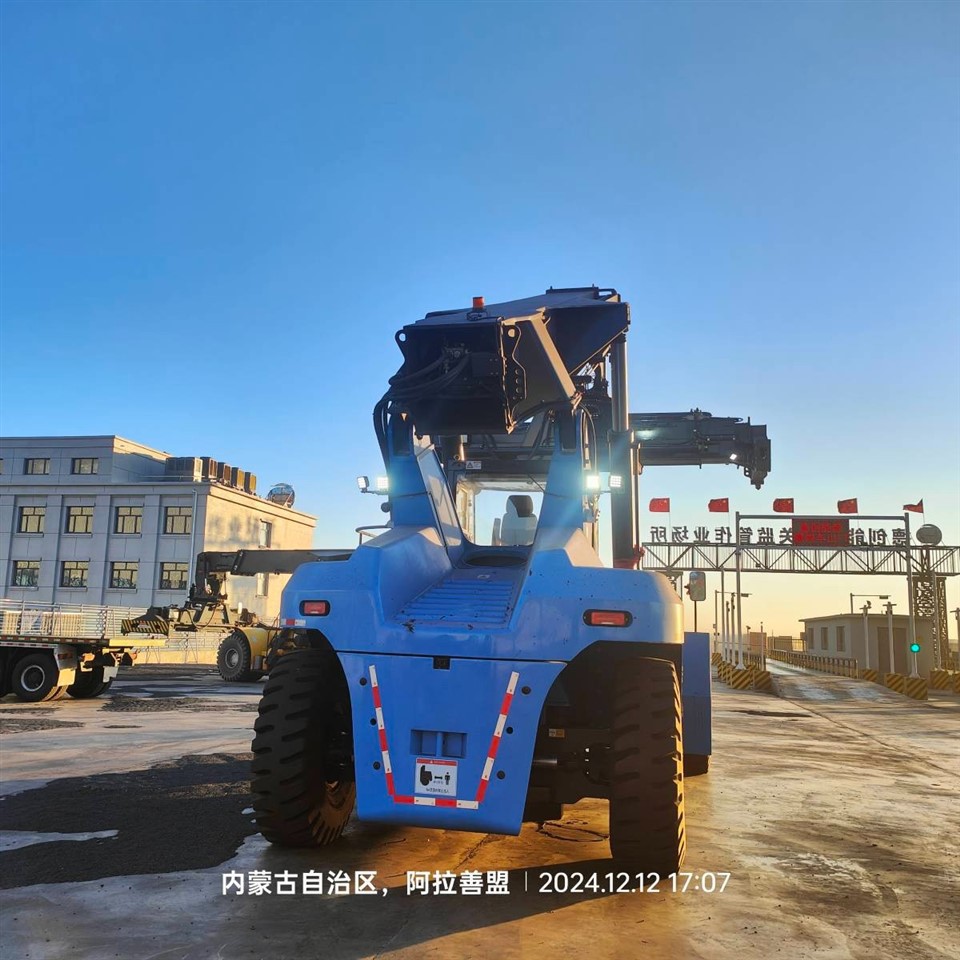
Rear Equipment View
Check Chassis Width, Tires and Attachment Position

Application Fit
Where an Electric Container Handler Can Be Evaluated
Port storage yards
Loaded-container movement where the yard can support a defined charging position and controlled traffic route.
Inland and rail terminals
Container transfer between storage, road vehicles and rail-side working areas with repeatable shift schedules.
Industrial container yards
Manufacturing or project sites that receive heavy containerized loads and can plan an equipment charging area.
Fleet replacement projects
Sites comparing electric and diesel equipment using their own energy prices, duty cycle and maintenance records.
Equipment Video
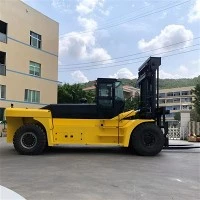
Review the Boom, Cab and Chassis Arrangement
Quote Preparation
Send the Data Needed for a Usable Proposal
A useful quotation should connect the machine, energy system, attachment and site conditions. This reduces later changes to the charger, container interface or delivered configuration.
- Destination country, delivery port and order quantity
- Container sizes, maximum weight and daily mix
- Moves per hour, shift length and loaded travel distance
- Available charging windows and site power conditions
- Working surface, gradients, gates and turning area
- Required documents, training and spare-parts scope
Configuration Boundaries to Put in Writing
Ask the final proposal to identify the battery type, charger, attachment, tire direction, lift arrangement, cab options and supplied documents as standard or optional items.
For fleet orders, use one approved configuration sheet for every unit so operators, spare parts and charging arrangements remain consistent.
Related Product and Planning Pages
Procurement FAQ
Questions to Resolve Before Ordering
Q1. What information is needed to size the charging plan?
Provide the shift schedule, planned breaks, moves per hour, loaded travel distance, gradients, temperature range and available site power. The charger and battery direction should be reviewed as one system.
Q2. Can the listed attachment handle different container lengths?
The current page lists an adjustable direction for 20-foot to 40-foot containers. Put the container sizes, maximum gross weight and required handling functions on the final configuration sheet.
Q3. How should lithium-ion and lead-acid options be compared?
Compare charging time, usable working windows, routine maintenance, ventilation, climate and the equipment available at the charging area. Use the actual duty cycle instead of choosing by battery name alone.
Q4. Which site dimensions should be checked?
Check gates, road width, turning area, overhead clearance, working lanes and the complete travel path. Include surface condition, gradients and drainage features that affect loaded movement.
Q5. What should be included in an overseas handover package?
Request the agreed configuration sheet, operating and maintenance documents, charger information, recommended spare-parts list, training scope and delivery documentation with the quotation.
Project Inquiry
Turn Your Shift Data Into a Configuration Request
For the 45 ton electric gruas reach stacker, send the container mix, operating schedule, charging conditions, site layout and destination. XINGHAO can use this information to prepare a machine, battery, charger and delivery proposal.
Hot Tags: 45 ton electric gruas reach stacker, China 45 ton electric gruas reach stacker suppliers, factory, 45 ton reach stacker with axletech axle, 45 ton diesel container reach stacker, 45 ton diesel reach stacker, Container heavy duty forklift, 45 Ton Reach Stacker, Container lift spreader