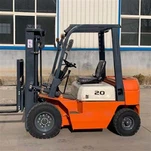
2.5 Ton or 3 Ton VNA Forklift: The Short Answer
Choose a 2.5 ton VNA forklift when your heaviest pallets remain within the 2,500 kg rated load class and minimizing aisle width has higher priority. Move to the 3 ton model when pallet weight requires additional rated capacity and the warehouse can accommodate its wider published stacking aisle requirement.
Capacity alone is not enough. The correct decision must also consider pallet dimensions, load center, clear rack-to-rack aisle width, highest pallet level, battery plan and floor conditions.
Start with the Two Differences That Matter Most
The 2.5 ton and 3 ton Xinghao articulated VNA forklifts share the same basic high-density warehouse concept, but they should not be treated as interchangeable trucks. The heavier model adds 500 kg of rated capacity, while its published aisle requirement is also wider for the same pallet formats.


2.5 Ton vs 3 Ton VNA Forklift Specifications
| Selection Factor | 2.5 Ton VNA | 3 Ton VNA |
|---|---|---|
| Rated Capacity | 2,500 kg | 3,000 kg |
| Standard Load Center | 500 mm | 500 mm |
| Published Aisle Width 800×1200 mm Pallet |
Approx. 2,000 mm | Approx. 2,200 mm |
| Published Aisle Width 1000×1200 mm Pallet |
Approx. 2,200 mm | Approx. 2,400 mm |
| Electrical Platform | 80 V AC | 80 V AC |
| Drive Motor | 11 kW | 11 kW |
| Lift Motor | 14 kW | 14 kW |
| Battery Choice | Lead-acid or lithium | Lead-acid or lithium |
| Wheelbase | 1,895 mm | 1,895 mm |
| Articulated Steering | Articulated VNA layout | 210° published articulation angle |
| Best Starting Point | Lower pallet weights and tighter aisle targets | Heavier pallet loads where additional capacity is required |
When Is 2,500 kg Capacity Enough?
The 2.5 ton model is not automatically the smaller or less capable choice. If the warehouse handles pallets comfortably below the 2,500 kg rated capacity, paying for a larger capacity class may not improve the actual storage operation.
The 2.5 Ton VNA Is Usually the Better Starting Point When:
- Maximum pallet weight remains within the 2,500 kg rated class
- Minimizing aisle width is a major layout objective
- Standard palletized warehouse goods make up most of the workload
- Existing rack spacing leaves limited room for a wider working aisle
- Fleet managers do not need additional capacity margin for heavier inventory
Move to the 3 Ton VNA When:
- Regular pallet loads exceed the practical requirement of the 2.5-ton class
- Heavier industrial goods are stored in high-density racks
- The warehouse can provide the wider working aisle required by the 3-ton model
- Fleet planning requires additional rated load capacity
- Future inventory may include heavier palletized products
Why the 3 Ton Model Needs More Working Aisle
A very narrow aisle forklift is selected as part of the rack system, not as an isolated machine. The published data for the two Xinghao models illustrates this clearly.
With an 800×1200 mm pallet, the 2.5 ton model lists an approximate 2,000 mm stacking aisle, while the 3 ton model lists approximately 2,200 mm. With a 1000×1200 mm pallet, those figures become approximately 2,200 mm and 2,400 mm respectively.
A difference of 200 mm may appear small when selecting a forklift, but repeated across a large number of rack aisles it can materially affect warehouse layout. That is why capacity should not be increased automatically "just to be safe."
Pallet Orientation
The same pallet can require different turning geometry depending on which side faces the rack opening.
Load Overhang
Goods extending beyond the pallet can reduce practical clearance even when the pallet itself fits the published aisle.
Rack Clearance
Rack uprights, protection barriers and clearance allowances must be included in the real working width.
Do Not Compare Capacity Without Checking Load Center
Both models use a published standard load center of 500 mm. This matters because rated capacity only has meaning when the load position used for the rating matches the real pallet and product.
A long load, deep pallet or product with its center of gravity farther forward can create a different load moment than a compact pallet of the same total weight.
Therefore, a warehouse handling a 2,400 kg pallet should not automatically conclude that the 2.5-ton model is suitable without also confirming the real load center and required lifting height.
Rack Height Must Be Confirmed Separately from Capacity
The highest rack level is another reason not to select the machine only from its 2.5-ton or 3-ton name.
A VNA forklift must provide sufficient fork height for the highest pallet while also fitting beneath warehouse doors, roof structures, sprinklers and other overhead restrictions when the mast is lowered.
The current product information contains different published mast-height ranges in different sections. For that reason, the final mast should be configured from the actual rack layout rather than assuming one generic maximum mast height applies to every truck.
Top Pallet Height
Measure the fork level needed to place the pallet on the highest beam.
Load Weight at Height
Confirm whether the required pallet weight must be lifted to the top rack level.
Lowered Mast Height
Check doorways, mezzanines and overhead structures along the travel route.
Free Lift
Confirm free-lift requirements where the truck operates under height restrictions.
Battery Choice Is More About Shift Pattern Than Tonnage
Both VNA models use an 80 V electric platform, and both product specifications provide lead-acid and lithium battery options. Therefore, the move from 2.5 tons to 3 tons does not by itself determine which battery chemistry should be selected.
The better question is how the truck will be used during the working day.
Shift Duration
Record productive hours per shift rather than only the total time the warehouse is open.
Charging Window
Determine whether charging is available between shifts or during planned breaks.
Fleet Standardization
Multi-unit buyers should consider whether battery configuration can be standardized across the warehouse fleet.
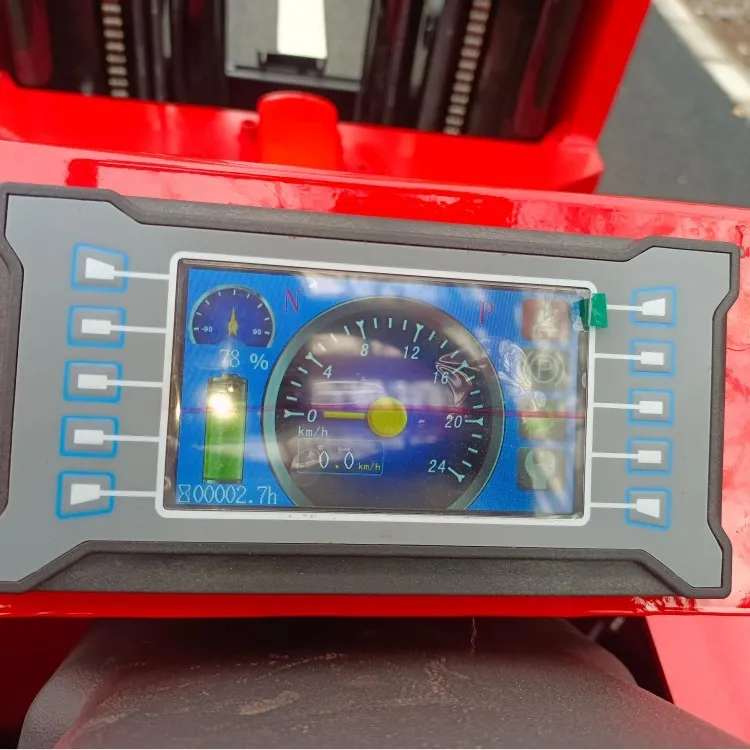
Controls Matter More as Rack Height Increases
VNA work involves repeated approach, lift, alignment and pallet placement cycles. Smooth control is therefore an important procurement consideration, particularly when operators are working near rack beams and stored inventory.
Both models use electric drive and lifting systems. The product specifications list 11 kW drive motors and 14 kW lifting motors, while the 2.5-ton model also specifies an 80 V AC ZAPI dual-core control system.
During supplier evaluation, buyers should confirm the final controller, display, hydraulic control arrangement and battery configuration included in the quotation.
Which VNA Forklift Fits Your Warehouse?
Choose the 2.5 Ton Model When
Loads remain comfortably within the 2,500 kg class and the warehouse places strong priority on minimizing stacking aisle width.
Choose the 3 Ton Model When
Regular loads require the 3,000 kg capacity class and the rack layout can accommodate the corresponding working aisle.
Choose Another Truck Type When
The warehouse does not need very narrow aisles, the operating surface is unsuitable, or the duty is better matched by an electric reach truck or another warehouse vehicle.
Send These Eight Values Before Requesting a VNA Quote
Aisle Width
Clear rack-to-rack working width.
Pallet Size
Width, depth and rack orientation.
Maximum Weight
Heaviest pallet handled in normal duty.
Load Center
Approximate center of gravity from forks.
Top Pallet Level
Required fork height at the highest rack.
Door Clearance
Lowest overhead clearance on travel routes.
Shift Pattern
Hours per shift and shifts per day.
Battery Plan
Lead-acid or lithium preference.
Related VNA Forklift and Warehouse Resources
2.5 Ton vs 3 Ton VNA Forklift FAQs
What is the main difference between a 2.5 ton and 3 ton VNA forklift?
The main difference is rated capacity and the corresponding warehouse geometry. The 2.5 ton model is rated for 2,500 kg, while the 3 ton model is rated for 3,000 kg. The 3 ton model also has wider published stacking aisle requirements.
Which model needs the narrower aisle?
The 2.5 ton model has the narrower published figures: approximately 2,000 mm for an 800×1200 mm pallet and 2,200 mm for a 1000×1200 mm pallet. The corresponding 3 ton figures are approximately 2,200 and 2,400 mm.
Should I buy the 3 ton model for extra safety margin?
Not automatically. Additional capacity should be justified by the actual load requirement because the larger capacity class can also affect aisle planning. Compare maximum pallet weight, load center and warehouse geometry together.
Do both models offer lithium batteries?
Yes. The current product specifications list both lead-acid and lithium battery configurations on an 80 V electrical platform.
Can I select the forklift from aisle width alone?
No. Pallet dimensions, orientation, load overhang, maximum weight, load center, rack height and clearance all affect the final configuration.
What warehouse information should I send before requesting a quote?
Send clear aisle width, pallet dimensions, maximum pallet weight, load center, highest pallet level, overhead clearance, shift pattern, battery preference, quantity and destination country.
Do Not Choose 2.5 Ton or 3 Ton from Capacity Alone
The correct VNA forklift is the machine that fits the pallet, aisle, rack and duty cycle together. Send your clear aisle width, pallet size, maximum load, load center, top pallet height, battery preference and shift pattern for a configuration review before quotation.