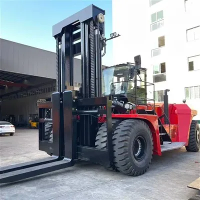
A 10 ton forklift is not defined by capacity alone. The CPCD100 is rated for 10,000 kg at a 600 mm load center, with a 3,900 mm outside turning radius and 1,220 mm standard fork length. Load dimensions, lift height, mast clearance, attachment weight, engine configuration and operating route should all be confirmed before ordering.
10 Ton Forklift Capacity and Load Center
The CPCD100 is rated for 10,000 kg at a 600 mm load center. That rating should not be applied automatically to every 10-ton load.
Long machinery, steel structures, large crates and oversized pallets can move the center of gravity farther forward. When the load center increases, the load moment also increases, so the applicable capacity must be checked for the actual load geometry.
CPCD100 10 Ton Forklift Specifications
| Specification | Value |
|---|---|
| Model | FD100T / CPCD100 |
| Power Type | Diesel |
| Rated Capacity | 10,000 kg |
| Rated Load Center | 600 mm |
| Fork Size | 1,220 × 175 × 75 mm |
| Length Without Forks | 4,255 mm |
| Overall Width | 2,245 mm |
| Raised Height Reference | 4,420 mm |
| Outside Turning Radius | 3,900 mm |
| Travel Speed, Loaded | 24 km/h |
| Travel Speed, Unloaded | 30 km/h |
| Full-Load Gradeability | 22% |
| Operating Weight | Approx. 12,450 kg |
| Tire Arrangement | Pneumatic, 4 front / 2 rear |
| Service Brake | Power service brake |
| Parking Brake | Mechanical parking brake |
Fork Length Must Match the Load Base
The standard fork size is 1,220 × 175 × 75 mm. Fork length should be selected from the load footprint rather than from load weight alone.
Long machinery, molds, steel bundles and large crates may require longer forks or another attachment. Any attachment also adds weight and can move the load center forward, so the final capacity check should use the complete configuration.
Specify Lift Height from the Actual Placement Point
A 10 ton forklift can be supplied with different mast configurations. The required lift should be defined from the highest point where the bottom of the load must be placed.
Lowered mast height is equally important. Workshops, warehouse doors, trailers and covered loading areas can limit access even when the required fork height is within the mast range. Confirm required lift height, lowered mast height and mast stage in the quotation.
Engine Selection Depends on the Destination Market
CPCD100 configurations are offered with different diesel engine options. The purchase specification should identify the exact engine model, rated power and emission configuration instead of relying only on the engine brand.
Destination-market requirements should be confirmed before quotation because emission standards, documentation and locally supported engine options can differ between countries.
Turning Radius and Overall Dimensions
A 10-ton forklift needs considerably more operating space than a standard warehouse truck. CPCD100 dimensions should be checked against gates, aisles, loading bays and turning corners.
Fork projection and the load itself extend the real operating envelope beyond the bare-truck dimensions. Site planning should include the complete truck, fork and load geometry.
Travel Speed and Site Gradient
CPCD100 data lists 24 km/h loaded travel speed, 30 km/h unloaded travel speed and 22% full-load gradeability.
These figures are useful for route planning, but the actual site should still be reviewed for surface condition, ramp length, traffic restrictions and load geometry.
Attachments Change the Capacity Check
Fork positioners, side shifters, clamps and other attachments can change the front-end weight and effective load center.
When an attachment is required, provide its model, weight, thickness and hydraulic requirements together with the load dimensions. The capacity review should use the complete truck, mast and attachment configuration.
Standard 10 Ton Forklift or Container-Entry Forklift?
A standard CPCD100 should not automatically be treated as a forklift for working inside a shipping container.
Container-entry work depends on lowered mast height, overhead guard height, container door clearance and the load profile. Xinghao also has a separate 10 ton container forklift configuration with a lowered-mast design for restricted-height applications.
8 Ton, 10 Ton or 12 Ton Forklift?
Capacity class should follow the normal working load, load center and attachment rather than simply choosing the largest available truck.
Where a 10 Ton Diesel Forklift Fits
Define the Load and Site before Quotation
Related Forklift Selection Pages
10 Ton Forklift FAQ
Get the 10 Ton Forklift Configuration for Your Load
Send the maximum load weight, dimensions, load center, required lift height, fork or attachment requirement, gate width, turning area, surface condition, gradient, destination and quantity. Xinghao can match the CPCD100 configuration to the actual handling task.