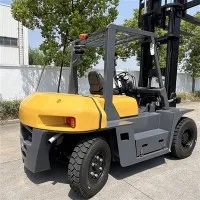
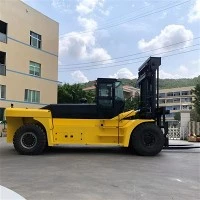
The Indoor Cushion Tire Forklift is a compact counterbalance lift truck engineered for pallet handling, production-line feeding, loading and unloading, and material movement on smooth, hard indoor surfaces.
Its cushion tire configuration significantly reduces the space required for maneuvering compared with conventional pneumatic-tire forklifts, making it ideal for warehouses, manufacturing facilities, distribution areas, retail operations, and other space-constrained environments.
Typical configurations can be customized based on rated capacity, load center, mast type, lift height, fork dimensions, powertrain, and specialized attachments.
Key Specifications for Procurement
|
Parameter |
Procurement Importance |
|
Rated Load Capacity |
Defines the maximum lifting capacity under specified load conditions |
|
Load Center |
Determines the load geometry utilized for the rated capacity |
|
Maximum Lift Height |
Dictates whether the truck can reach required rack or stacking heights |
|
Mast Type |
Impacts lift height, free lift, and overall collapsed truck height |
|
Overall Width |
Ensures clearance through available aisles, doors, and working zones |
|
Turning Radius |
Directly influences maneuverability in confined spaces |
|
Overhead Guard Height |
Critical when operating through low doorways or restricted-height areas |
|
Fork Length & Spread |
Must match pallet dimensions and secure various load widths |
|
Tire Size |
Influences floor suitability and overall vehicle dimensions |
|
Travel & Lift Speed |
Evaluated against facility layout to optimize cycle times |
|
Gradeability |
Essential when ramps or floor gradients are present |
|
Operating Weight |
Important for floor loading limits and transport calculations |
|
Power Source |
Determines operating method, emissions profile, and energy needs |
|
Attachment Capacity |
Must be verified when integrating side shifters or clamps |
Why Choose a Cushion Tire Forklift for Indoor Operations
Cushion tires are specifically designed for smooth, hard surfaces where maneuverability and compact vehicle dimensions take precedence over rough-terrain capability.
Compared with pneumatic-tire forklifts, a cushion-tire configuration is the optimal choice when operations require the truck to:
Operate seamlessly on finished concrete or other smooth industrial floors
Navigate efficiently through relatively narrow aisles
Enter confined production or storage areas with ease
Maneuver safely around high-density racks, machinery, and loading zones
Maintain a compact overall operating footprint
Handle repeated palletized loads continuously inside a facility
Typical Indoor Applications
Warehousing & Distribution: Ideal for repetitive pallet movement, rack loading, unloading, and internal warehouse transportation on smooth floors.
Manufacturing Plants: Used for feeding production lines, moving raw materials, transferring work-in-progress pallets, and handling finished goods.
Automotive & Component Manufacturing: Compact dimensions simplify movement around complex production equipment and internal logistics routes.
Paper & Packaging: Adaptable for handling paper rolls, packaging materials, and specialized palletized products using application-specific forks or clamps.
Retail & Distribution Facilities: Perfect for indoor loading and stock handling where aisle and doorway dimensions require strict control.
Building Material Handling: Suitable for indoor movement of packaged building components when operating surfaces are smooth and well-maintained.
Selecting the Right Forklift Configuration
Capacity
Begin by identifying the heaviest load handled during standard operations rather than relying solely on nominal pallet weight. Always verify:
Maximum load weight and physical dimensions
Load center and maximum lift height
Attachment weight and operational frequency
Lift Height
Base the required lift height on the actual fork height needed at the highest storage position rather than simple rack height. Check the selected mast for:
Lowered mast height and free lift
Maximum fork height and overhead clearance
Residual capacity at elevation
Truck Dimensions
Physical dimensions are just as critical as lifting capacity in indoor spaces. Confirm:
Aisle width, doorway dimensions, and rack clearance
Turning space and loading-bay access limitations
Mast, Fork & Attachment Options
Mast Options
Configure mast stages and lift heights according to exact operational clearances, free lift requirements, and residual capacity at elevation.
Fork Options
Specify dimensions, cross-sections, spreads, and carriage classes based on specific pallet types and load weight distributions.
Attachments
Enhance functionality with application-matched options such as side shifters, fork positioners, bale clamps, paper roll clamps, rotators, and specialized forks, ensuring full compatibility with the hydraulic system.
Powertrain & Configuration
Select the powertrain according to operating hours, indoor environmental standards, and facility infrastructure. Available options include:
Internal combustion power and LPG / gas configurations
Electric drive systems and specialized transmissions
Application-matched hydraulic setups
Manufacturing & Quality Control
To ensure delivered machinery matches specifications precisely, quality control protocols comprehensively inspect:
Customization & Export Supply
Configurations can be fully adapted to target markets and specialized applications through customized options including:
Adjusted rated capacities, mast heights, and fork dimensions
Specific attachments, operator protection features, and tire setups
Tailored paint colors, safety labels, branding decals, and localized documentation
FAQ
Q: What is an Indoor Cushion Tire Forklift?
A: It is a compact counterbalance forklift fitted with cushion tires designed primarily for smooth, hard indoor surfaces.
Q: Why use cushion tires instead of pneumatic tires?
A: Cushion tires provide a compact vehicle footprint and superior maneuverability in confined indoor areas.
Q: Can a cushion tire forklift operate outdoors?
A: It can operate on suitable smooth paved surfaces, but cushion tires are unsuited for rough outdoor terrain, gravel, or mud.
Q: How do I select the correct forklift capacity?
A: Start with maximum load weight, then verify load center, lift height, and attachments under actual working conditions.
Q: What lift height should I specify?
A: Specify the required fork height at your highest storage position, then check the corresponding mast height and residual capacity.
Q: Can the forklift be equipped with attachments?
A: Yes, side shifters and other specialized attachments can be integrated when compatible with the truck and hydraulic system.
Q: What information is needed for a quotation?
A: Provide load capacity, load center, lift height, pallet dimensions, aisle widths, power source, and destination country.
Hot Tags: indoor cushion tire forklift, China indoor cushion tire forklift suppliers, factory, 12 Ton Diesel Forklift, 12 Ton Forklift FD120, 3 5 Ton Diesel Forklift, 7 ton Diesel Forklift Truck, 8 ton counterbalanced forklift, Heavy Duty Fork Forklift 10 Ton