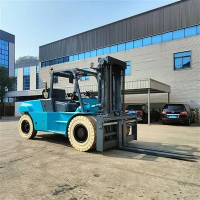
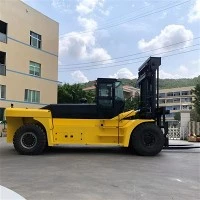
Engineered specifically for smooth concrete, asphalt, and improved indoor hard surfaces, the Compact Cushion Tire Counterbalance Forklift delivers high-efficiency material handling where operational space is strictly limited. By pairing a shortened chassis with solid cushion tires, this configuration achieves a tighter turning radius, controlled floor contact, and optimized load-handling geometry for high-frequency pallet movement.
Technical Specifications Matrix
|
Parameter |
Selection Standard |
|
Forklift Classification |
Compact Cushion Tire Counterbalance |
|
Rated Capacity |
Matched to specific model and load center requirements |
|
Power System Options |
LPG, Gasoline, or Advanced Electric configurations |
|
Tire Specification |
Solid cushion rubber (Standard or Non-Marking) |
|
Mast Availability |
2-stage, 3-stage, or customized vertical reach |
|
Lift Height Range |
Configured according to precise facility storage requirements |
|
Hydraulic Attachments |
Side shifters, fork positioners, clamps, and rotators |
|
Primary Work Environment |
Controlled indoor flooring and paved industrial yards |
Core Product Features
Ultra-Short Turning Envelope
Engineered with a streamlined chassis geometry and an optimized steering axle, this forklift delivers an exceptionally small turning radius. It enables operators to navigate high-density storage zones and pivot smoothly inside narrow warehouse aisles without clipping rack uprights.
Low-Profile Stability & Controlled Floor Contact
By integrating solid cushion tires with a low center of gravity, the truck maintains superior lateral stability during high-lift stacking operations. This configuration distributes weight evenly across smooth surfaces, preventing floor stress while maximizing residual lifting capacity.
Precision Hydraulic Control System
Equipped with responsive multi-spool control valves and advanced lift-cylinder dampening, the hydraulic system ensures smooth, micro-adjustable load positioning. This minimizes product damage during delicate stacking, retrieval, and rack placement tasks.
Heavy-Duty Industrial Powertrain
Designed for continuous multi-shift performance, the power unit delivers high torque at low RPMs for rapid acceleration and reliable ramp-climbing capability. Integrated thermal management systems prevent overheating during intensive handling cycles.
Typical Applications
High-Density Indoor Warehousing & Distribution
Primary Use: Rapid pallet put-away, high-tier rack staging, and order fulfillment.
Operational Benefit: Maximizes vertical storage space utilization within restricted floor layouts.
Manufacturing & Assembly Plants
Primary Use: Transporting raw materials, heavy tooling, and finished sub-assemblies directly to production lines.
Operational Benefit: Safely maneuvers through tight factory corridors and around heavy industrial machinery.
Enclosed Loading Docks & Staging Areas
Primary Use: Transferring goods between warehouse floors, staging lanes, and trailer entrances.
Operational Benefit: Compact chassis dimensions allow seamless movement in and out of container trucks and dock levelers.
Controlled Industrial Processing & Packaging
Primary Use: Handling palletized carton loads, wrapped goods, and drum materials on smooth concrete or epoxy flooring.
Operational Benefit: Clean, controlled operation with options for non-marking tires to protect polished and sensitive facility floors.
Operator Ergonomics, Safety & Compliance
Ergonomic Operator Compartment
Designed for Comfort: Features a low entry step, adjustable suspension seating, and optimized pedal placement to minimize fatigue over multi-shift operations.
Maximized Visibility: Slender overhead guard pillars and an open-view mast architecture give operators clear forward, lateral, and upward sightlines.
Active Safety Systems
Operator Presence Sensing (OPS): Automatically suspends travel and hydraulic functions if the operator leaves the seat.
Interlocked Controls: Seatbelt reminders, parking brake alarms, and anti-rollback stability controls protect both personnel and inventory during incline operations.
Documentation & Compliance Support
Complete Technical Literature: Each unit ships with comprehensive operating manuals, maintenance schedules, and clear schematic diagrams.
Regulatory Readiness: Built to align with major international industrial safety codes, complete with precise capacity rating plates and serialized tracking.
Maintenance & Fleet Management Best Practices
To maintain peak operational performance across multi-shift environments, fleet managers should implement a structured maintenance schedule:
Daily Pre-Operation Checks: Inspect fluid levels, tire wear, hydraulic hose integrity, horn functionality, and brake responsiveness.
Periodic Hydraulic Flushing: Replace hydraulic filters and inspect cylinder seals regularly to prevent pressure loss and component degradation.
Thermal Monitoring: Periodically check engine cooling systems or electric motor temperatures, especially in high-duty-cycle facilities.
Comprehensive Factory Quality Control
Every production unit undergoes rigorous physical inspection before dispatch to guarantee operational reliability:
Structural Integrity: Frame weld testing, mast vertical alignment, and counterweight torque verification.
Hydraulic Performance: Pressure testing, cylinder operation checks, and hydraulic line pressure validation.
Powertrain & Safety: Transmission shifting tests, dynamic brake evaluations, steering response checks, and functional safety device verification.
FAQ
Q: What determines the maximum safe lifting capacity of a compact cushion tire forklift?
A: Safe lifting capacity depends on the combination of the base weight, the load center distance, the lifting height, and whether any hydraulic attachments are fitted. Exceeding the specified load center or adding heavy front-end gear reduces residual capacity.
Q: Can non-marking cushion tires be fitted to prevent floor discoloration?
A: Yes. Non-marking rubber compounds can be specified during the ordering process to eliminate black rubber streaks on polished warehouse floors, epoxy coatings, and cleanroom surfaces.
Q: How does aisle width calculation affect equipment selection?
A: The required right-angle stacking aisle depends on the truck's overall length, wheelbase, turning radius, and the length of the load itself. Precise aisle measurements ensure the equipment can pivot smoothly between high-density storage racks.
Hot Tags: compact cushion tire forklift, China compact cushion tire forklift suppliers, factory, 7 Ton Diesel Forklift, counterbalanced 3 5 ton forklift, counterbalanced 5 ton forklift, FD30, FD35, Warehouse using Diesel Forklift 3 5 Tonne