Product Identity
What Is "Manual Reach Stacker" Means on This Page
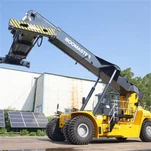
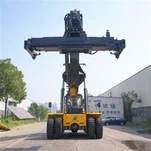
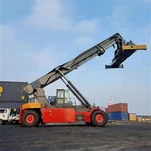
A manual reach stacker here means an operator-directed 45-tonne container handler. It is not a hand-powered warehouse stacker. The listed machine uses a Cummins diesel engine, ZF automatic transmission, Linde hydraulics and a full CAN-bus control network, while the operator directly manages travel, boom and spreader movements from the cab.
This distinction matters when importers compare quotations. The machine is intended for loaded ISO container work in yards and depots, with published capacities of 45 tonnes in the first row, 31 tonnes in the second row and 16 tonnes in the third row. A final selection still requires the load chart, stacking plan and site route to be reviewed together.

Verified Page Data
Specifications for Initial Technical Screening
The following values are taken from the current product information. They support an initial comparison, but a purchase specification should also include the approved load chart, dimensions, tyre details, axle identification and operating limits for the exact unit quoted.
| Specification | Published configuration |
|---|---|
| Rated load capacity | 45,000 kg |
| Service weight | 71,400 kg |
| Capacity by stacking row | 45 t first row / 31 t second row / 16 t third row |
| Engine | Cummins QSM11, Euro III |
| Rated engine power | 250 kW at 2,100 rpm |
| Maximum torque | 1,674 Nm at 1,400 rpm |
| Transmission | ZF 15WG261 automatic transmission |
| Hydraulic system | Linde |
| Control architecture | Full CAN-bus |
| Container interface | Spreader for ISO 20-foot and 40-foot containers |
| Service brake | Hydraulic wet-disc brake |
| Parking brake | Automatic engagement when power is switched off |
| Listed option | Cold-climate package described as Russia specification |
| Listed parts provision | Spare-parts support for 2,000 working hours; confirm itemized scope in the quotation |
Do Not Compare the 45-Tonne Figure Alone
The first-, second- and third-row ratings are different. State the maximum container gross mass, stacking row, lift height and pickup geometry so the applicable capacity can be checked before the yard layout or tender response is finalized.
Operator Station

Direct Control Still Uses Coordinated Machine Systems
What the buyer should review in the cab
The photographed console shows a joystick-led operating station with physical switches and an emergency-stop control. This supports direct operator input, but it does not mean the machine is mechanically "manual." The automatic transmission, hydraulic circuit and CAN-bus network remain part of the working system.
- Control labels and display language for the destination team
- Operator visibility at pickup, travel and placement positions
- Seat, mirrors, warning devices and requested cab options
- Training scope for boom, spreader, travel and braking controls
- Daily inspection points and fault-reporting procedure
Include the required language, operator experience and local training expectations in the inquiry. The approved configuration sheet should identify which cab and control options are standard and which are optional.
Site Compatibility
Four Measurements Needed Before Quotation Approval
1
Container demand
List 20-foot and 40-foot container quantities, maximum gross weights, expected moves per hour and the share handled in each stacking row.
2
Working envelope
Measure lane width, gates, overhead restrictions, stacking space and the turning area available with the intended container length.
3
Travel surface
Record gradients, surface condition, drainage, edge strength and the loaded route between pickup and placement points.
4
Climate and regulations
Provide ambient temperature, altitude, dust or salt exposure, fuel quality and the emission or documentation rules at destination.
Power and Drivetrain
Match the Published Configuration to Local Requirements
The current page lists a Cummins QSM11 engine at Euro III level and a ZF 15WG261 automatic transmission. Buyers in North America, Europe and some Middle Eastern projects should not assume that this emission configuration meets every local registration, tender or workplace rule.
State the destination country and intended operating site before pricing. The supplier can then confirm whether the published configuration is suitable or whether another available engine and documentation package must be quoted. No unlisted emission option should be treated as included until it appears on the approved proposal.
Component details to place on the order sheet
- Engine model, emission level and identification
- Transmission model and control arrangement
- Drive and steering axle identification
- Hydraulic system and specified fluid grade
- Tyre size, ply rating and approved alternatives

Why the detail image matters
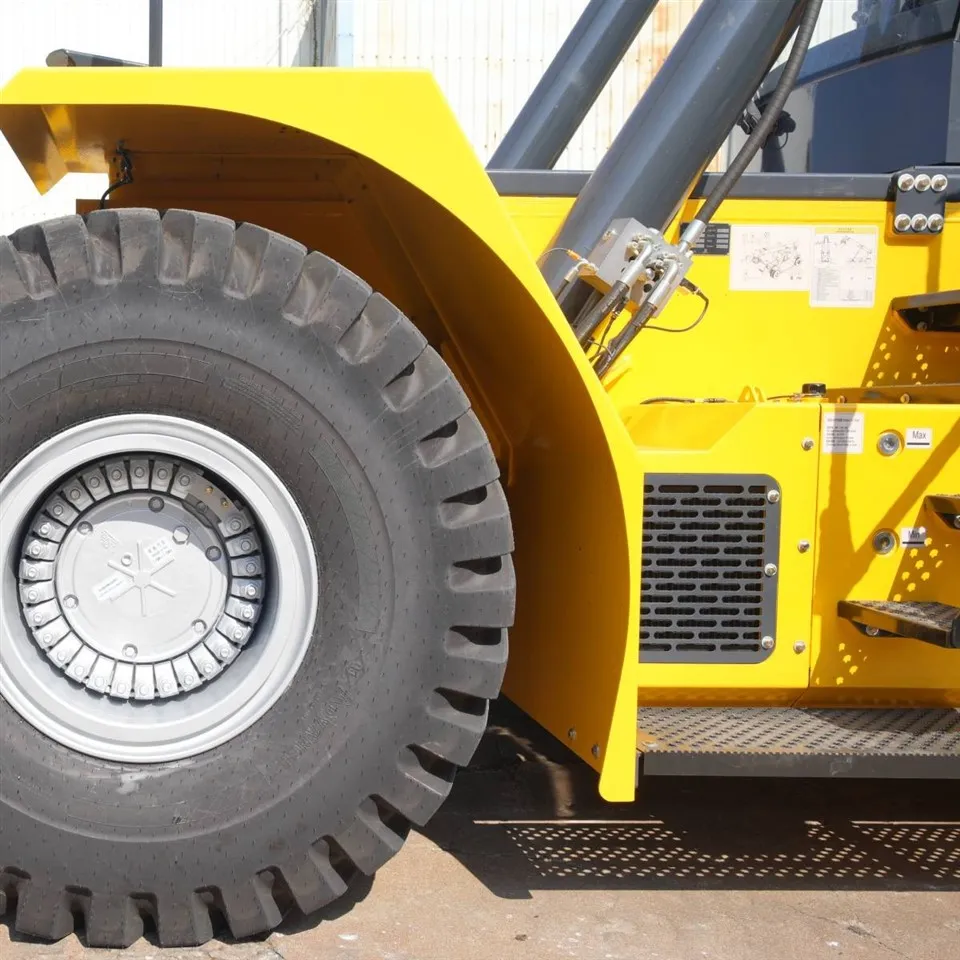
Tyres, wheel assemblies, hydraulic lines, access steps and service points influence site suitability and maintenance planning. Use current production photos together with the final component list rather than approving an order from a generic machine image alone.
Procurement Control
Build the Order Around One Approved Configuration Sheet
For a configured port machine, "standard" can mean different things to the buyer and supplier. One signed technical schedule should connect the working requirement to the exact equipment and delivered scope.
Machine and spreader
- Capacity chart and required stacking rows
- Container lengths and spreader functions
- Dimensions, turning space and tyre details
- Cab, controls and cold-climate options
Commercial and support scope
- Order quantity and destination port
- Production and shipping schedule
- Included spare-parts list and quantities
- Training, commissioning and after-sales boundaries
The current page does not publish a universal MOQ, production lead time or packing method. These should be quoted after the order quantity, configuration, destination and shipping plan are defined. The same rule applies to certifications: request the documents required for the destination and verify that they cover the unit being supplied.
01
Technical review
Compare the load chart, dimensions, operating route, climate and required container interface.
02
Scope confirmation
Record selected options, supplied parts, documents, training and destination requirements.
03
Pre-shipment check
Agree identification and functional checks for travel, steering, boom, spreader and braking systems.
Quote Preparation
Information to Include With the Inquiry
Operating data
- Container sizes and maximum gross mass
- First-, second- and third-row frequency
- Maximum lift height and daily moves
- Route length, gradients and surface condition
Order data
- Quantity and destination country
- Required emission and document package
- Cab, climate and spreader requirements
- Delivery port, training and parts expectations
Providing these details allows the China supplier to return a configuration-based proposal instead of a price for an undefined machine. It also gives distributors and project contractors a clearer basis for comparing inclusions, exclusions and site compatibility.
Related Resources
Continue the Container-Handling Review
Procurement FAQ
Questions to Resolve Before Ordering
Q1. Is this manual reach stacker hand-powered or manually shifted?
No. The product information lists a Cummins diesel engine, ZF automatic transmission, Linde hydraulics and full CAN-bus control. "Manual" on this page describes direct operator control of container-handling movements, not a hand-powered machine or manual gearbox.
Q2. Which container sizes are covered by the listed spreader?
The current page lists compatibility with ISO 20-foot and 40-foot containers. State the container mix, maximum gross weight, required stacking row and any spreader functions in the inquiry so the supplied interface can be confirmed.
Q3. Is the listed Euro III engine suitable for every market?
That cannot be assumed. Emission, registration and workplace rules vary by country and project. Provide the destination and operating site so the supplier can confirm the required engine configuration and supporting documents before quotation approval.
Q4. How are MOQ, lead time and shipping method confirmed?
They should be quoted from the requested quantity, approved configuration, option scope, destination and delivery plan. These commercial terms are not universal for a configured 45-tonne machine, so include the project details with the inquiry.
Q5. What should be checked before overseas delivery?
Agree the machine and component identification, selected options, functional checks, load documentation, supplied parts, operating and maintenance records, training scope, shipping dimensions and destination documents. The quotation should identify every included and optional item.
Project Inquiry
Convert Yard Requirements Into a Comparable Proposal
Send container sizes and weights, stacking rows, lift height, site route, climate, destination, quantity and support requirements. XINGHAO can use this information to prepare a technical configuration and commercial quotation for review.
Hot Tags: manual reach stacker, manual reach stacker supplier, manual reach stacker factory, 45 ton diesel reach stacker, operator controlled reach stacker, container yard reach stacker, ISO container handler, 45 ton diesel container reach stacker, Energy saving reach stacker, Container heavy duty forklift, Reach Stacker container handler, 45 Ton Lifting Equipment, Empty container reach stacker