

ECH90-7E electric handling for empty-container yards
The ECH90-7E electric empty container handler combines a 9,000 kg rated capacity with a seven-high stacking configuration for empty-container operations. Its 242.3 kWh CATL lithium iron phosphate battery, CAN-bus control and container spreader form an electric alternative for yards planning to reduce diesel use at the point of operation.
Equipment approval should be based on the container mix, stacking plan, lane width, pavement, gradients, shift energy demand and charging infrastructure. The rated capacity and seven-high description do not replace confirmation of the exact container type, spreader arrangement and site operating limits.
ECH90-7EModel designation
9,000 kgRated load capacity
7 highMaximum stacking layer
242.3 kWhCATL LFP battery system
Start with the yard's container flow
An empty-container handler works as part of a system that includes gate traffic, inspection areas, repair zones, stack lanes and truck interchange points. Before selecting the machine, map the daily moves by container length and height, the required stack positions, travel distance per cycle and peak queue conditions.
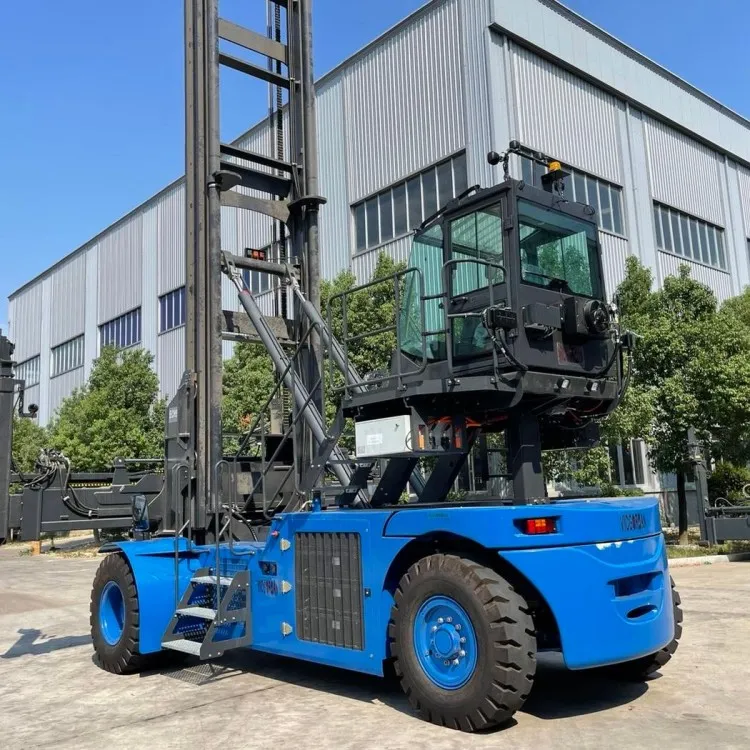
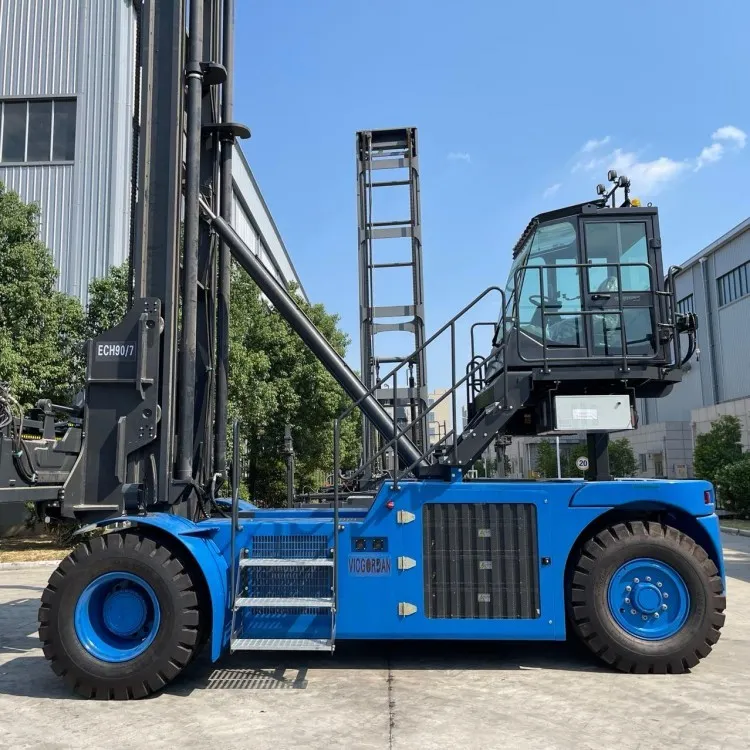
The ECH90-7E is configured as a seated machine with a high-mounted cab and dedicated empty-container mast and spreader. The cab position, mast visibility and spreader status information should be evaluated against the actual lane markings and stacking pattern.
Application data to provide
- 20 ft and 40 ft container proportions
- Standard-height and high-cube quantities
- Required single-container stacking layers
- Average and peak moves per hour
- Loaded travel distance per cycle
- Pavement condition and maximum gradient
- Daily operating and charging windows

Side view of the ECH90-7E chassis, elevated cab and empty-container mast.

Front three-quarter view showing the mast structure and container spreader.
Plan the stack, lane and transfer route together
Seven-high capability is useful only when the stack layout, pavement and operating controls support it. The final site plan should leave sufficient clearance for turning, spreader alignment, container overhang and safe separation from other vehicles and personnel.
Stack geometryDefine container length, height, stack direction, row spacing and the highest permitted tier for each operating area.
Travel envelopeCheck the full machine path, turning sweep, spreader width, overhead restrictions and clearance at lane ends.
Ground interfaceReview pavement strength, flatness, drainage, joints, slopes and the areas used for braking or direction changes.
Core configuration and approval points
| Item | ECH90-7E reference | Order-stage confirmation |
|---|---|---|
| Rated capacity | 9,000 kg at a stated 1,295 mm load centre | Container type, handling method, load centre definition and capacity plate |
| Stacking configuration | Maximum seven layers | Container height, wind policy, stack plan and site operating limit |
| Service weight | 39,800 kg | Transport plan, pavement loading and axle/load distribution data |
| Battery | 242.3 kWh CATL lithium iron phosphate system | Battery voltage, BMS, thermal management, connector and service documentation |
| Spreader movement | ±600 mm side shift | Spreader model, twistlock interface, container compatibility and status indication |
| Control system | Full CAN-bus vehicle control | Display functions, diagnostic access, software settings and alarm list |
| Braking | Wet-disc service brake; power-off parking brake | Brake test method, gradient condition and emergency procedure |
| Tyres and dimensions | Configuration-dependent | Approve the tyre size, tyre construction and exact overall dimensions on the signed specification |
Define the spreader interface before production
Container compatibility
State the ISO container lengths and heights in the fleet, including the share of high-cube units. Confirm whether the proposed spreader is intended for the required handling mode and how the operator verifies twistlock engagement.
Side-shift working range
The listed ±600 mm side shift supports alignment correction at the stack face. Review the reference position, full travel, hydraulic control and clearances with the exact spreader.
Interlocks and indications
Ask for the sequence covering container detection, twistlock status, lift permission, overload limiting and any spreader/mast safety interlock. The display symbols should be included in operator training.
Acceptance demonstration
Use representative 20 ft and 40 ft empty containers to demonstrate pick-up, side shift, travel, stacking and release under agreed site or factory test conditions.
Request an ECH90-7E technical proposal
Send the container mix, required stack height, yard layout, pavement information, daily moves and electrical supply. Xinghao can use these inputs to define the machine, spreader and charging information required for approval.
Size the battery system from measured duty
The 242.3 kWh lithium iron phosphate battery is one part of the energy system. Runtime and charging duration depend on travel distance, lift cycles, hydraulic demand, temperature, auxiliary loads, usable state-of-charge window and charger output. A fixed operating-hour claim should therefore be replaced by a duty-cycle calculation.
Measure the cycle
Record travel, lift, lowering, idle and queue time for a representative move.
Build the shift
Multiply the cycle by normal and peak moves, then add realistic waiting and auxiliary demand.
Check the supply
Confirm local voltage, frequency, transformer capacity, charger position and cable route.
Approve the plan
Agree on charger output, charging windows, thermal limits and the minimum reserve for operations.
Electric operation changes the yard support plan
An electric powertrain removes diesel exhaust at the point of operation and eliminates routine engine-oil and fuel-system service. It does not eliminate inspections or maintenance. The battery, cooling circuit, high-voltage connections, motors, hydraulics, brakes, mast, spreader and tyres remain part of the service programme.
Operating-cost comparisons should use the buyer's electricity tariff, diesel price, duty cycle and maintenance records. A site-specific calculation is more useful than a fixed percentage or a saving based on another market's energy prices.
Infrastructure review
- Available grid capacity and demand limit
- Charger power and connector standard
- Charging-bay access and impact protection
- Drainage, lighting and emergency access
- Battery thermal-management instructions
- Isolation, recovery and towing procedures
Factory acceptance and commissioning checklist
- Verify model, serial numbers and approved component schedule
- Check dimensions, service weight and transport preparation
- Review battery, BMS, charger and electrical documentation
- Test travel, steering, service brake and parking brake
- Test lift, lower, side shift and spreader functions
- Demonstrate twistlock status and safety interlocks
- Confirm overload indication and weighing-display functions
- Run CAN-bus diagnostic and alarm checks
- Inspect hydraulic connections, mast, chains and tyres
- Complete container pick, travel, stack and release cycles
- Confirm manuals, parts list and maintenance schedule
- Record agreed test results and unresolved items
After delivery, commissioning should verify the machine on the approved yard route and electrical supply. Operator and maintenance training should cover energy isolation, charging, daily inspection, spreader status, braking, visibility and the site's wind and stacking rules.
Compare the equipment category, not only the power source
Electric empty-container handlerCompare when the work is dedicated to empty-container stacking and the yard can support high-power charging.
Diesel empty-container handlerReview where refuelling logistics, remote operation or existing diesel support changes the project decision.
Reach stacker or container forkliftEvaluate a different machine type when loaded containers, first-row reach or non-stacking transport are part of the duty.
Related port and container-handling equipment
Empty Container HandlersCompare the available electric and diesel configurations for container yards. 9-Ton Electric Empty Container HandlerReview the separate 9-ton electric product configuration before selecting a battery package. 9-Ton Diesel Empty Container HandlerCompare a diesel-powered 9-ton option for the same broad empty-container duty. 45-Ton Reach StackersEvaluate loaded-container handling equipment when the duty goes beyond empty boxes. Container ForkliftsCompare container-lifting formats for transport, stacking and yard-transfer requirements. Port and Terminal SolutionsPlace the machine within a wider terminal equipment and traffic-planning context. Port Machinery Buyer's GuideContinue with equipment-selection and procurement information for port operations.
Electric empty-container handler FAQ
What containers is the ECH90-7E intended to handle?
It is presented for empty-container handling with a spreader sized for 20 ft and 40 ft containers. The exact container heights, handling mode and twistlock interface must be listed in the approved specification.
Does seven-high mean every empty container can be stacked to seven layers?
No. Seven-high is the stated maximum configuration. The permitted tier depends on container type, yard plan, ground condition, wind rules, machine configuration and the operating limits approved for the site.
How long does the 242.3 kWh battery operate?
Runtime cannot be determined from battery capacity alone. It depends on travel distance, container moves, lift cycles, temperature, auxiliary loads and usable state of charge. Request a duty-cycle calculation for the planned shift.
How quickly can the machine be charged?
Charging time depends on charger output and the starting and target state of charge. Confirm the matched charger, local electrical supply, thermal limits and charging window before publishing a time claim.
What does the ±600 mm side shift provide?
It allows lateral spreader adjustment for container alignment. The usable movement, reference position, clearance and control response should be demonstrated with the exact spreader and representative containers.
What documents should be approved before shipment?
Approve the signed specification, general arrangement, capacity information, axle and tyre schedule, spreader data, battery and charger documents, acceptance plan, packing details, manuals and agreed inspection records.
Get specifications, layout data and a quotation
Share the container sizes, stacking tiers, yard dimensions, daily move profile and available power supply for an electric empty container handler configuration review.
Hot Tags: electric empty container handler; 9 ton electric empty container handler; lithium electric empty container handler; electric container handler manufacturer; empty container handling equipment; electric container stacker, 45 ton container handler, 45 ton diesel container stacker, 45 ton container stacker forklift, RS 45 ton reach stacker, 45 ton reach stackers container lift, reach stacker forklift