


The right telehandler lift height is not simply the tallest boom you can buy. A 7 m machine can be the better choice for routine site handling, while 10 m, 14 m and 18 m classes become relevant as vertical placement and forward outreach increase. Start with three numbers: maximum load weight, required vertical height and required horizontal reach. Then verify capacity at that exact boom position on the load chart.
What Does Telehandler Lift Height Actually Mean?
Telehandler lift height describes the highest vertical position the boom and carriage can reach under the specified machine configuration. It does not tell you how much weight the machine can carry at that position.
The same telehandler also has a maximum forward reach, and its allowable load normally changes as the boom rises and extends. This is why buyers should compare a complete working envelope instead of choosing from lift-height headlines alone.
7 m vs 10 m vs 14 m vs 18 m Telehandler
Current Xinghao products illustrate how vertical height and forward reach increase together. The values below are model references, not a universal load chart for every machine in the height class.
| Height Class | Current Model Reference | Rated Class | Max Lift | Forward Reach | Best Starting Point |
|---|---|---|---|---|---|
| 7 m | 3.5 Ton Telescopic Forklift | 3,500 kg | 7.0 m | 3.9 m | General site and agricultural handling |
| 10 m | T5010 | 5,000 kg | 10.0 m | 5.5 m | Medium-height construction placement |
| 14 m | 5014 | 5,000 kg | 14.0 m | 7.46 m | High-level placement and obstacle reach |
| 18 m Class | 4 Ton 18 m Telehandler | High-reach 4 ton product class | Approx. 18 m class | Extended forward-reach class | Tall structures and long obstacle reach |
When Is a 7 m Telehandler Enough?
A 7 m telehandler is often the logical starting point when most lifting takes place around ground level to low and medium building heights.
Xinghao's current 3.5 ton 7 m telescopic forklift reference combines a 3,500 kg rated class, 7,000 mm maximum lift and approximately 3,900 mm maximum forward outreach.
This class can suit routine construction supply, agricultural storage, bale or pallet movement and industrial yard work where very long forward reach is not required.

10 m Adds Useful Height without Moving Straight to a Very Long Boom
The 10 m class becomes relevant when material has to reach upper floor levels, elevated platforms, roof-edge loading points or placement locations that are beyond the useful envelope of a 7 m machine.
Xinghao's T5010 reference combines a 5,000 kg rated class, 10 m maximum lifting height and 5.5 m maximum horizontal reach.
It can provide a practical middle ground for construction and industrial sites that need more reach but do not regularly work in the 14–18 m height range.
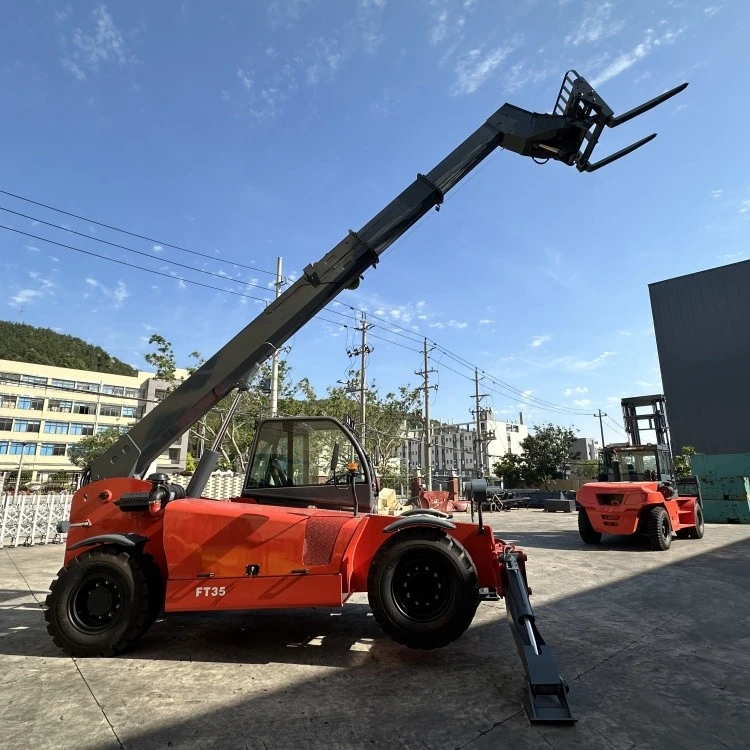
14 m Is Where Forward Reach Becomes a Major Buying Variable
Moving from 10 m to 14 m is not simply adding four metres of vertical height. High-reach work usually also demands more boom extension, stabilizing space and careful use of the load chart.
The current 5014 product reference combines 5,000 kg rated capacity, 14 m maximum lift and 7.46 m maximum horizontal reach.
This class becomes more relevant where loads must be placed above obstacles, into elevated building openings or farther from the chassis than a 10 m-class machine can reach.

18 m Telehandlers Are for Extended High-Reach Working Envelopes
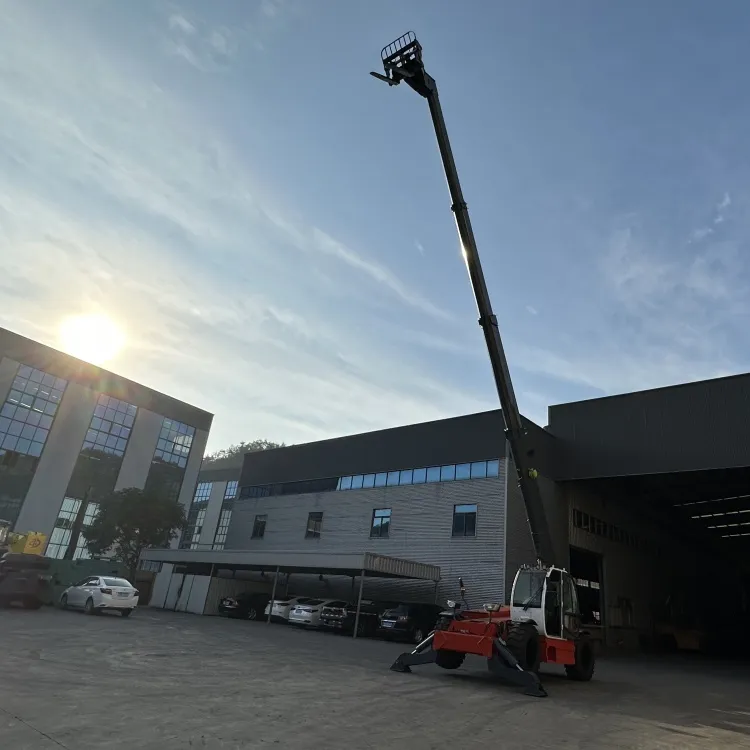
An 18 m-class telehandler is intended for jobs where both high vertical placement and substantial forward extension are recurring requirements.
At this boom length, the rated capacity shown in the model name becomes less useful by itself. Capacity at maximum height and capacity at maximum outreach can be much lower than the nominal rating.
Xinghao publishes multiple extended-reach configurations, so buyers should request the load chart for the exact 18 m-class machine rather than combining figures from different model tables.
Why Not Simply Buy the Tallest Telehandler?
Extra boom length can increase machine size, working-envelope complexity and the importance of stabilizer and ground conditions. A taller machine does not automatically improve productivity if the additional reach is rarely used.
Vertical Height and Horizontal Reach Solve Different Problems
Two jobs can require the same vertical height but very different telehandlers because one load is directly above the machine while the other must be placed beyond a trench, wall, scaffold or stored material.
Mostly Vertical Lift
If the machine can position close to the load point, required vertical height may be the main boom-selection variable.
Lift across an Obstacle
A wall, trench, scaffold, truck body or stored material can make horizontal reach more important than the highest vertical point.
Four Example Telehandler Selection Scenarios
Farm Storage
Loads remain below approximately 6–7 m and forward reach is modest. Start by comparing the 7 m class.
Mid-Rise Construction
Pallets regularly need placement near 8–10 m with moderate outreach. Compare the 10 m class.
High-Level Placement
The load must reach around 12–14 m or cross a wider obstacle. Start with a 14 m load-chart review.
Extended Boom Work
Vertical position approaches the upper-teen metre range and long forward outreach is routine. Compare an 18 m-class machine.
Maximum Lift Height Does Not Mean Full Rated Capacity at That Height
This is the most important technical boundary in telehandler selection. A machine may carry its rated load close to the chassis but a smaller load when the boom is raised or extended.
Do not combine the largest rated-capacity number, maximum lifting height and maximum forward-reach number from separate brochure lines into one assumed working condition.
Request the Load Chart for the Actual Working Point
Send the maximum load weight, load center, required vertical height, required forward reach and attachment. The permissible capacity should be checked at that exact boom position.
Forks, Buckets and Other Tools Change the Working Envelope
Telehandler height selection should be completed together with attachment selection. Attachment weight and geometry change the front load condition, while hydraulic attachments also require the correct auxiliary circuit.
Ground, Stabilizer Space and Access Can Change the Best Height Class
How to Choose Telehandler Lift Height in Six Steps
Compare Telehandler Models and Applications
Telehandler Lift Height Questions
Send Load + Height + Forward Reach
Provide the maximum load weight and dimensions, required vertical placement height, required horizontal reach, attachment type, ground condition, site gradient, available operating space, quantity and destination. These inputs allow the 7 m, 10 m, 14 m or 18 m telehandler class to be compared against the actual working point.


