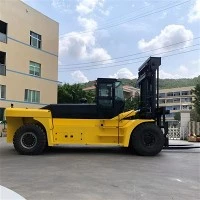
The 3 Wheel Electric Counterbalance Forklift is engineered for indoor material handling where pallet access, load capacity, and restricted turning spaces intersect. By utilizing a rear-steering wheel configuration, this machine significantly reduces the aisle width required for 90-degree stacking and directional changes while retaining the direct pallet-engagement layout of a conventional counterbalance truck.
Designed for distribution centers, manufacturing plants, and high-density warehouses on smooth, level concrete or epoxy surfaces, this electric series balances maneuverability with stable lifting performance.
Core Technical Specification
|
Parameter |
Engineering Specification |
|
Product Type |
3-Wheel Electric Counterbalance Forklift |
|
Rated Load Capacity |
1,500 kg – 3,000 kg (Model dependent) |
|
Standard Load Center |
500 mm |
|
Standard Lift Height |
3,000 mm (Configurable up to higher rack levels) |
|
Mast Configuration |
Duplex / Triplex wide-view options |
|
Steering System |
Rear-wheel dual-drive or centered single-wheel pivot |
|
Chassis Protection |
IPX5 certified high-pressure washdown safe |
|
Fork Carriage Material |
Heavy-duty Stainless Steel (SUS304) options available |
|
Battery System |
CATL Lithium-ion (LiFePO4) or Lead-acid traction cells |
|
Compliance |
ISO 9001 / CE Certified |
Mast Options & Vertical Reach
Mast selection dictates both stacking height and structural clearance through low-overhead zones like doorways, elevators, or mezzanines.
Duplex Masts: Standard two-stage configuration for general ground-level and low-rack applications (commonly 3,000 mm lift).
Triplex Free-Lift Masts: Three-stage configuration designed for high-tier racking storage while maintaining a low collapsed height to clear internal doorways.
Always verify the collapsed mast height against lowest facility entry points and the maximum fork height against top-tier beam levels.
Customization & Configuration Options
To match regional technical standards and specific operational workflows, units can be built with modular variations:
Mast Assemblies: Duplex or Triplex configurations with custom lift heights.
Energy Solutions: Lead-acid or CATL LiFePO4 battery banks with matching industrial chargers.
Tire Compounds: Non-marking solid cushion tires or specialized rubber compounds optimized for indoor facility cleanliness.
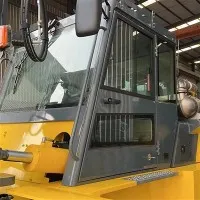
Operator Environment: Open overhead guard or fully enclosed steel cabin with heating options.
Hydraulic Attachments: Integrated side shifters, fork positioners, and clamp variants.
Typical Industrial Applications
Indoor Warehousing
High-density pallet storage, rack-to-floor transfers, and inventory staging on flat indoor surfaces.
Manufacturing Plants
Line-side material delivery, raw component staging, and finished goods transfer within confined assembly bays.
Distribution Centers
High-frequency sorting, cross-docking, and container unloading on level loading docks.
Battery & Powertrain Integration
Electric performance relies on the synergy between the battery management system (BMS), AC traction motors, and hydraulic pump motors.
Lithium-Ion (LiFePO4) Systems: Powered by advanced CATL battery architectures supporting rapid opportunity charging (70 to 90-minute full charge cycles). Ideal for multi-shift operations where scheduled battery swapping is impractical. Retains over 80% capacity after thousands of charge cycles.
Lead-Acid Traction Systems: Traditional heavy-duty flooded cells suited for single-shift facilities with established charging infrastructure and scheduled maintenance routines.
Electrical specifications, voltage outputs, and charger matching are configured according to regional voltage standards and duty-cycle intensity.
Manufacturing, Inspection & Quality Control
Manufacturing heavy-duty material handling equipment requires strict factory oversight across structural fabrication, electrical integration, and final performance testing:
Structural Fabrication: Precision-welded high-strength steel chassis frames built to eliminate torsional flexing under heavy load cycles.
Electrical & Hydraulic Testing: Integrated testing of AC controllers, wiring harnesses, high-pressure hydraulic lines, and lift cylinders to ensure leak-free operation.
Final Functional Audit: Every truck undergoes dynamic testing verifying steering geometry responsiveness, braking efficiency, traction speed, and mast staging behavior prior to container loading.
Maintenance Accessibility & Spare Parts Support
For dealers and fleet operators, long-term operational uptime depends on serviceability and component availability:
Hinged / Removable Panels: Designed for quick access to core electrical components, AC controllers, and hydraulic service points during routine maintenance.
Modular Diagnostics: Standardized digital interface for error code reading and performance tuning.
Spare Parts Availability: Comprehensive parts catalogs, wearable components (seals, filters, contactors), and critical replacement parts supplied directly to support regional dealer networks.
FAQ
Q: What is the main operating difference between a 3-wheel and 4-wheel electric forklift?
A: The 3-wheel configuration uses a rear-steering layout that delivers a tighter turning radius, making it ideal for narrow indoor warehouse aisles where space is restricted. A 4-wheel truck is typically chosen when enhanced lateral stability on uneven ground is prioritized over tight maneuverability.
Q: What battery options are available for this series?
A: Units can be configured with high-performance CATL lithium-ion (LiFePO4) battery systems supporting rapid opportunity charging or traditional lead-acid traction batteries based on your facility's operational shift schedule.
Q: Are custom lift heights and attachments supported?
A: Yes. Mast configurations, fork dimensions, and hydraulic attachments such as side shifters can be integrated based on your exact pallet handling requirements, subject to residual capacity validation.
Q: What compliance documentation is provided with shipment?
A: Equipment is manufactured under strict quality standards, with complete CE compliance documentation, operator manuals, maintenance guides, and factory inspection records supplied with the order.
Hot Tags: 3 wheel electric counterbalance forklift, China 3 wheel electric counterbalance forklift suppliers, factory, 2 5 Ton Telescopic Handler, 3t electric forklift, 4 Ton Electric Forklift Truck, electric 5 ton forklift, flourmill 3 5 ton electric forklift, lithium battery 4 ton forklift truck