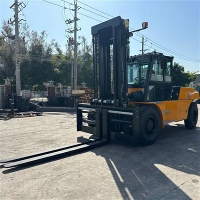
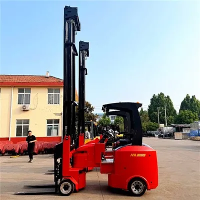
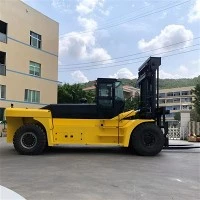
An indoor outdoor pneumatic tire forklift is engineered for operations requiring continuous movement between enclosed warehouses, loading docks, production areas, and paved or semi-paved outdoor yards.
The pneumatic tire configuration absorbs surface irregularities far more effectively than cushion tires across outdoor asphalt, concrete, and yard transit lanes. The counterbalance design delivers direct front-end fork access without requiring outrigger legs, supporting standard pallet handling, truck loading, and short-distance material transfers.
Key Specifications for Procurement
|
Specification |
Procurement Significance |
|
Rated Load Capacity |
Establishes the maximum weight safely handled under a specified load center and lift height. |
|
Load Center |
Dictates allowable capacity limits, particularly when handling long, bulky, or unbalanced loads. |
|
Maximum Lift Height |
Determines vertical reach capability for warehouse racking, trailers, and stacking zones. |
|
Mast Type |
Two-stage and three-stage options define vertical lift limits, free lift, and overhead clearance. |
|
Overall Height & Width |
Must clear facility doorways, container entrances, and restricted aisle spaces. |
|
Turning Radius |
Governs maneuverability inside storage aisles, loading docks, and production lines. |
|
Tire Type & Size |
Influences traction, shock absorption, ground clearance, and puncture resistance. |
|
Fork Dimensions |
Length and cross-section must match pallet sizes and load depth distributions. |
|
Ground Clearance |
Prevents undercarriage interference when transitioning between indoor floors and outdoor yards. |
|
Gradeability |
Indicates performance capabilities on facility ramps and inclined surfaces. |
|
Powertrain |
Diesel, LPG/gasoline, or electric configurations must match site environment and emissions rules. |
|
Service Weight |
Vital for floor load limits, transport weight restrictions, and stability calculations. |
|
Attachments |
Hydraulic add-ons alter the effective load center and require residual capacity review. |
Key Product Features
All-Terrain Versatility: Heavy-duty pneumatic tires provide superior traction, shock absorption, and ground clearance, ensuring smooth transitions between indoor concrete floors and semi-paved or unpaved outdoor yards.
Heavy-Duty Counterbalance Design: Engineered with a robust structural steel frame and a high-density rear counterweight to deliver direct, stable front-end fork access without requiring external outrigger legs.
Ergonomic Operator Environment: Features an optimized cab layout, adjustable suspension seating, wide-view mast design, and intuitive hydraulic controls to minimize operator fatigue and maximize shift productivity.
Advanced Cooling & Drivetrain Durability: Integrated high-efficiency cooling systems and rugged drivetrain components protect against overheating during continuous, high-intensity outdoor and multi-shift operations.
Comprehensive Workplace Safety: Equipped with standard operator presence sensing (OPS), heavy-duty overhead guard protection, reliable hydraulic safety lock valves, and high-visibility mast channels to ensure maximum job-site safety.
Is a Pneumatic Tire Forklift Right for Your Operation
Pneumatic tires are the standard choice when a forklift frequently transitions between indoor facilities and outdoor working areas with non-smooth surfaces.
Suitable Working Conditions
Loading and unloading transport trucks at outdoor loading bays
Transferring pallets between indoor storage and outdoor paved yards
Transporting building materials across concrete or asphalt surfaces
Moving steel plates, timber bundles, and heavy industrial supplies
Operating across combined production floors, storage yards, and shipping zones
Traveling longer distances between distinct facility areas
Powertrain Options
Diesel
Primary Uses: Outdoor material handling, extended daily duty cycles, heavy-duty applications, and continuous yard operations.
Considerations: Destination markets must comply with local emissions regulations and engine tier standards.
LPG / Gasoline
Primary Uses: Combined indoor and outdoor operations requiring rapid refueling and sustained power output.
Considerations: Indoor combustion operation requires adequate facility ventilation and compliance with workplace air quality standards.
Electric
Primary Uses: Mixed operations requiring zero tailpipe emissions, reduced noise levels, and available charging infrastructure.
Considerations: Battery voltage, capacity, charger specifications, and operating shifts should be evaluated as an integrated system.
Mast and Attachment Selection
Mast Configurations
Two-Stage Mast: Selected for moderate lift heights, standard overhead clearance, and enhanced forward visibility during general pallet handling.
Three-Stage Mast: Utilized for higher vertical reach, container stuffing, and facilities requiring a low lowered height combined with high maximum fork extension.
Hydraulic Attachments
Available options include side shifters, fork positioners, bale clamps, paper roll clamps, carton clamps, and rotators. Adding hydraulic attachments increases total front-end weight and shifts the center of gravity, necessitating a residual capacity calculation based on specific load parameters.
Manufacturing & Quality Inspection
Equipment reliability relies on strict manufacturing controls and verification points across production:
Structural Integrity: Frame, counterweight, mast channels, and fork carriages undergo dimensional checks and weld integrity inspections.
Hydraulic Performance: Hydraulic circuits are tested under pressure for leak prevention, cylinder lift stability, and tilt responsiveness.
Powertrain & Drivetrain: Engine, transmission, cooling systems, and steering axles undergo operational bench testing.
Final Functional Audit: Completed units undergo dynamic testing of braking, steering, lifting, traveling, and electrical safety systems prior to crating and export.
FAQ
Q: Can a pneumatic tire forklift operate indoors?
A: Yes, provided the powertrain and facility ventilation meet local workplace air quality and emission standards.
Q: Are pneumatic tires suitable for unpaved ground?
A: They handle paved asphalt, concrete, and compacted yards effectively, but unpaved mud or loose terrain requires a rough terrain model.
Q: What causes a reduction in forklift lifting capacity?
A: Exceeding the designated load center, increasing lift height beyond standard limits, or installing heavy hydraulic attachments reduces residual capacity.
Q: How do I choose between diesel and electric pneumatic models?
A: The choice depends on daily operating hours, outdoor travel frequency, ventilation availability, and charging infrastructure access.
Hot Tags: indoor outdoor pneumatic tire forklift, China indoor outdoor pneumatic tire forklift suppliers, factory, 5 ton diesel forklift for sell, diesel 3 5 ton forklift, FD30 forklift, FD50 forklift, FD80 diesel forklift, FD80 forklift truck