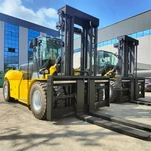
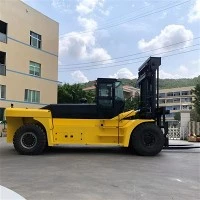
A low-profile cushion tire forklift integrates standard counterbalance mechanics with a compact chassis and tire setup optimized for indoor operation. Unlike pneumatic-tire models built for mixed or unpaved terrain, cushion tire forklifts require smooth, finished concrete or asphalt surfaces. Their reduced exterior dimensions minimize the physical footprint, lowering turning radius requirements in tight aisles.
The low-profile architecture is particularly relevant for facilities featuring:
- Restricted operating areas and narrow aisles
- Low-clearance doorways, mezzanines, and overhead obstructions
- High-density storage layouts
- Intermittent production-line staging
- Trailer loading and box truck operations
Selecting the proper unit requires analyzing the complete operational cycle, facility dimensions, and floor profiles rather than relying solely on nominal lifting capacity.
Key Specifications for Procurement
|
Specification |
What Buyers Should Confirm |
|
Rated Capacity |
Maximum weight the truck can lift under a specified load center and lift height |
|
Load Center |
Horizontal distance from the fork face to the center of gravity of the load (typically 500 mm or 24 inches) |
|
Maximum Lift Height |
Vertical reach required to service the highest rack tier or loading point |
|
Mast Type |
2-stage (simplex/duplex) or 3-stage (triplex) configurations with specific free lift profiles |
|
Overall Height |
Lowered mast height and overhead guard height relative to door clearances |
|
Overall Width |
Total transverse dimension dictating aisle clearance and turning space |
|
Overall Length |
Length measured to the fork face, impacting right-angle stacking aisles |
|
Turning Radius |
Minimum radius required for the truck to complete a full 180-degree turn |
|
Fork Dimensions |
Length, width, thickness, and mounting class |
|
Tire Type |
Smooth, treaded, or non-marking cushion tire compounds |
|
Power Type |
Internal combustion options including LPG, gasoline, or diesel configurations |
|
Ground Clearance |
Minimum distance from the underside of the chassis to the floor surface |
|
Service Weight |
Total unladen weight of the truck affecting floor load limits and transport |
|
Attachments |
Integrated side shifters, fork positioners, or specialized clamps |
Typical Applications
Manufacturing Plants: Transferring raw materials, sub-assemblies, and finished goods between production lines, assembly stations, and warehouse bays.
Warehouses: Transporting palletized goods within high-density indoor storage environments and staging zones.
Distribution Centers: Executing rapid cross-docking, consolidation, and short-distance material routing across smooth concrete surfaces.
Loading Docks: Operating inside enclosed trailers, box trucks, and loading dock bays where vertical clearance and tight turning are mandatory.
Industrial Production: Maintaining continuous material flow through controlled manufacturing cells and inventory holding areas.
Key Product Advantages
Low-Profile Chassis Design
The low-profile structural layout reduces the overall height and visual envelope of the truck. This geometry assists visibility and maneuverability in facilities with tight vertical and horizontal boundaries. Overall height dimensions and rear clearance profiles should be cross-referenced with facility blueprints prior to final selection.
Cushion Tires for Smooth Industrial Floors
Pressed-on cushion tires feature a solid rubber compound bonded to a steel band, providing a compact tire profile suited to hard, smooth indoor surfaces. They deliver stable load handling on finished concrete but are unsuited for loose aggregate, rough terrain, deep potholes, or unprotected outdoor yards.
Compact Counterbalance Layout
The rear counterweight balances heavy loads forward of the drive axle while maintaining a tight turning envelope. This configuration allows operators to navigate standard warehouse aisles and production workstations without excess overhang. Turning radius performance must be evaluated alongside truck width, length, and mast geometry.
Enhanced Operator Visibility
A low-profile rear counterweight and streamlined overhead guard support columns help improve rearward lines of sight during reverse travel. Visibility outcomes depend on the selected mast stage, load backrest height, attached accessories, and the dimensions of the load being transported.
Configuration Options
Forklift builds can be adjusted to match specific operational workflows and regional requirements:
Fork Options: Standard length variants, extended forks, and adjustable-spacing fork positioning sets.
Hydraulic Attachments: Integrated side shifters, fork positioners, carton clamps, and specialized handling fixtures. Confirm that attachment weight and lost load center are factored into capacity calculations.
Mast Configurations: Two-stage and three-stage full free-lift masts engineered to match ceiling heights and low-clearance stacking zones.
Powertrain Options: Internal combustion engines configured for LPG, gasoline, or diesel operation, paired with matched transmission systems.
Operator Environment: Ergonomic seating adjustments, steering column tilt, operator presence sensing systems, lighting packages, and auxiliary safety indicators.
How to Select the Right Low Profile Cushion Tire Forklift
Define the Load Profile
Evaluate the maximum and average weights of the materials handled during standard shifts. Confirm pallet dimensions, load stability, and the center of gravity. Ensure capacity ratings account for any specialized attachments that extend the load center.
Determine Lift Height and Vertical Clearance
Calculate the exact fork height needed to reach the highest storage tier or transport vehicle. Verify that the lowered mast height clears all facility entrance doors, low-hanging pipes, and production mezzanines.
Measure Facility Aisles and Turning Space
Map out physical constraints within the building, including aisle widths, corner clearances, loading dock plates, and staging areas. Compare the truck's right-angle stacking dimension against actual layout measurements to ensure smooth traffic flow.
Assess Floor Conditions
Inspect the operating surface. Cushion tires perform efficiently on clean, dry, and level concrete floors. If the facility features damaged joints, steep ramps, or transitions to outdoor gravel yards, cushion tire models may experience accelerated wear or traction loss.
Select the Powertrain
Choose internal combustion configurations based on fuel availability, refueling infrastructure, shift duration, and indoor ventilation systems. Verify that exhaust emissions comply with local workplace safety regulations for indoor equipment operation.
Quality and Production Verification
Export manufacturing standards require systematic inspection across core assemblies before equipment dispatch:
Structural Integrity: Frame welding, mast channels, overhead guard structure, and counterweight mounting bolts.
Hydraulic Performance: Cylinder sealing, pump pressure ratings, valve response, and hose integrity under load testing.
Drive and Steering: Axle alignment, steering response, brake efficiency, and transmission engagement.
Electrical and Safety: Circuit continuity, instrument panel readings, lighting function, and operator restraint mechanisms.
Final Audit: Verification of assembled specifications against the approved customer configuration sheet.
FAQ
Q: Can a low-profile cushion tire forklift be used outdoors?
A: They are engineered strictly for indoor use on clean, dry, and smooth concrete or asphalt surfaces. Operating them on gravel, dirt, or rough outdoor yards leads to rapid tire destruction, poor traction, and potential chassis damage due to low ground clearance.
Q: Why choose a low-profile model over a standard cushion tire forklift?
A: Low-profile models feature a reduced overall height and lowered overhead guard configuration designed specifically to clear low-hanging entryways, shipping containers, box trailers, and tight mezzanine levels where standard trucks cannot fit.
Q: Can cushion tires be swapped out for pneumatic tires if outdoor access is occasionally needed?
A: Generally, no. Forklift frames, steering axles, and wheel housings are built specifically for one tire type. Changing from cushion to pneumatic requires structural clearances that standard cushion frames do not accommodate.
Hot Tags: low profile cushion tire forklift, China low profile cushion tire forklift suppliers, factory, 7 0T forklift with Isuzu 6BG1, diesel 8 ton counterbalanced forklift, diesel small 5t forklift, FD40 FORKLIFT, Small 5 Ton Diesel Forklift, Small 5 Ton Diesel Forklift Work In Container