


Introduction
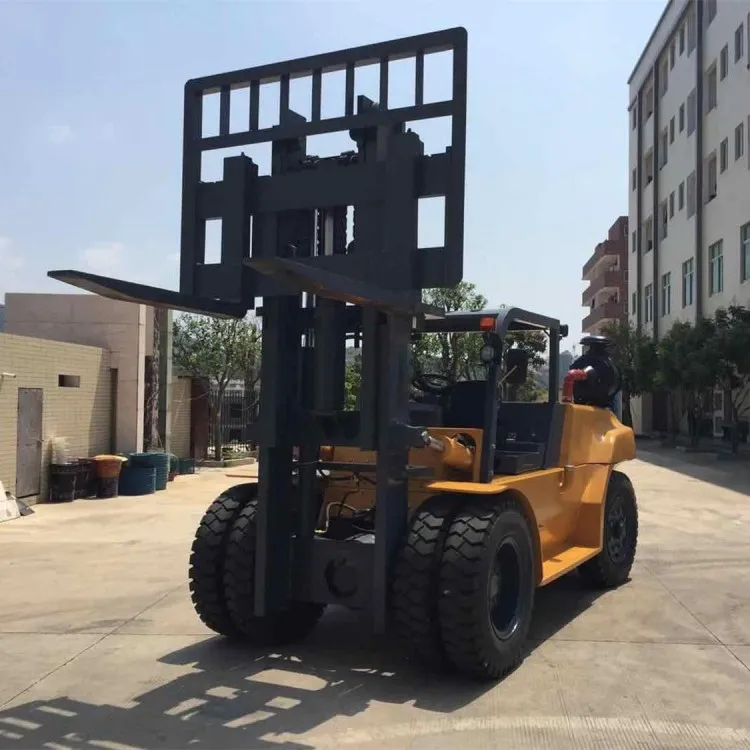
As global logistics, manufacturing, and infrastructure projects continue to scale up, demand for 10 ton diesel forklifts has increased steadily. These forklifts sit at a critical point between standard industrial forklifts and ultra-heavy container handling equipment, making them widely used in steel plants, stone yards, ports, warehouses, and construction-related logistics.
However, many buyers still approach the purchase of a 10 ton diesel forklift with light-duty forklift thinking-focusing mainly on rated capacity and price. In reality, operating conditions, duty cycles, fuel efficiency, compliance requirements, and after-sales support play a far greater role in long-term performance and cost.
This buying guide is designed to help professional buyers understand what truly matters when selecting a 10 ton diesel forklift.
The Hidden Costs
The initial purchase price of a forklift is only part of the total cost. Many operational issues stem from under-specified or poorly matched equipment.
Common hidden costs include:
- Reduced lifting performance under continuous heavy load
- Excessive fuel consumption due to inefficient engines
- Frequent maintenance caused by weak drivetrains or hydraulics
- Premature structural fatigue in frames and masts
- Downtime due to unavailable spare parts
Forklifts that perform well on paper but lack real-world durability often lead to higher lifetime costs, especially in multi-shift or outdoor operations.
Compliance & Regulations
For international projects, compliance is not optional-it directly affects import approval, insurance, and site operation.
Key compliance factors for 10 ton diesel forklifts:
- Emission standards (EU Stage III / V, EPA Tier 3 / 4)
- CE conformity for European markets
- ISO manufacturing and safety standards
- Local workplace safety and inspection requirements
A reliable supplier should clearly explain which markets the forklift is compliant with, rather than offering vague "global compliance" claims.
Supply Chain & Operational Value
A 10 ton diesel forklift is often a core production asset, not a backup machine. Its reliability directly affects material flow.
Operational value considerations:
- Stable performance under long operating hours
- Smooth power delivery for precise load control
- Compatibility with existing yard or warehouse layout
- Fuel efficiency during heavy lifting cycles
From a supply chain perspective, buyers should also evaluate:
- Lead time stability
- Availability of spare parts
- Ease of maintenance and service access
Equipment that integrates smoothly into daily operations delivers far greater value than machines optimized only for initial cost.


Brand & Consumer Experience
Brand value in heavy equipment is not about recognition alone-it reflects engineering consistency, quality control, and long-term support.
Key brand-related questions buyers should ask:
- Does the manufacturer specialize in heavy forklifts?
- Is there a track record in similar industries or regions?
- Are technical documents clear and practical?
- Is after-sales support responsive and structured?
A positive user experience-both for operators and maintenance teams-translates into higher productivity and fewer operational disruptions.
Case Studies
Case 1: Steel Processing Facility
A steel plant operating in three shifts replaced older 8 ton forklifts with 10 ton diesel forklifts to reduce handling cycles. By selecting forklifts with reinforced masts and high-torque engines, the facility reduced rehandling time and achieved a measurable improvement in daily throughput.
Case 2: Stone and Marble Yard
A stone yard handling granite blocks required forklifts capable of stable lifting on uneven ground. After upgrading to properly specified 10 ton diesel forklifts with heavy-duty axles and optimized hydraulics, equipment downtime was significantly reduced during peak seasons.
These cases highlight the importance of application-driven selection, rather than relying on nominal capacity alone.
About Us
We specialize in supplying diesel forklifts, heavy forklifts, reach stackers, and container handling equipment for international markets. Our solutions are designed around real operational requirements, not generic specifications.
What we offer:
- Application-based equipment configuration
- Compliance-ready models for global markets
- Export-oriented packaging and logistics support
- Spare parts planning and technical documentation
Our goal is to help buyers deploy equipment that performs reliably throughout its full service life.
Choosing the right 10 ton diesel forklift requires more than comparing prices or lifting capacity. Buyers must consider hidden operational costs, regulatory compliance, supply chain reliability, and long-term performance.
When properly specified, a 10 ton diesel forklift becomes a dependable asset that supports productivity, safety, and cost control across demanding operations.
Looking for expert guidance or detailed specifications?
Contact our team to discuss your application and receive a tailored forklift recommendation for your project.


