


Introduction
Container yards operate under constant pressure to handle growing volumes, tighter schedules, and limited space. In this environment, equipment selection has a direct impact on throughput, operational cost, and yard flexibility.
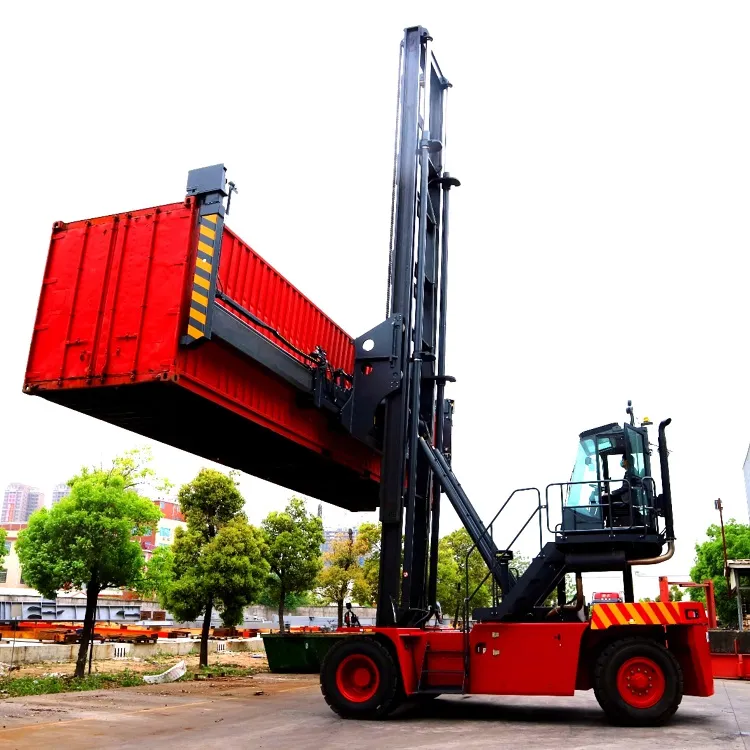
Among various container handling solutions, reach stackers are widely adopted in ports, inland container depots, and logistics yards because they significantly improve operational efficiency without the infrastructure demands of larger crane systems.
This article explains how reach stackers enhance container yard efficiency and why they remain a preferred solution for many professional operators.
Higher Stacking Density Improves Yard Utilization
One of the most immediate efficiency gains from using reach stackers is improved space utilization.
Key advantages:
- Ability to stack containers 3 to 5 rows high
- Reduced ground footprint compared to rubber-tired gantry cranes (RTGs)
- Flexible stacking patterns based on yard layout
By increasing vertical stacking capacity, reach stackers allow operators to handle more containers within the same yard area, delaying or eliminating the need for costly yard expansion.
Faster Container Handling Cycles
Reach stackers are designed for quick lifting, positioning, and transport, which directly improves cycle time.
Efficiency factors include:
- Powerful hydraulic systems for fast lifting and lowering
- Precise spreader control for quick container engagement
- Short travel distances due to flexible stacking arrangements
Compared to equipment that requires fixed lanes or rails, reach stackers can adapt routes dynamically, reducing idle time and unnecessary repositioning.
Operational Flexibility in Mixed Workloads
Container yards rarely handle only one type of task. Reach stackers support multiple operational scenarios, such as:
- Loading and unloading trucks
- Rehandling containers within the yard
- Transferring containers between yard blocks
- Handling both loaded and empty containers
This flexibility allows operators to respond quickly to changes in container flow without switching equipment, improving overall yard responsiveness.
Reduced Infrastructure Requirements
Unlike gantry crane systems, reach stackers require minimal infrastructure investment.
Key benefits:
- No rails, fixed lanes, or overhead structures
- Lower installation and setup costs
- Easy relocation within or between yards
For small to medium container yards, inland depots, or temporary project sites, reach stackers offer a cost-effective efficiency upgrade without long construction timelines.


Improved Truck Turnaround Time
Truck waiting time is a critical performance indicator for container yards. Reach stackers contribute to faster truck turnaround by:
- Allowing direct container access without rehandling multiple stacks
- Supporting flexible truck positioning
- Reducing queue congestion at fixed handling points
Faster truck processing improves customer satisfaction and increases daily throughput without extending operating hours.
Enhanced Operator Visibility and Control
Modern reach stackers are designed with operator efficiency and safety in mind.
Key features include:
- Elevated cabins for clear container visibility
- Ergonomic controls for precise positioning
- Load monitoring and stability systems
Better visibility reduces positioning errors, minimizes container damage, and speeds up handling cycles-especially in high-density stacking areas.
Lower Total Cost of Ownership Compared to Alternatives
While reach stackers are heavy-duty machines, their overall cost structure is often favorable when evaluated correctly.
Efficiency-related cost advantages:
- Lower capital investment than crane-based systems
- Reduced maintenance complexity
- Fewer operators required per container movement
- High utilization across multiple tasks
When measured by cost per container handled, reach stackers deliver strong value, particularly in yards with variable throughput.
Adaptability to Yard Growth and Layout Changes
Container yards evolve over time. Reach stackers support growth by offering:
- Easy redeployment to new stacking zones
- Compatibility with different container sizes (20ft, 40ft, 45ft)
- Adjustable operating patterns as traffic increases
This adaptability ensures that equipment continues to support efficiency even as yard requirements change.
Reach stackers improve container yard efficiency by combining high stacking capability, fast handling cycles, operational flexibility, and lower infrastructure dependency. For many ports and logistics yards, they represent the most practical balance between performance and cost.
By enabling higher yard density, faster truck turnaround, and adaptable operations, reach stackers help operators handle growing container volumes while maintaining control over space and operating expenses.
Compliance & Certification


