Introduction
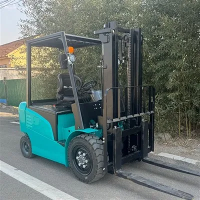
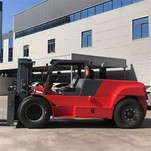
Selecting a reach stacker is a critical decision for port operators, container terminals, logistics yards, and industrial facilities. Unlike standard forklifts, reach stackers handle heavy loads, stack containers efficiently, and operate continuously in demanding conditions.
Choosing the wrong model can lead to reduced productivity, higher operational costs, or safety risks. This guide highlights the key specifications and features buyers should evaluate before purchasing a reach stacker to ensure it meets both operational and long-term business needs.
1. Rated Lifting Capacity
The most obvious specification is the lifting capacity, typically ranging from 35 to 45 tons for standard container handling.
Considerations:
- Actual load vs rated capacity: Rated capacity is usually measured under ideal conditions (standard load center, flat ground). Real operational loads may exceed or shift the center of gravity.
- Stacking needs: Ensure the reach stacker can lift containers at the heights and rows you require, including both loaded and empty containers.
Always review the load chart, which indicates capacity at various stacking heights and reach distances.
2. Maximum Lifting Height and Stacking Rows
Reach stackers differ in their ability to stack containers multiple rows high. Common configurations include 3-high, 4-high, and occasionally 5-high stacking.
Considerations:
- Yard layout and space constraints
- Container flow and stacking frequency
- Whether both empty and fully loaded containers will be handled
Choosing a machine with inadequate stacking height can create bottlenecks, while over-specifying height can increase costs unnecessarily.
3. Engine Type and Power
The engine affects performance, reliability, and compliance with local regulations. Most reach stackers are diesel-powered, though some hybrid models exist.
Considerations:
- Engine power output under full load
- Emission compliance (EU Stage V, Tier 3/4, etc.)
- Fuel efficiency for continuous operation
- Availability of engine spare parts in your region
A reliable engine ensures smooth operation and reduces downtime in heavy-duty applications.
4. Transmission and Drivetrain
Efficient transmission and robust drivetrain are essential for handling heavy loads and rough terrains.
Key Specs:
- Automatic vs power-shift transmission
- Axle capacity and stability under load
- Differential locks for traction on uneven surfaces
A well-designed drivetrain minimizes maintenance and ensures safe operation even in challenging yard conditions.
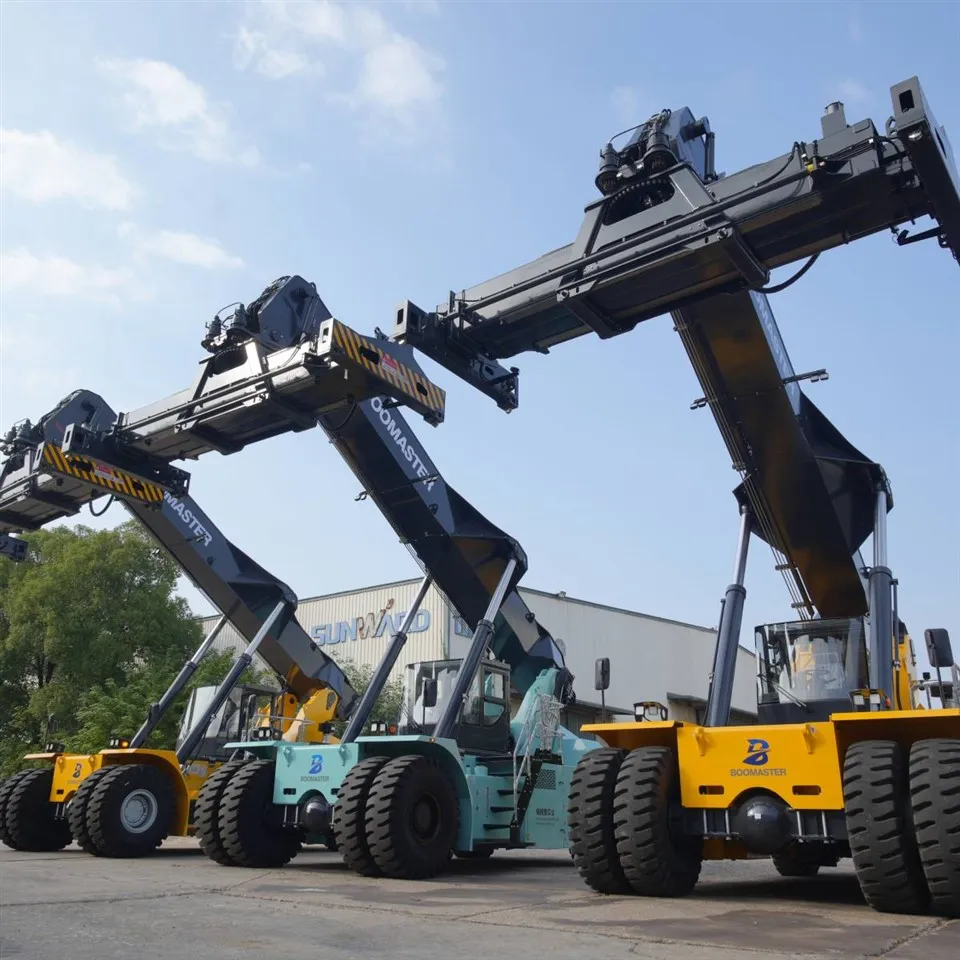
5. Spreader Compatibility
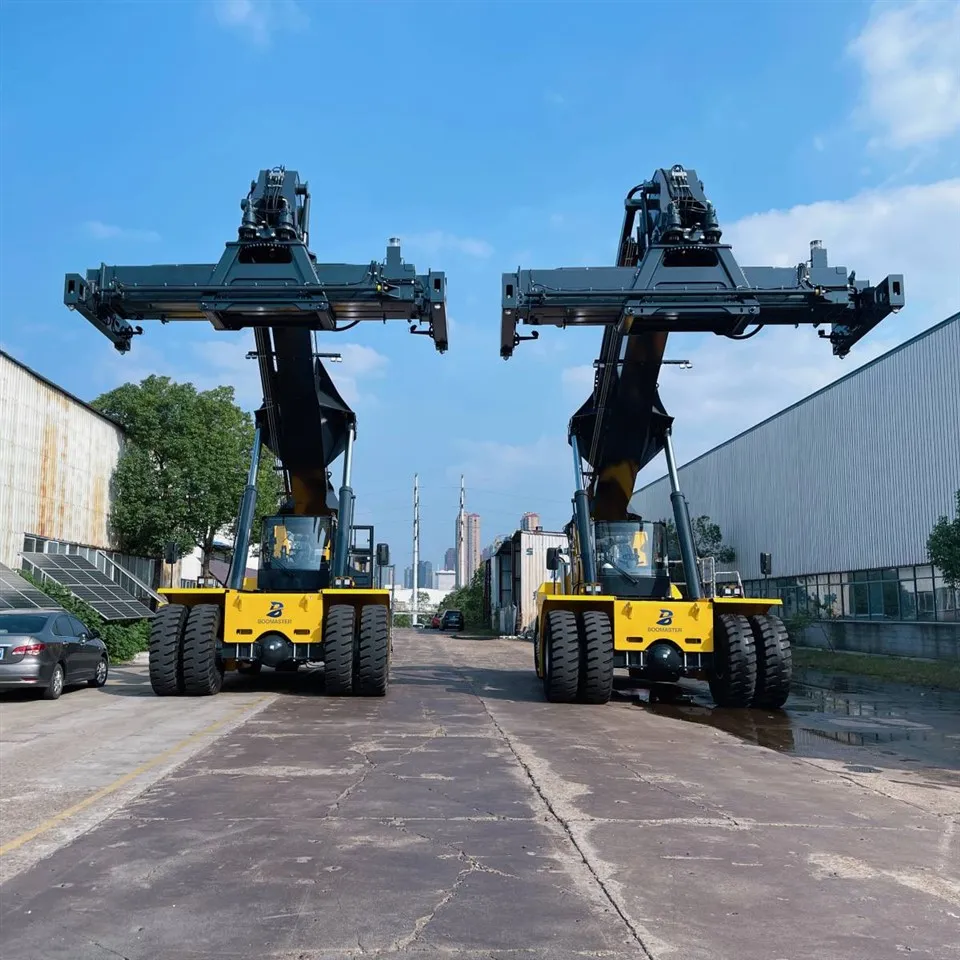
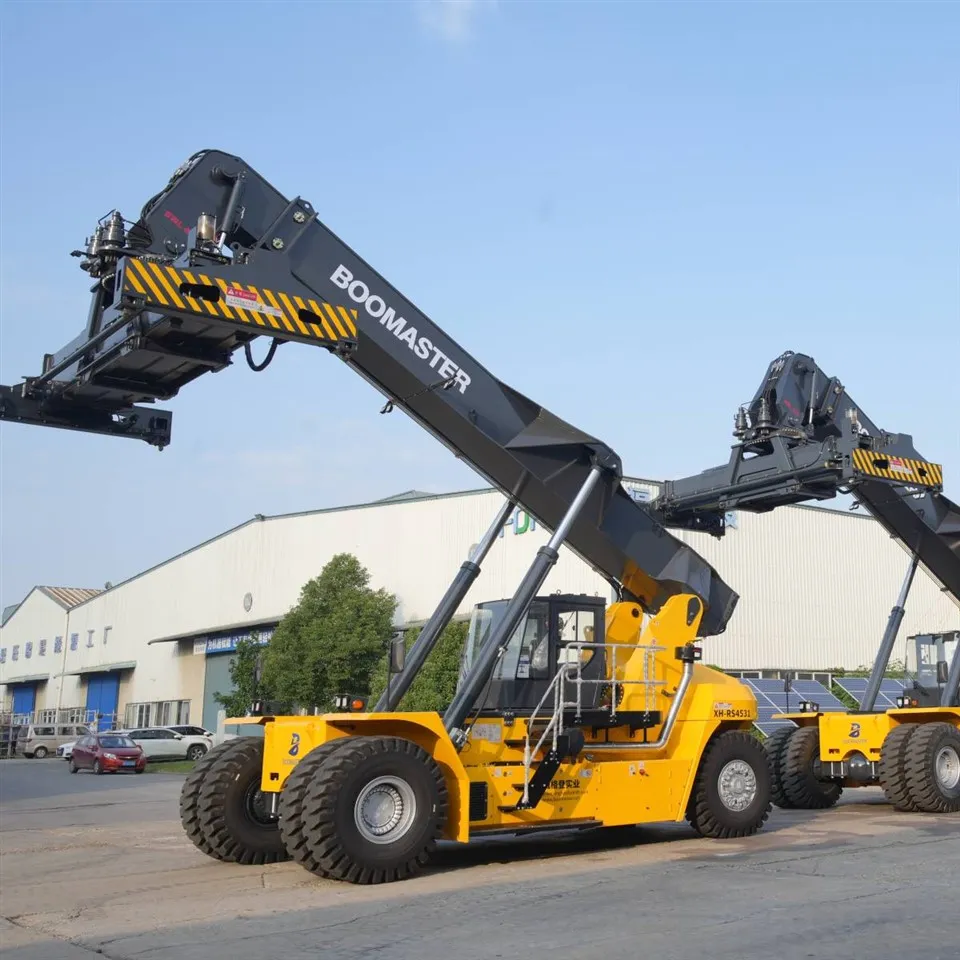
The spreader is the interface between the reach stacker and the container.
Considerations:
- Standard container lengths: 20ft, 40ft, 45ft
- Telescopic vs fixed spreaders
- Twist-lock mechanisms reliability
- Quick-change capabilities for handling multiple container sizes
Flexible spreader systems save time and increase operational efficiency.
6. Hydraulic System Performance
The hydraulic system controls lifting, tilting, and load stabilization.
Considerations:
- Pump capacity and pressure
- Smooth lifting under full load
- Heat management in high-temperature environments
- Maintenance requirements
Hydraulic efficiency directly impacts cycle time and operator precision.
7. Operator Cabin and Controls
Operator comfort and visibility are critical for productivity and safety.
Features to Evaluate:
- Ergonomic seat and adjustable controls
- High visibility for stacking operations
- Load monitoring and stability control systems
- User-friendly joysticks or touchscreen controls
A comfortable operator is more efficient and less prone to errors.
8. Maintenance and Service Access
Easy maintenance reduces downtime and long-term costs.
Considerations:
- Accessibility of engine, hydraulics, and filters
- Local availability of spare parts
- Service network and technical support
- Clear manuals and training for operators
Machines designed for easier maintenance usually achieve higher uptime.
9. Customization Options
Every yard and operation is different. Many suppliers offer customization for:
- Reinforced cooling systems for hot climates
- Anti-corrosion coatings for coastal environments
- Tire selection based on ground conditions
- Optional attachments for specialized handling
Custom configurations ensure the reach stacker aligns with real-world operational conditions.
A properly specified reach stacker balances capacity, height, reach, engine performance, hydraulic efficiency, and operator comfort. Over-specification increases cost, while under-specification limits productivity and safety.
By carefully evaluating each of these specifications, buyers can select a reach stacker that maximizes efficiency, safety, and long-term return on investment.
Next Steps for Buyers
- Explore our Reach Stacker Product Page for detailed specifications, models, and attachments.
- Consult our team for expert guidance on matching a reach stacker to your yard layout and container handling requirements.