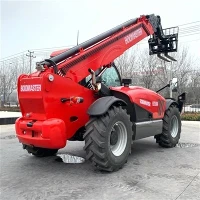
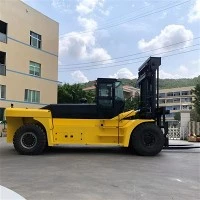
The 3-wheel electric sit-down forklift is engineered for pallet handling, loading, unloading, and rack replenishment where floor space and turning clearance are restricted.
Its three-wheel steering architecture reduces the physical space required for turning compared to conventional four-wheel counterbalance trucks, while retaining the seated operator layout necessary for continuous, repetitive material handling tasks.
Successful procurement requires evaluating capacity, load center, lift height, overall width, turning radius, aisle requirements, battery configuration, and daily duty cycle as an integrated package rather than relying on wheel count alone.
Key Technical Parameters
|
Specification Category |
Evaluation Parameter |
|
Forklift Classification |
Electric sit-down counterbalance forklift |
|
Steering Configuration |
3-wheel rear-wheel drive and steer |
|
Rated Capacity |
Determined by model specification |
|
Load Center |
Matched to rated capacity and load dimensions |
|
Lift Height |
Standard and optional mast configurations |
|
Mast Type |
Duplex or triplex options based on clearance and height requirements |
|
Power Source |
Lead-acid or lithium battery configuration |
|
Charging System |
Matched to battery capacity and local electrical supply |
|
Turning Radius |
Model-dependent; confirmed in final specification |
|
Overall Width |
Dimension-controlled for compact maneuverability |
|
Fork Dimensions |
Selected according to pallet size and load geometry |
|
Tire Type |
Solid rubber or non-marking tires for indoor industrial floors |
|
Hydraulic & Drive |
High-efficiency electric traction and pump motors |
Ergonomics and Operator Compartment
For multi-shift industrial applications, operator interface design influences efficiency, fatigue mitigation, and safety:
Seated Layout
Provides stable body support for continuous travel and frequent material handling operations.
Visibility Design
Mast channels and overhead guard layouts are configured to maintain a clear line of sight during fork positioning and stacking.
Control Accessibility
Steering wheels, hydraulic levers, and directional controls are positioned within natural reach to reduce repetitive physical strain.
Operator Protection
Standard safety restraint systems, adjustable seating, and clear instrumentation panels support daily compliance.
How to Select the Right Configuration
Base Selection on Maximum Routine Load
Use the heaviest standard load rather than the average pallet weight. If standard pallets weigh 1,200 kg but occasional loads reach 1,500 kg, configure the truck capacity for the heavier threshold.
Verify the Load Center
Rated capacity is established at a specific load center distance. Long, irregular, or off-center loads shift the center of gravity forward, reducing lifting capacity. Provide accurate load dimensions during inquiry.
Specify True Lift Height
Define the exact stacking height rather than nominal building height. Evaluate overhead obstructions, doorway clearances, lowest beam heights, and free-lift requirements when selecting duplex or triplex masts.
Calculate Operating Aisle Requirements
Match pallet dimensions, rack configurations, and turning characteristics to verify that the truck can safely enter, lift, and exit storage aisles.
Match Battery Capacity to the Duty Cycle
Evaluate operating hours per shift, travel distance, ramp gradients, and charging opportunities. Select lead-acid systems for predictable single-shift schedules or lithium systems for multi-shift operations requiring opportunity charging.
Maintenance and Serviceability
Minimizing equipment downtime is a key operational metric for fleet owners and industrial facilities. The service architecture of the 3-wheel electric sit-down forklift is structured to streamline routine maintenance intervals:
Component Access: Removable side panels and hinged covers provide direct access to drive motors, hydraulic pumps, and electronic controller units for routine inspections.
On-Board Diagnostics: Integrated controller fault-code displays allow technicians to identify electrical anomalies and performance irregularities without external diagnostic tools.
Simplified Battery Maintenance: Lead-acid variants feature clear electrolyte level indicators and accessible watering ports, while lithium-ion configurations eliminate daily liquid maintenance requirements entirely.
Component Standardization: High-wear parts, including steering linkages, brake assemblies, and hydraulic seals, are designed for straightforward replacement using standard shop tooling.
Battery and Charging Options
Lead-Acid Batteries
- Suited for traditional fleets with scheduled charging routines.
- Predictable daily operation with established battery-changing infrastructure.
- Lower initial equipment investment.
Lithium-Ion Batteries
- Suited for intensive multi-shift operations.
- Eliminates daily battery maintenance and watering.
- Supports opportunity charging during short breaks.
- Requires matching the charger specification to local electrical mains voltage and frequency.
Manufacturing and Quality Control
Primary Inspection Checks
Fork structural integrity and dimension compliance
Mast synchronization and smooth vertical travel
Hydraulic pressure holding and leak prevention
Steering responsiveness and turning clearance
Braking efficiency and emergency stop response
Traction motor output and controller calibration
Safety device operation, lighting, and warning systems
FAQ
Q: What is a 3-wheel electric sit-down forklift?
A: It is a battery-powered counterbalance truck featuring a three-wheel chassis layout and a seated operator position, designed for high maneuverability in confined indoor spaces.
Q: Is a 3-wheel model better than a 4-wheel model?
A: A three-wheel model provides tighter turning performance in restricted spaces, whereas a four-wheel model may offer greater stability margins for heavier loads or less uniform floor conditions.
Q: What load center should be specified?
A: The load center must match the actual center of gravity of the transported goods. Long or unbalanced loads require customized capacity calculations.
Q: Can lithium batteries be specified?
A: Lithium configurations are available for compatible models, matched to the facility's operating schedule and local power supply.
Q: What information is required to receive an accurate quotation?
A: Provide maximum load weight, load dimensions, load center, required lift height, aisle width, pallet type, working hours per shift, number of shifts, floor conditions, and destination requirements.
Hot Tags: electric sit down 3 wheel forklift, China electric sit down 3 wheel forklift suppliers, factory, 2 ton forklift truck, 3 ton lead acid electric forklift, 4 ton electric forklift for warehouse, electric 2 ton forklift, electric forklift truck 3 5 ton, lithium battery 4 ton forklift truck