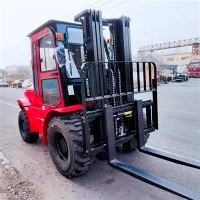
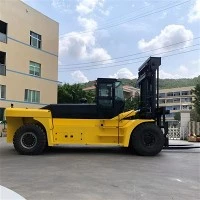
Three-wheel electric forklift trucks utilize a battery-powered counterbalance chassis with a single rear-wheel steering configuration. This layout provides a tight turning envelope and high maneuverability, making them suitable for pallet handling in warehouses, manufacturing plants, distribution centers, and paved facilities where operating space and aisle dimensions are limited.
Selecting this configuration requires analyzing actual load weight, load center, lift height, aisle clearance, and daily operating cycles rather than relying on nominal capacity alone.
Key Selection Parameters
|
Parameter Category |
Specification / Configuration |
|
Rated Load Capacity |
Configuration dependent |
|
Standard Load Center |
Configuration dependent |
|
Lift Height |
Multiple mast configurations available |
|
Chassis Configuration |
Three-wheel electric counterbalance |
|
Drive System |
Electric motor integration |
|
Maneuverability |
Compact turning radius for restricted spaces |
|
Energy System |
Matched battery and industrial charger packages |
|
Handling Attachments |
Configurable forks and hydraulic options |
Typical Application Areas
Warehousing: Pallet transfer between receiving docks, high-density racking zones, and dispatch areas.
Manufacturing Plants: Transporting raw materials, work-in-progress components, and finished goods between production lines.
Distribution Centers: High-frequency movement across staging lanes and inventory storage locations.
Packaging and Light Industrial Facilities: Indoor material handling where emission control and low noise levels are operational priorities.
Power System and Battery Selection
Electrical configuration must match the shift duration and facility charging infrastructure rather than relying solely on battery capacity ratings.
Operational Factors to Evaluate:
Daily operating hours per shift
Number of shifts per day
Travel distance and ramp usage
Available charging windows and infrastructure
Available Energy Options:
Lead-acid traction batteries with appropriate maintenance requirements
Lithium-ion battery systems for opportunistic charging routines
Matched industrial chargers meeting local electrical standards
Mast, Fork, and Attachment Configurations
Mast Options
Duplex or triplex mast structures
Standard, high-lift, or container-friendly heights
Free-lift configurations for low-ceiling operations
Fork and Attachment Options
Fork length, width, and thickness matched to pallet geometry
Integral or hang-on side shifters
Fork positioners for variable pallet sizes
Load-specific hydraulic attachments
Safety and Ergonomics
Operator Protection: Robust overhead guard structures designed to meet structural safety standards against falling objects.
Visibility Profile: Mast channel layouts engineered to maximize forward field of view during stacking and travel.
Control Layout: Ergonomically positioned hydraulic levers and steering columns designed to minimize operator fatigue during high-frequency shifts.
Stability Design: Low center of gravity layout and automated speed reduction during tight turns to enhance lateral stability.
Freight and Container Loading Logistics
Export delivery efficiency depends on precise dimensional planning and safe container consolidation. Equipment shipments can be organized for optimal maritime transport through verified handling protocols:
Container Compatibility: Dimensional profiling for standard dry containers or high-cube shipping configurations.
Mast and Guard Clearance: Breakdown or secured low-height positioning to accommodate doorway and ceiling restrictions inside shipping containers.
Weight Distribution: Axle and battery weight distribution management to ensure safe lashing, blocking, and bracing during transit.
Loading Documentation: Photographic pre-shipment loading records, packing lists, and gross weight verification provided prior to vessel departure.
FAQ
Q: What defines a 3 wheel electric forklift truck?
A: It is a battery-powered counterbalance truck using a three-wheel layout to achieve a compact turning radius and operate effectively in restricted spaces.
Q: Is a 3 wheel forklift capable of operating in narrow aisles?
A: Yes, maneuverability is its primary design advantage. However, aisle clearance must be validated using the truck's overall dimensions, turning radius, and pallet overhang rather than nominal width alone.
Q: Are lithium-ion batteries available for this equipment?
A: Lithium-ion configurations can be integrated based on model availability, duty cycles, and charging infrastructure requirements.
Q: Can specialized attachments be installed?
A: Hydraulic attachments such as side shifters and fork positioners can be integrated according to load requirements and hydraulic circuit availability.
Q: Is the truck suitable for outdoor use?
A: It is designed primarily for indoor or smooth, paved outdoor surfaces. For rough terrain, unpaved yards, or construction sites, rough-terrain models should be evaluated instead.
Hot Tags: 3 wheel electric forklift truck, China 3 wheel electric forklift truck suppliers, factory, 2 5 ton 7 m telehandler, 2 5 ton forklift reach truck, 4 Ton Electric Forklift, dusty 4 ton lithium battery forklift truck, flourmill 5 ton electric forklift, how to drive 7 ton electric forklift truck