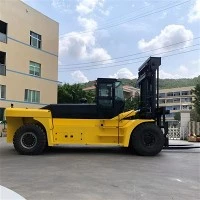
The Lithium Ion 3 Wheel Electric Forklift combines a counterbalance lifting system with a compact three-wheel chassis and lithium-ion battery power.
The three-wheel steering configuration is engineered primarily for tight-space maneuverability. Unlike conventional four-wheel counterbalance trucks, the rear-wheel steering design allows a significantly tighter turning radius, making this model optimal for narrow aisles, high-density warehouses, and confined production facilities.
The integrated lithium-ion power system serves as a high-efficiency alternative to internal-combustion engines and lead-acid batteries, supporting opportunity charging, zero exhaust emissions, and minimal routine maintenance.
Product Specifications
|
Item |
Configuration Details |
|
Product Type |
3-Wheel Electric Counterbalance Forklift |
|
Power Source |
Lithium-ion battery system |
|
Steering Configuration |
Three-wheel rear-drive geometry |
|
Primary Application |
Indoor and semi-indoor material handling |
|
Load Capacity Range |
Configurable based on model specifications |
|
Mast Options |
2-stage / 3-stage full free-lift configurations |
|
Battery System |
Matched to operational duty cycle and site power |
|
Charging Specification |
High-efficiency fast charger matched to battery capacity |
|
Drive System |
AC drive motor architecture |
|
Operating Environment |
Warehouses, distribution centers, manufacturing workshops |
Performance & Technical Advantages
High-Energy Efficiency: Lithium-ion technology delivers a high energy conversion rate of over 95%, significantly reducing energy loss during charging and discharging cycles compared to traditional lead-acid alternatives.
Zero Maintenance Chemistry: Sealed, maintenance-free battery design eliminates the need for water topping, electrolyte checks, acid spill cleanup, and dedicated battery room ventilation systems.
Constant Power Output: Maintains stable voltage and consistent lifting/driving performance throughout the entire discharge cycle, avoiding the operational slow-down typically experienced as lead-acid batteries drain.
Advanced Thermal Management: Integrated Battery Management System (BMS) continuously monitors cell temperature, voltage, and current to prevent overheating, overcharging, and deep discharge.
Typical Applications
Warehousing
Pallet transport, rack replenishment, and high-density storage management.
Manufacturing Plants
Moving raw materials, work-in-progress components, and finished goods between production lines and storage zones.
Distribution Centers
Rapid staging, receiving, and dispatch operations requiring high maneuverability.
Loading Docks
Trailer loading and unloading where compact dimensions and precise handling are mandatory.
Procurement & Configuration Guide
To ensure the equipment matches your operational reality, evaluate the following parameters before ordering:
Load Parameters: Define maximum load weight, dimensions, and load center distance. Do not rely solely on nominal pallet weight.
Lift & Clearance Constraints: Verify maximum stacking height, lowered mast height, and overhead structural clearances.
Aisle & Turning Geometry: Supply narrowest aisle dimensions and rack configurations to verify right-angle stacking requirements.
Duty Cycle & Battery Matching: Detail operating hours per shift, number of shifts daily, and available charging windows to determine correct battery capacity.
Attachment Integration: Identify required material handling accessories (e.g., side shifters or fork positioners) as they alter the effective load center and residual capacity.
Product Maintenance Guidelines
Daily Pre-Operation Checks: Inspect tire conditions, check hydraulic fluid levels, test the horn and lights, verify emergency brake functionality, and ensure the seat-switch safety interlock operates correctly.
Battery & Charging Care: Keep the charging port clean and dry. Avoid exposing the lithium-ion battery to extreme ambient temperatures, and follow recommended opportunity charging protocols to extend cell longevity.
Mast & Chain Lubrication: Periodically clean and lubricate lift chains, mast channels, and sliding bearings using recommended industrial grease to prevent premature wear and ensure smooth lifting.
Brake & Hydraulic Inspection: Regularly check the regenerative braking system responsiveness and inspect hydraulic hoses for signs of wear, micro-cracks, or fluid seepage.
Operator Ergonomics & Safety Systems
Ergonomic Layout: Adjustable steering column, suspension seating, and intuitive pedal placement to reduce operator fatigue during multi-shift operations.
Visibility: Optimized mast profile and overhead guard design to maximize forward and upward line of sight.
Stability Control: Low center of gravity and automated speed reduction during tight turns to prevent tipping risks.
Braking & Safety Interpuncts: Regenerative braking system, emergency power disconnect, and seat-switch safety interlocks that halt operation when the driver leaves the seat.
FAQ
Q: What is a lithium-ion 3-wheel electric forklift?
A: It is a counterbalance electric forklift powered by a lithium-ion battery featuring a three-wheel chassis layout designed to maximize maneuverability in confined spaces.
Q: Why choose a 3-wheel model over a 4-wheel model?
A: The 3-wheel configuration provides a tighter turning radius, making it ideal for narrow indoor aisles. A 4-wheel truck is generally selected when heavy-duty outdoor stability or uneven terrain is the primary concern.
Q: Is the battery and charger included?
A: The electrical package is configured based on your operational profile. The battery capacity and charger output are matched specifically to your shift schedule and site power supply.
Q: How do I determine the correct battery capacity?
A: Battery selection depends on daily operating hours, travel distances, lift frequency, and available charging windows rather than Ah ratings alone.
Q: Can the forklift be opportunity charged?
A: Yes, lithium-ion systems support flexible short-duration charging during breaks, provided the charger and battery management system are correctly matched.
Q: Can application-specific attachments be installed?
A: Yes. However, because attachments alter the effective load center and truck stability, they must be factored into the capacity calculation prior to final ordering.
Hot Tags: lithium ion 3 wheel electric forklift, China lithium ion 3 wheel electric forklift suppliers, factory, 3 5 Ton Electric Forklift, 3 5t electric counterbalanced forklift truck, 4 ton electric forklift for warehouse, 5000 lb electric forklift, 8 ton forklift truck for pharmaceutical Industry, electric portable forklift