


Articulated Forklift or Reach Truck: The Short Answer
An articulated VNA forklift usually offers the stronger space-saving option when aisle width is the main constraint. Current Xinghao data for the 2.5 ton articulated VNA lists stacking aisles of about 2.0 m for an 800×1200 mm pallet and about 2.2 m for a 1000×1200 mm pallet. Xinghao's current electric reach truck range uses wider working aisles, with about 2.8–3.0 m published as a general planning reference for standard pallet stacking.
That does not automatically make the articulated truck the better warehouse choice. Reach trucks can be simpler to integrate where aisles are already wide enough, rack access is conventional and the travel pattern is concentrated inside the warehouse. The correct comparison is therefore not only truck versus truck, but complete warehouse layout versus complete warehouse layout.
The Two Trucks Create Space in Different Ways
An articulated forklift rotates its front mast section relative to the rear chassis so the load can align with the rack while the truck remains inside a narrow aisle. A reach truck uses a compact chassis and a mast or reach mechanism that moves the forks toward the pallet position while the truck remains aligned in the aisle.

The articulated front section changes the rack-approach geometry and allows the truck to work within a narrower stacking aisle when the complete layout supports it.

The reach truck uses a compact warehouse chassis and reach mechanism for rack access without articulating the complete front truck section.
Articulated Forklift vs Reach Truck for Warehouse Space
| Decision Factor | Articulated VNA Forklift | Electric Reach Truck |
|---|---|---|
| Aisle-space priority | Strong option where the project is actively trying to reduce rack aisle width. | Suitable where the available aisle already supports a conventional reach-truck layout. |
| Current Xinghao aisle reference | 2.5 ton VNA: about 2.0 m with 800×1200 mm pallet and about 2.2 m with 1000×1200 mm pallet. | Electric reach truck range: about 2.8–3.0 m is published as a general standard-pallet planning reference. |
| Rack approach | Front mast section articulates toward the rack. | Reach mechanism moves the load toward the rack while the chassis remains in the aisle. |
| General warehouse travel | Articulated configuration can move between narrow aisles and other suitable hard-surface warehouse areas. | Primarily optimized for indoor rack and aisle handling. |
| Capacity examples in current range | Xinghao VNA models currently include 1.5, 2.0, 2.5 and 3.0 ton classes. | Current reach-truck range includes configurations from about 1.5 to 2.5 tons depending on model. |
| High-rack selection | Mast height and residual capacity must be checked for the selected VNA model. | Current reach-truck models include mast configurations from approximately 6 m up to 12.5 m depending on series. |
| Warehouse redesign value | Usually stronger when the project is rebuilding rack rows around narrower aisles. | Often easier to retain when existing rack aisles and operating methods already suit reach-truck geometry. |
Why a Smaller Aisle Can Change the Entire Rack Layout
Warehouse space is not saved because the forklift itself occupies less floor area while parked. The larger opportunity comes from repeating a narrower working aisle across several rack rows.
For example, assume a proposed layout contains six working aisles. If one verified truck layout needs 2.9 m per aisle and another verified layout needs 2.1 m, the difference is 0.8 m per aisle.
Across six aisles, that theoretical difference represents 4.8 m of building width that can potentially be reassigned to rack modules, access routes or other functions.
This is only a layout illustration. It is not a guarantee that every VNA project saves 0.8 m per aisle. The exact comparison must use the selected truck, pallet, rack, clearances and site rules.
Reach-truck planning aisle: 2.9 m
VNA planning aisle: 2.1 m
Difference per aisle: 0.8 m
Six repeated aisles: 0.8 m × 6 = 4.8 m
Do Not Compare a VNA Minimum with an Unrelated Reach-Truck Number
A valid comparison starts with the same pallet, the same entry direction, similar load conditions and the actual model under consideration. Otherwise the result can exaggerate or hide the real space difference.
The current 2.5 ton Xinghao VNA data demonstrates why pallet size matters. Its published stacking aisle changes from about 2,000 mm with an 800×1200 mm pallet to about 2,200 mm with a 1000×1200 mm pallet. The 3 ton VNA publishes about 2,200 and 2,400 mm for those same named pallet formats.
A reach-truck comparison should be calculated with the same pallet format and the specific reach-truck chassis rather than assuming the broad 2.8–3.0 m category reference applies to every model.
- Use the same pallet deck size in both calculations.
- State the fork-entry direction.
- Measure the loaded pallet, including overhang.
- Include rack protectors and fixed obstructions.
- Check the cross aisle and aisle entrance separately.
- Confirm capacity at the highest required fork position.
Space Savings Can Be Lost Outside the Rack Aisle
A truck can fit between two rack rows and still fail the overall warehouse route. Compare four separate movements before changing the rack layout.
Aisle Entry
Check whether the truck can align from the cross aisle without contacting rack-end protection or adjacent loads.
Rack Approach
Compare the articulated sweep or reach movement using the real pallet and fork configuration.
Transfer Route
Measure doors, intersections, staging zones and other travel paths between storage and dispatch.
Pickup & Deposit
Confirm turning and alignment space at docks, staging points and pallet-transfer locations.
When the Reach Truck Is Still the Better Warehouse Choice
Choosing an articulated forklift purely because it can work in a narrower aisle can create unnecessary complexity if the warehouse does not need that extra density.
A reach truck remains a strong comparison where the racking is already installed, the current aisle is wide enough, travel is predominantly indoors and the warehouse team is satisfied with a conventional reach-truck operating method.
When an Articulated Forklift Creates More Layout Value
The articulated option becomes more attractive when warehouse expansion is constrained and the design team is prepared to use a narrower rack module across multiple aisles.
It can also be useful where the same truck needs to leave the rack aisle and move pallets through suitable transfer areas, reducing the need to hand the pallet from a dedicated aisle truck to another warehouse vehicle.
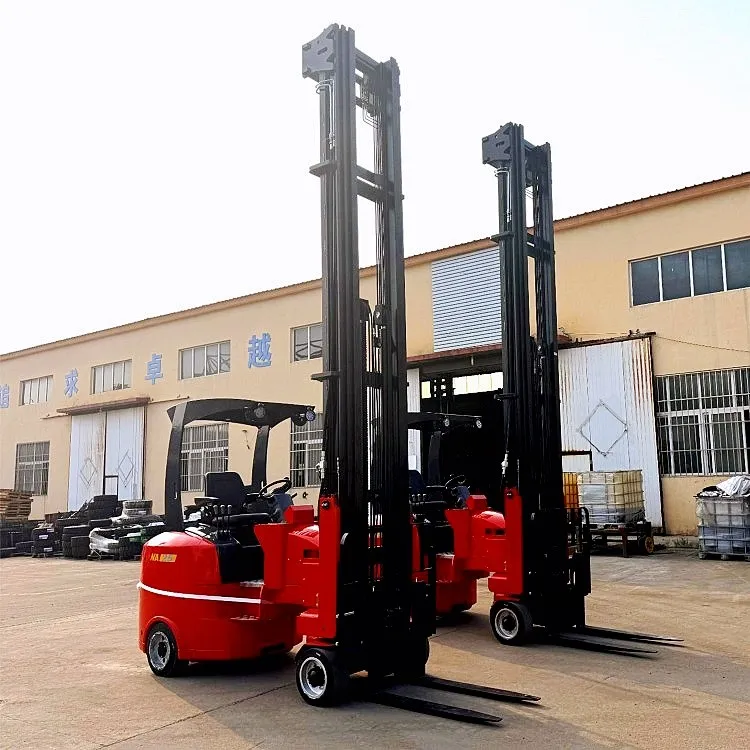
VNA selection is most valuable when aisle reduction is repeated across enough rack rows to materially change the warehouse layout.

Reach-truck selection also includes operator format, battery arrangement, rack height, residual capacity and shift routine-not aisle width alone.
The Narrower the Aisle, the More Important the Floor and Mast Become
A narrow aisle leaves less unused space around the moving truck and pallet. Floor joints, settlement, damaged surfaces and rack misalignment therefore deserve more attention when the design pushes toward tighter clearances.
Lift height must also be considered with capacity. A truck's rated capacity at the standard load center is not automatically the capacity available at the highest rack level. Request the residual capacity data for the selected mast, fork and attachment configuration.
Xinghao's current sit-down reach truck range illustrates the same principle: published series data covers different capacity and mast configurations, including 1,600 kg and 2,000 kg models with different high-lift options. The exact warehouse proposal should therefore identify the selected model rather than combining the highest capacity and highest lift values from different configurations.
Which Truck Should You Choose?
Choose an Articulated VNA When
Aisle width is a major constraint, additional rack rows have meaningful value, pallet formats are controlled and the warehouse can support the required floor and operating conditions.
Choose a Reach Truck When
Existing aisles already provide sufficient working space, conventional indoor rack handling dominates the duty and narrower VNA aisles would not justify redesigning the storage system.
Choose Another Option When
The duty is mainly low-level short-distance handling, the floor cannot support the proposed high-rack configuration, or the required pallet weight and lift height fall outside the selected VNA or reach-truck capacity.
Compare Both Trucks on the Same Warehouse Drawing
The best procurement comparison is a pair of layout overlays. Place one proposed articulated VNA configuration and one proposed reach truck on the same warehouse drawing using the same pallet and rack assumptions.
- Building internal width and usable storage length
- Rack depth and rack-row configuration
- Clear rack-to-rack aisle dimensions
- Pallet size, entry direction and loaded dimensions
- Highest pallet level and required fork height
- Cross aisles and end-of-row turning areas
- Dock and staging-zone travel routes
- Floor joints, slopes and local obstructions
- Maximum pallet weight and load center
- Shift pattern, battery and charging routine
Only after both alternatives fit the real route should the buyer compare how many rack rows, pallet positions and equipment units each layout requires.
Related Warehouse Equipment and Planning Resources
Articulated Forklift vs Reach Truck Questions
An articulated VNA forklift generally offers the stronger aisle-space advantage when the warehouse is specifically designed for narrow-aisle storage. The actual saving must be calculated with the exact truck, pallet, rack and site clearances.
The current 2.5 ton model lists about 2,000 mm for an 800×1200 mm pallet and about 2,200 mm for a 1000×1200 mm pallet. The 3 ton model lists about 2,200 and 2,400 mm respectively. These are model-and-pallet-specific planning references.
Xinghao's current reach-truck category uses approximately 2.8–3.0 m as a general reference for standard pallet stacking. Final working aisle width depends on the selected truck, pallet orientation, rack and turning geometry.
No. A reach truck may be the better choice when the existing rack aisles are already wide enough, the duty is mainly conventional indoor rack handling and rebuilding the warehouse for narrower VNA aisles provides limited value.
No. Use the same pallet, entry direction and load assumptions, then check rack clearance, cross aisles, turning points, mast height, residual capacity and floor condition for each truck.
Send the warehouse drawing, rack dimensions, clear aisle widths, pallet size and entry direction, maximum loaded dimensions and weight, highest pallet level, cross aisles, floor notes, shift pattern and destination country.
Send One Warehouse Drawing and Compare Both Options
We can review an articulated VNA layout and a reach-truck layout using the same pallet and rack assumptions.
- Clear rack-to-rack aisle width
- Pallet size and fork-entry direction
- Maximum pallet weight and dimensions
- Rack beam heights and top pallet level
- Cross aisle and aisle entrance dimensions
- Floor condition and shift pattern
Request a Warehouse Layout Review
Please include your warehouse dimensions, rack layout, pallet size, maximum load, required lift height, aisle widths, shift pattern, quantity and destination country.


