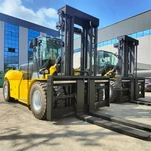
Driving requirements for electric forklifts mainly include core aspects such as standardized operation, safe speed control, fork management and precautions for special scenarios. The following are specific requirements summarized from authoritative sources:
Core operating specifications
Qualifications and safety preparation
The driver must hold a special operation certificate. It is strictly forbidden to drive without a license or under the influence of alcohol.
Before starting, check key systems such as brakes, batteries, and tires. If a fault is found, it must be reported immediately.
Driving speed control
The driving speed in the factory shall not exceed 15 km/h, and complex areas (such as turns and warehouse doors) shall be reduced to 5-10 km/h.
Sudden acceleration, sudden braking or sharp turns are prohibited, and reverse driving is required when going downhill.
Fork and cargo management
The fork should be driven 15-20 cm (or 30-40 cm, depending on the specifications) off the ground, and the mast should be tilted backward to ensure stability.
The height of the cargo must not block the line of sight, the center of gravity should be ≤500 mm from the fork arm, and overloading or single fork operation is prohibited.
Operation in special scenarios
Slope driving: When the vehicle is loaded, it needs to drive forward when going uphill, and it needs to drive backward when going downhill; the opposite is true for an empty vehicle.
Turns and obstacles: Honk the horn and slow down in advance, keep a safe distance (≥3 meters), and avoid sharp turns that may cause rollover.
Complex environment: Slow down on slippery roads, and use explosion-proof vehicles in flammable and explosive areas.