Introduction: Why Choosing the Right Reach Stacker Matters
Reach stackers are a cornerstone of modern container yards, ports, and industrial logistics operations. They combine lifting, stacking, and transporting capabilities for full and empty containers.
However, many buyers-especially first-time purchasers or those upgrading fleets-make avoidable mistakes that lead to reduced productivity, higher operating costs, and unnecessary downtime. This article identifies the most common errors and explains how to prevent them.
Mistake #1: Ignoring Load Center and Weight Variations
Many buyers assume that the rated lifting capacity at standard 600 mm load center applies to all containers and attachments. In reality:
- A 20–40 ton container with an attachment like a spreader or clamp shifts the center of gravity
- Exceeding load center reduces lifting capacity, risking mast overload or tipping
Tip: Always consult the residual capacity chart provided by the manufacturer for your typical container size and attachment combination.
Mistake #2: Overlooking Yard Layout and Aisle Width
Reach stackers require sufficient space for maneuvering, especially when stacking high containers or operating in tight corners. Common oversights include:
- Narrow aisles without proper turning radius
- Insufficient stacking height clearance
- Uneven or soft ground
Tip: Conduct a yard survey before selecting equipment, considering both maximum lift height and travel path.
Mistake #3: Focusing Only on Purchase Price
Some buyers prioritize upfront cost over operational performance. This can lead to:
- Higher fuel consumption due to underpowered engines
- Increased maintenance due to cheaper components
- Reduced uptime because of inadequate emission or cooling systems
Tip: Evaluate Total Cost of Ownership (TCO), including fuel, maintenance, and spare parts over the expected lifecycle.
Mistake #4: Neglecting Emission Compliance
For international projects, Euro V or Stage V compliance is often mandatory. Common mistakes include:
- Buying non-compliant engines for regions with emission regulations
- Underestimating DPF or SCR maintenance requirements
Tip: Confirm regulatory compliance and understand the operational needs for emission system maintenance.
Our Products

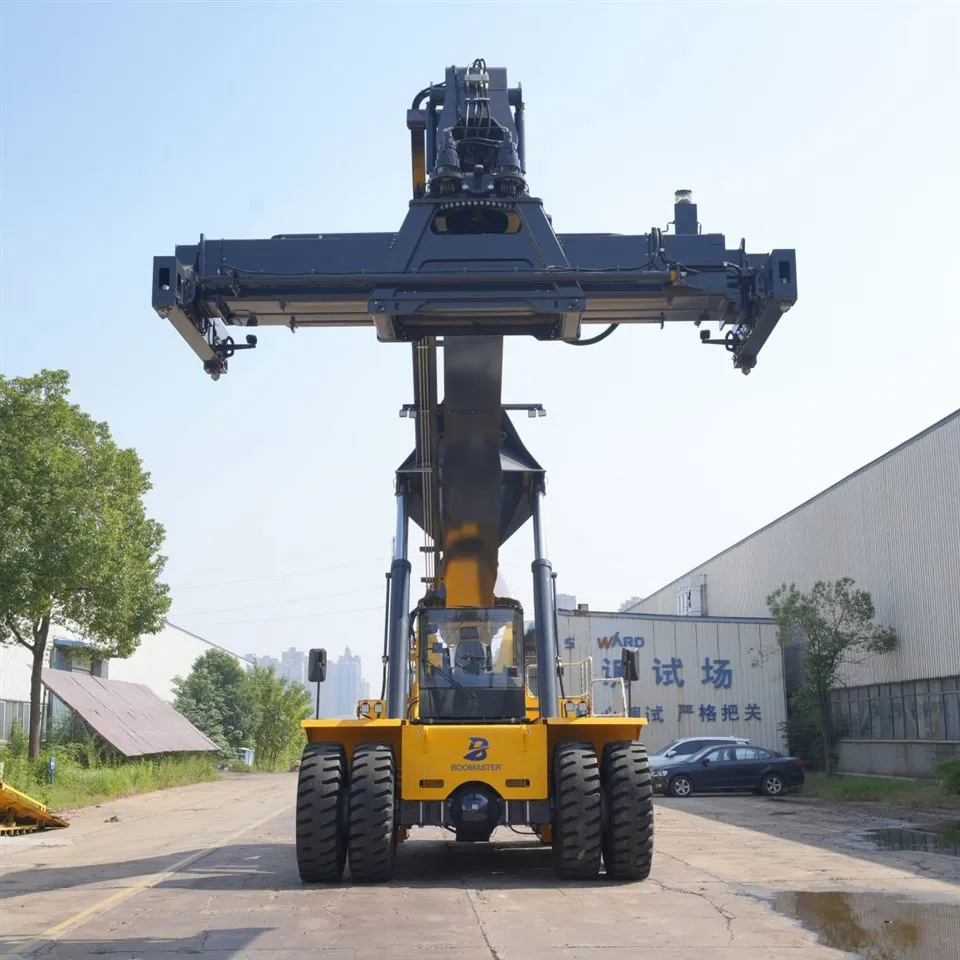

Mistake #5: Ignoring Operator Ergonomics and Safety
Reach stackers operate at heights up to 15 meters. Overlooking cabin design and safety features can lead to:
- Operator fatigue and reduced productivity
- Higher risk of accidents during stacking or transport
- Poor visibility affecting precision and efficiency
Tip: Inspect cabins for visibility, joystick layout, seat suspension, and safety systems before purchase.
Mistake #6: Underestimating Maintenance and After-Sales Support
Even the best reach stacker can become costly if spare parts or service support are limited. Common errors:
- Choosing suppliers without local service centers
- Ignoring lead times for spare parts
- Not verifying warranty coverage
Tip: Ensure local support, spare parts availability, and technical training are factored into the procurement decision.
Mistake #7: Skipping Attachment Compatibility Checks
Attachments like rotatable spreaders, clamps, or forks alter lifting dynamics. Errors include:
- Using incompatible attachments
- Not recalculating capacity with attachments
- Ignoring hydraulic flow requirements
Tip: Always verify attachment compatibility, load center, and hydraulic system capacity.
Make an Informed Reach Stacker Investment
Avoiding these common mistakes ensures that your reach stacker:
- Handles your specific container types safely
- Operates efficiently in your yard layout
- Complies with emission regulations
- Delivers predictable long-term operating cost
A careful evaluation of capacity, yard requirements, operator safety, attachments, and service support will help buyers select the right reach stacker for maximum efficiency and ROI.