


A reach stacker is a high-value piece of port and yard equipment, often expected to operate continuously under heavy load conditions. Unlike standard forklifts, reach stackers are highly configurable machines. Understanding which specifications truly matter-and why-can significantly impact productivity, safety, and total cost of ownership.
Below are the most critical specifications B2B buyers should focus on.
1. Rated Lifting Capacity and Load Chart
The first specification most buyers look at is rated lifting capacity, typically ranging from 35 tons to 45 tons for container handling. However, the nominal capacity alone does not tell the full story.
Professional buyers should always review the load chart, which shows lifting capacity at different reach distances and stacking rows. For example:
- Lifting 45 tons in the first row is very different from lifting 45 tons in the second or third row.
- Some operations rarely stack beyond two rows, while others require consistent third-row performance.
Matching capacity to actual stacking requirements helps avoid overpaying for unused capability while ensuring safe operation under real working conditions.
2. Maximum Lifting Height and Stacking Rows
Reach stackers are commonly specified by the number of container rows they can stack:
- 3-high or 4-high container stacking
- Ability to handle second- and third-row operations efficiently
Buyers should consider:
- Yard layout and space constraints
- Container throughput volume
Whether empty and loaded containers are handled by the same machine
Excessive lifting height may increase machine cost and fuel consumption, while insufficient stacking capability can quickly become a bottleneck in busy terminals.
3. Engine Type and Power Rating
Engine selection directly affects performance, reliability, and compliance with local regulations. Most heavy reach stackers are diesel-powered, with engines from well-known brands to ensure serviceability.
Key factors include:
- Engine power output (kW / HP) under full load
- Emission standards (Tier III, Tier IV, EU Stage V, etc.)
- Fuel efficiency under continuous heavy-duty cycles
For buyers operating in regions with strict emission regulations, compliance is not optional and should be verified early in the procurement process.
4. Transmission and Drivetrain Configuration
The drivetrain must handle frequent load changes, lifting operations, and long-duty cycles. Buyers should evaluate:
- Automatic vs. power-shift transmission
- Axle load capacity
- Differential locking for yard traction
A robust drivetrain reduces maintenance downtime and ensures stable performance in uneven or congested yard conditions.

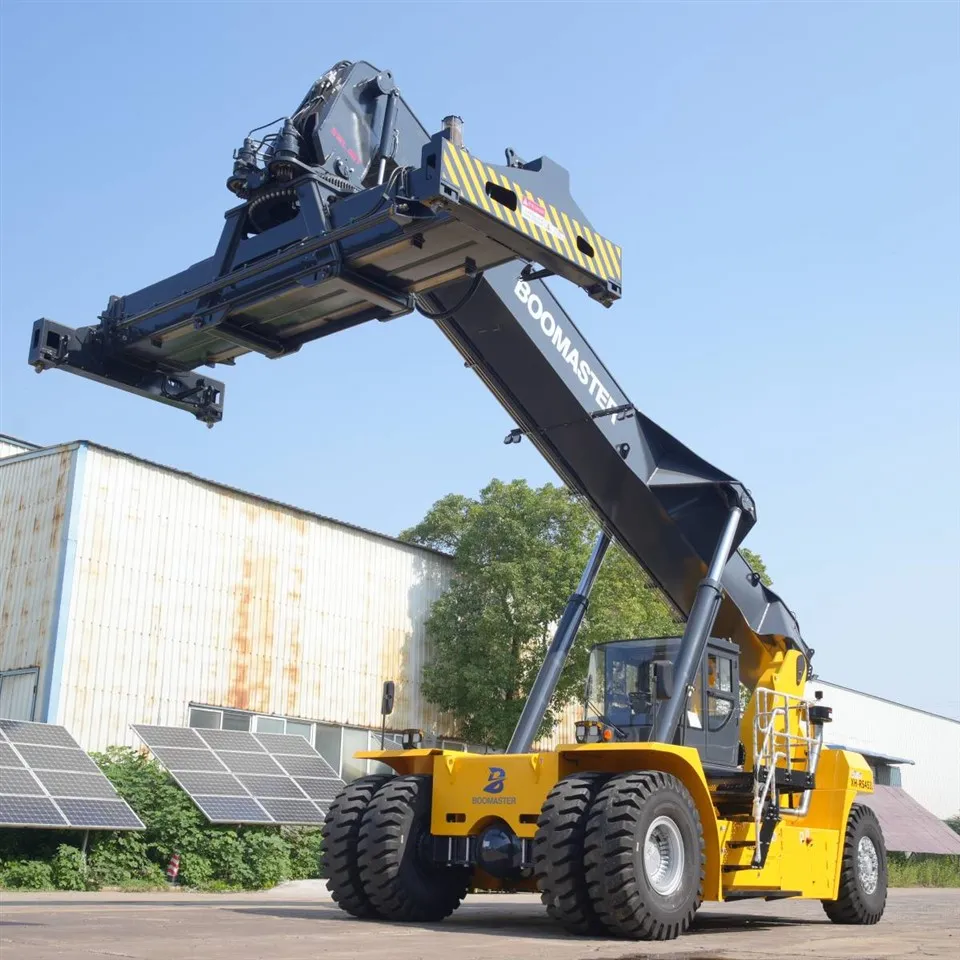
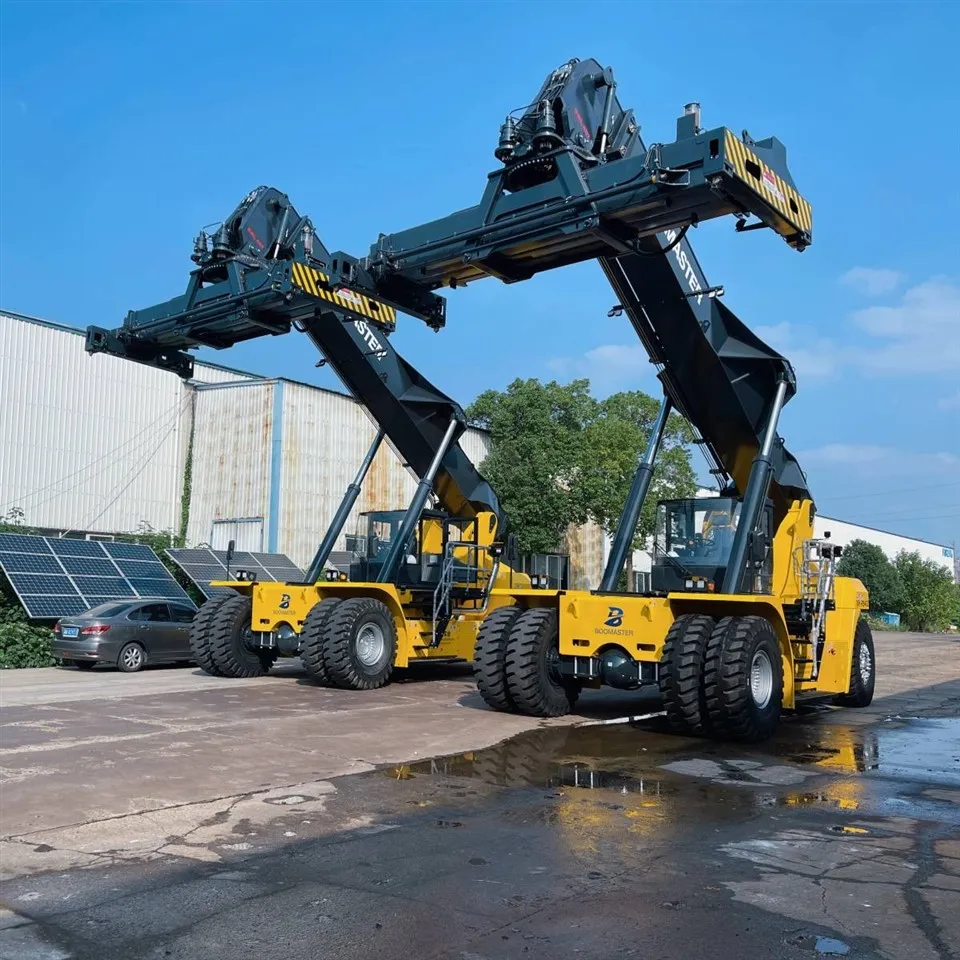
5. Spreader Type and Container Compatibility
The spreader is a critical working component and must match the containers being handled. Common considerations include:
- 20 ft / 40 ft / 45 ft container compatibility
- Fixed or telescopic spreader
- Twist-lock system reliability and response speed
Operations handling mixed container sizes benefit from flexible spreader systems that minimize changeover time and operator intervention.
6. Hydraulic System Performance
Hydraulic performance directly affects lifting speed, precision, and operator control. Buyers should assess:
- Pump capacity and pressure ratings
- Smoothness of lifting and lowering under full load
- Heat management in high-temperature environments
An under-specified hydraulic system may limit productivity even if other specifications appear sufficient on paper.
7. Operator Cabin and Control System
Operator efficiency and safety are often overlooked during specification review. Modern reach stackers should offer:
- Ergonomic cabin design with wide visibility
- Load monitoring and stability systems
- User-friendly joystick and control layout
Comfortable operators make fewer errors, work longer shifts more effectively, and reduce accident risk.
8. Maintenance Access and Service Support
From a procurement standpoint, long-term serviceability is just as important as initial performance. Buyers should consider:
- Ease of access to engine, hydraulics, and filters
- Availability of spare parts
- Local or regional service support
Machines designed with maintenance access in mind typically achieve higher uptime and lower lifetime operating costs.
9. Customization for Operating Conditions
No two yards operate exactly the same way. Many professional buyers request custom configurations such as:
- Reinforced cooling systems for hot climates
- Anti-corrosion treatment for coastal environments
- Tire selection based on surface conditions
Discussing customization options with the supplier early helps ensure the reach stacker fits actual site conditions rather than generic assumptions.
Final Consideration: Matching Specifications to Real Use
The best reach stacker is not the one with the highest specifications, but the one that aligns most closely with real operational needs. Over-specification increases purchase and operating costs, while under-specification leads to safety risks and productivity losses.
By carefully evaluating lifting capacity, stacking requirements, power systems, and service support, professional buyers can make informed decisions that deliver long-term value.


