Introduction
Purchasing a heavy forklift is a major investment for ports, logistics hubs, manufacturing plants, and industrial yards. Unlike standard forklifts, heavy forklifts are expected to handle large loads, operate for long hours, and perform reliably in demanding environments.
However, many buyers-especially those sourcing equipment for overseas projects-make critical mistakes during the selection process. These errors often lead to higher operating costs, reduced efficiency, or even safety risks.
This article outlines five common mistakes buyers make when choosing a heavy forklift, and how to avoid them through smarter evaluation and planning.
Mistake 1: Focusing Only on Rated Capacity
One of the most common mistakes is choosing a heavy forklift based solely on its rated lifting capacity, without considering real working conditions.
Why This Is a Problem
- Rated capacity is usually measured under ideal conditions (standard load center, flat surface).
- In real operations, loads may be oversized, unbalanced, or lifted at greater heights.
- Attachments such as clamps or spreaders reduce the effective lifting capacity.
What Buyers Should Do Instead
- Evaluate actual load weight, size, and center of gravity.
- Review the forklift's load chart rather than just headline capacity.
- Allow a safety margin to avoid overloading during peak operations.
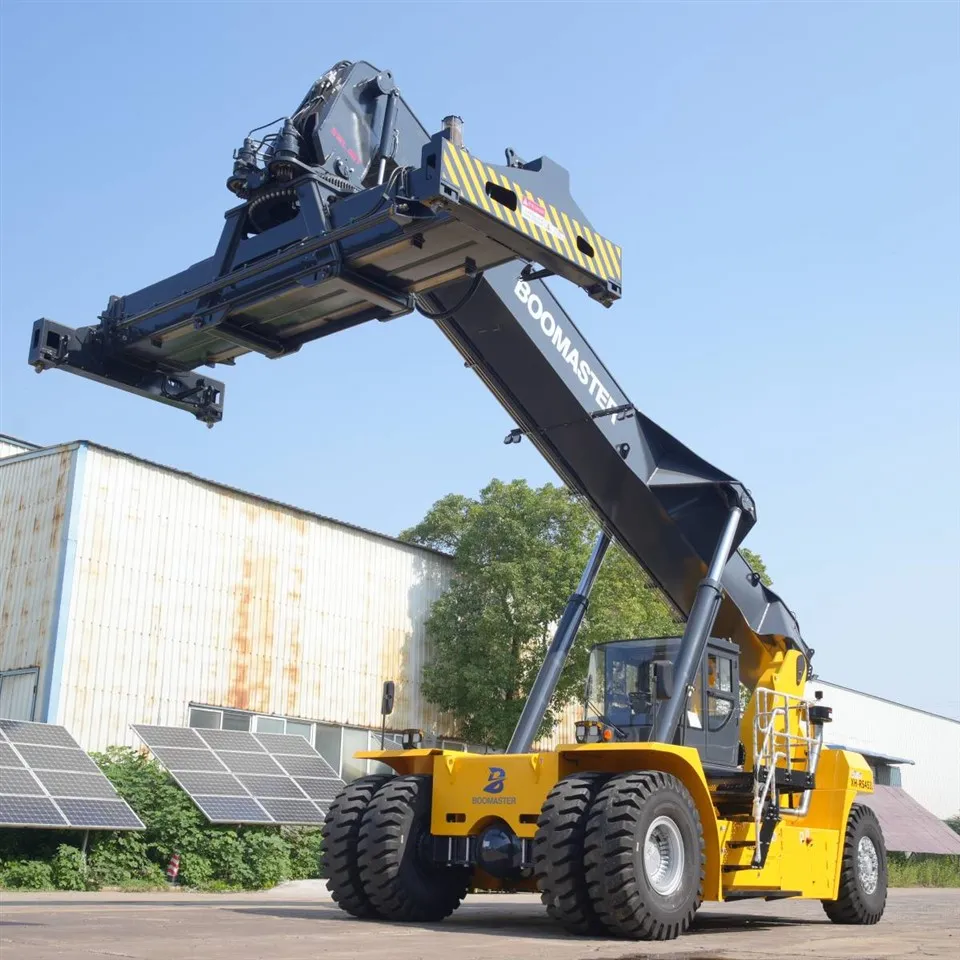
For container or oversized cargo handling, buyers often compare heavy forklifts with reach stackers to ensure sufficient reach and stability.
Mistake 2: Ignoring the Operating Environment
Heavy forklifts are used in diverse environments, from smooth warehouse floors to rough outdoor yards. Choosing the wrong configuration can significantly reduce efficiency.
Common Oversights
- Selecting indoor-oriented forklifts for outdoor use.
- Ignoring ground conditions, slope, or surface material.
- Overlooking climate factors such as high temperatures, dust, or humidity.
Best Practice
Match the forklift type to the environment:
- Diesel heavy forklifts for outdoor, high-load operations.
- Reinforced tires and higher ground clearance for rough terrain.
Consider alternative equipment like reach stackers or telehandlers for container yards or uneven surfaces.
Mistake 3: Underestimating Total Cost of Ownership (TCO)
Many buyers focus on purchase price rather than long-term operating costs, which often leads to higher expenses over time.
Hidden Costs Often Overlooked
- Fuel consumption
- Maintenance frequency and spare parts availability
- Downtime due to repairs or improper configuration
- Operator training and safety compliance
Smarter Evaluation
- Compare forklifts based on TCO, not just initial cost.
- Assess engine efficiency, service intervals, and component durability.
- Confirm local or international availability of spare parts and technical support.
In many cases, a slightly higher upfront investment results in lower lifetime costs and better reliability.


Mistake 4: Overlooking Safety and Compliance Requirements
Safety is critical in heavy lifting operations, yet some buyers treat it as a secondary concern.
Common Safety-Related Errors
- Choosing forklifts without adequate overload protection.
- Ignoring regional certification requirements (CE, ISO, etc.).
- Failing to evaluate visibility, braking systems, or stability controls.
How to Avoid This
- Verify compliance with international safety standards.
- Ensure the forklift includes features such as:
- - Load monitoring systems
- - Stability control
- - Emergency braking
- Consider operator ergonomics to reduce fatigue and accidents.
Mistake 5: Choosing a Supplier Based on Price Alone
Selecting a heavy forklift supplier purely based on price is a high-risk decision, especially for overseas procurement.
Risks of Price-Driven Decisions
- Inconsistent product quality
- Limited after-sales service
- Difficulty sourcing spare parts
- Poor technical support after delivery
What Professional Buyers Should Evaluate
- Supplier experience with heavy forklifts and industrial equipment
- Proven export capability and project references
- After-sales service structure and spare parts availability
- Ability to provide technical documentation and training
A reliable supplier adds value not just through equipment, but through long-term operational support.
Heavy Forklift vs Other Heavy Handling Equipment
In some applications, a heavy forklift may not be the most efficient solution. Buyers should also consider:
- Reach stackers for container stacking and yard optimization
- Telehandlers for construction and uneven terrain
- Specialized container handlers for high-throughput ports
Choosing the right equipment mix often delivers better results than relying on a single machine type.
Final Thoughts: Making a Smarter Heavy Forklift Decision
Avoiding these five common mistakes can significantly improve operational efficiency, safety, and cost control. A well-chosen heavy forklift supports long-term productivity and reduces operational risk.
Key Takeaways for Buyers
- Look beyond rated capacity and purchase price
- Match equipment to real operating conditions
- Evaluate total cost of ownership
- Prioritize safety and compliance
- Choose suppliers with proven expertise and support
Next Steps for Buyers
Explore our equipment solutions to find the right fit for your operation:
- Heavy Forklift Product Page
- Reach Stacker Product Page
Our team can assist with model selection, configuration advice, and export support for global projects.