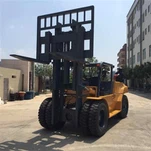
Intermodal Rail Yards: Reaching the 2nd Track with Electric Stackers
Rail yard logistics are fundamentally different from open seaport operations. You are not dealing with a wide-open tarmac; you are restricted by fixed rail lines, extremely tight spacing, and the constant need to reach over track one to grab a container sitting on track two. Furthermore, inland rail hubs are increasingly expanding closer to municipal zones, bringing aggressive noise regulations and strict diesel exhaust audits.
You need heavy machinery that can handle immense offset loads safely, without triggering local environmental fines. Here is the engineering reality behind deploying heavy-duty electric intermodal container stackers in modern railway logistics.
The Mechanics of 2nd-Row Lifting Capability
Reaching over a rail car to lift a container from the second row puts massive leverage and torsional stress on a machine's chassis. You are no longer just lifting a load straight up; you are reaching out, shifting the forward center of gravity to its absolute limit.
For a machine to safely handle a 31-tonne payload in the second row, structural redundancy is mandatory. We engineer the boom and the main chassis frame using thick, high-tensile steel to counter this extreme leverage. The heavy-duty front drive axle and the precisely calibrated rear counterweight ensure the machine stays planted on the dirt.
Furthermore, when the boom is fully extended over the tracks, hydraulic precision is critical. We use oversized hydraulic cylinders paired with intelligent proportional valves. This provides the operator with smooth, micro-controlled extension and retraction, preventing sudden load swings that could damage adjacent train cars or derail the operation.

Track-Over-Track Operations Without Diesel Exhaust
Inland rail hubs face a unique operational hurdle: they are frequently located near urban residential areas. The constant roar of high-displacement engines and the black smoke from diesel exhaust during a 24/7 loading operation inevitably lead to noise complaints and heavy environmental scrutiny from local municipalities.
Deploying zero-emission rail yard equipment eliminates these regulatory roadblocks. By utilizing a commercial-grade 308kW AC traction motor paired with a massive CATL lithium-ion battery system, your operators get the exact same hydraulic breakout force as a diesel stacker-but they get it in near silence and with zero tailpipe emissions.
This makes passing municipal environmental audits simple. More importantly, it protects your ground crew and riggers from inhaling toxic particulate matter during long shifts working closely between the train cars.
Our products

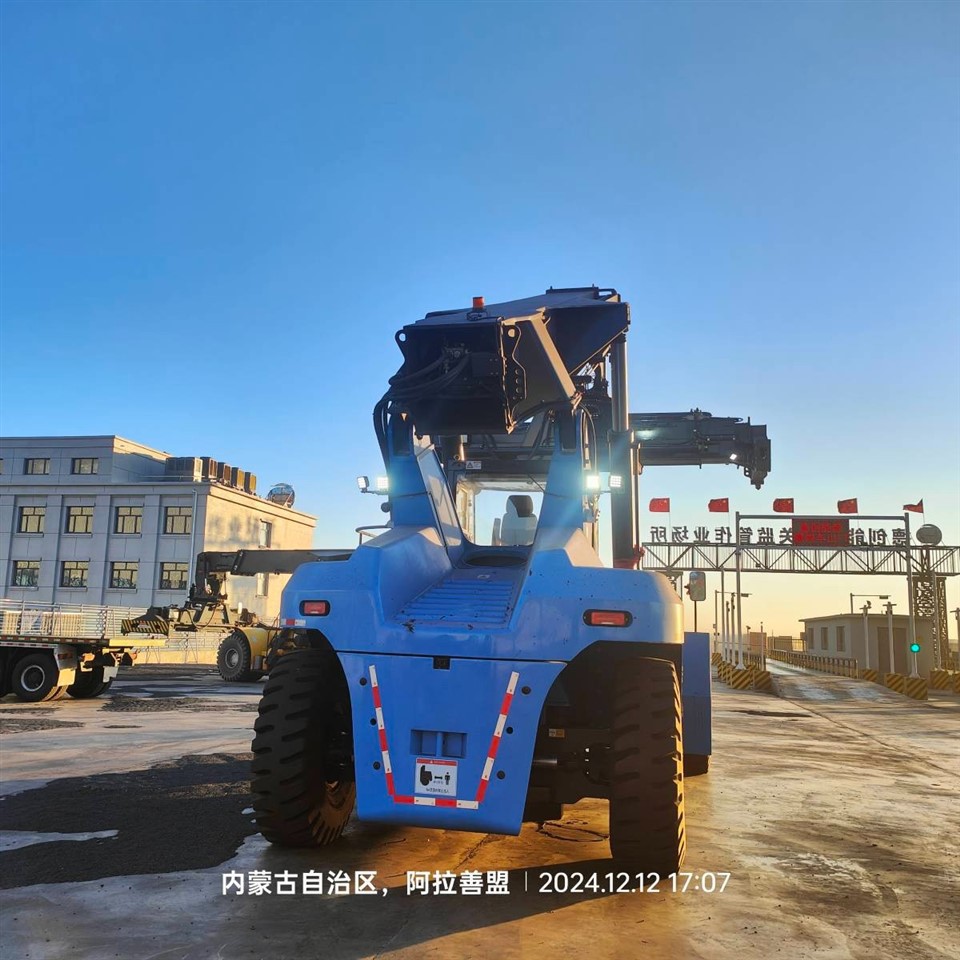

OEM Customization for Regional Railway Authorities
Regional railway authorities and large-scale intermodal terminal operators rarely buy generic, off-the-shelf equipment. Government procurement contracts often dictate specific safety features, custom lighting arrays, and strict corporate branding requirements.
Because Xinghao operates as a direct OEM manufacturer, we build these machines to meet your exact tender specifications right on our assembly line. Do you need a specialized spreader to handle European swap bodies? Do you require an elevated or forward-shifting cabin for better downward visibility when executing track-over-track lifts? We engineer it. We can even paint the entire fleet in your precise corporate RAL colors before the machines are loaded for export.
Stop letting outdated equipment throttle your rail operations. Contact the Xinghao engineering sales team today to discuss specific 2nd-row load chart requirements and get a custom factory-direct quote on our inland rail port container handling solutions.