When warehouse managers look to maximize storage capacity, upgrading to a Very Narrow Aisle (VNA) layout is the logical step. However, many facility upgrades die in the planning phase because of a widespread industry myth: the belief that all VNA systems require a massive capital investment to upgrade existing concrete to a DIN 15185 "superflat" standard.
The fear of shutting down operations to grind, laser-level, or completely re-pour a warehouse floor is a massive deterrent. But the truth is, the floor requirements depend entirely on the specific machinery you choose to deploy.
Turret Trucks vs. Articulated Forklifts: Floor Demands
To understand VNA forklift floor requirements, you must look at the mechanics of the equipment. The confusion stems from treating all narrow aisle machines as the same category.
When material handling consultants talk about superflat floors and expensive wire or rail guidance systems, they are usually referring to Turret Trucks (man-up or man-down models). Turret trucks have a rigid, fixed wheelbase and operate with exceptionally tight tolerances within the aisle. Because the entire machine is fixed, a mere 3mm deviation on the floor translates into severe, dangerous mast sway when lifting a heavy pallet 10 meters into the air. Therefore, turret trucks absolutely require flawless, laser-leveled concrete and guide rails to operate safely.
When comparing the articulated vs turret truck, the floor demands completely diverge. Articulated forklifts are engineered with a pivoting front mast section. They do not require guide rails or wire guidance to enter an aisle, and more importantly, they do not require a structurally perfect floor.
Why Articulated Chassis Absorb Floor Imperfections
The tolerance of articulated VNA machines to standard floors comes down to mechanical design and shock absorption.
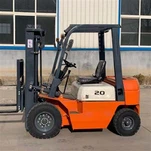
Unlike traditional indoor reach trucks or turret trucks that run on hard, small polyurethane load wheels, premium articulated VNA machines utilize a four-wheel counterbalance chassis equipped with large, heavy-duty solid rubber tires.
These rubber tires act as a primary suspension system. When the machine drives over standard structural concrete joints, minor undulations, or slight surface imperfections, the rubber absorbs the impact. Furthermore, the articulated steering joint allows the front section of the machine to adjust independently of the heavy rear chassis. This mechanical separation prevents floor unevenness from traveling straight up the mast, eliminating the violent high-altitude sway that plagues rigid VNA equipment.
Factory Direct Solutions for Existing Warehouses
The cost of civil engineering-grinding, filling, and re-leaping a warehouse floor-often destroys the Return on Investment (ROI) of a space-saving VNA project.
By sourcing Xinghao articulated forklifts, you are investing in a machine built for the realities of existing, imperfect warehouse environments. You gain the high-density storage benefits of a 1.8-meter narrow aisle without spending hundreds of thousands of dollars on facility floor modifications. As a factory-direct OEM, we engineer these machines with robust drive axles and heavy-duty chassis designs precisely so they can perform reliably on standard commercial concrete.
You do not need to rebuild your warehouse to upgrade your storage density; you just need the right machine.
Ready to upgrade your layout? Contact our technical support team today with your facility details, and let us evaluate if your existing warehouse floor is ready for an articulated VNA solution.