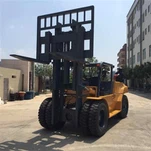
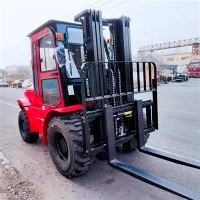
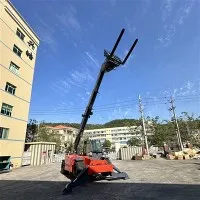
Purchasing a heavy-duty forklift is not a standard procurement task; it is a major capital expenditure (Capex) that dictates the rhythm of your entire operation. When you move past the 10-ton mark, the engineering physics change entirely. A chassis failure or a blown transmission on a massive lift truck doesn't just cause a minor delay-it shuts down your port, your steel mill, or your freight yard.
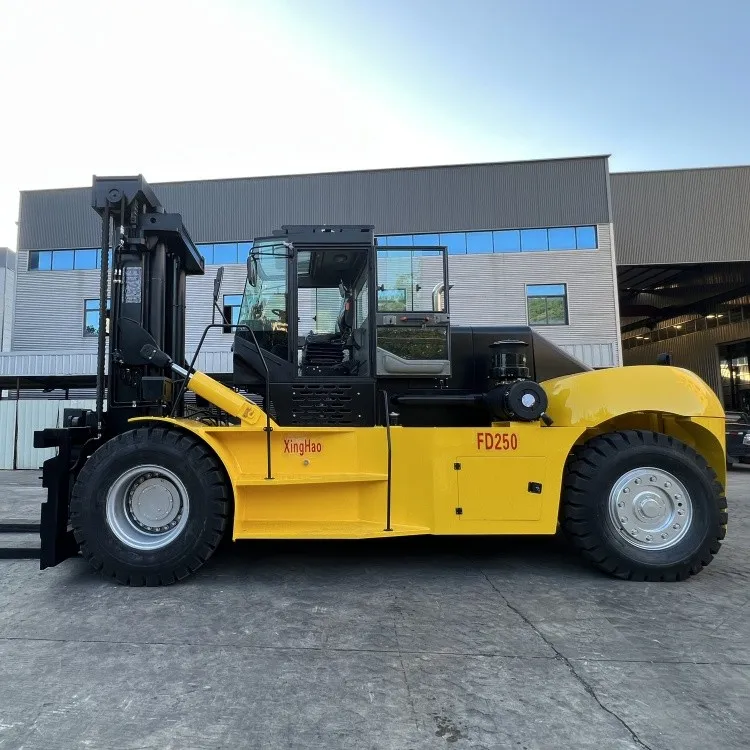
If you are evaluating a 16 ton diesel forklift for heavy yard work or a massive 25 ton forklift for extreme payloads, you need to look past the spec sheet. Here is an insider's guide on how fleet managers and equipment dealers evaluate and select true heavy duty material handling equipment that delivers decades of ROI.
Defining Your Extreme Applications: From Port Containers to Stone Fabrication
The first step in heavy procurement is matching the machine's brute force to your specific operational environment. Over-speccing wastes money; under-speccing causes catastrophic equipment failure.
- Port Terminals & Container Depots: If your primary job is moving unladen TEUs or standard heavy freight, a 16-ton to 18-ton chassis is usually the sweet spot. It offers enough capacity for heavy logistics while maintaining a turning radius that won't bottleneck a congested yard.
- Heavy Stone Processing & Export: If your operation involves extreme, dense weights-such as moving raw marble blocks, exporting high-quality Cambodian granite tombstones, or handling heavy quartz slabs across a dusty yard-a standard commercial truck will burn out its hydraulics within months. These environments demand the massive counterweights, wide-stance drive axles, and reinforced masts found in a 25-ton to 30-ton chassis to prevent dangerous mast sway.
- Steel Mills & Foundries: Handling heavy steel coils requires not just weight capacity, but the ability to handle severe shock loads on the front axle when braking.
The Core Drivetrain: Why Cummins, Volvo, and ZF Matter
In the heavy equipment world, the chassis is just the skeleton; the powertrain is the heartbeat. When buying from overseas, the biggest fear fleet managers have is parts availability. This is why you must scrutinize the core components.
A reliable heavy forklift manufacturer will not cut corners here. Look for trucks powered by globally recognized engines like Cummins or Volvo. Whether you need standard Tier 3 engines for developing markets or stringent Stage V / Euro V compliant engines for Europe and North America, these brands guarantee that your local heavy diesel mechanic can source filters, belts, and engine parts on the same day.
Equally important is the transmission. When a fully loaded 25-ton machine hits a 15-degree ramp, the torque transfer is violent. We strongly advise selecting trucks equipped with heavy-duty ZF or Dana powershift transmissions and Kessler-type drive axles. They are built specifically to absorb commercial shock loads, preventing the costly drivetrain failures common in cheaper, domestic-market gearboxes.
Our products


Customizing the Business End: Side Shifters, Positioners, and Steel Rams
A heavy forklift without the right attachment is just an expensive paperweight. At this scale, operators cannot physically leave the cabin to manually adjust the forks. Your procurement order must include the right hydraulic attachments tailored to your load:
- Fork Positioners & Side Shifters: These are mandatory on any 16-ton to 25-ton truck. They allow the operator to hydraulically widen or narrow the forks to match different pallet sizes or shipping containers, and shift the entire carriage left or right to perfectly align with a load without repositioning the entire massive truck.
- Steel Coil Rams: If you are in the metal industry, replacing standard forks with a heavy-duty steel coil ram allows you to safely lift and transport massive rolled steel without damaging the inner core.
- Block Clamps: Essential for the stone and concrete industries to securely grip and transport unwieldy, smooth materials.
Sourcing a Reliable Chinese Heavy Forklift Manufacturer
Today, the majority of the world's heavy forklifts are manufactured in China. However, for international dealers and fleet buyers, the challenge is separating the true OEM factories from the trading companies that simply slap a sticker on a subcontracted machine.
To ensure you are dealing with a direct manufacturer, look for transparency. A real factory will gladly provide aerial video footage of their assembly lines, welding robots, and testing grounds. They will have verifiable ISO 9001 Quality Control standards and CE/EPA certifications readily available.
When you partner directly with a source factory like Xinghao Forklift, you bypass the trading company markups. This ensures your dealership gets protected wholesale margins, direct access to the engineering team for custom paint and OEM attachment configurations, and a reliable pipeline for spare parts.
Don't compromise on your heavy fleet. Evaluate your duty cycles, demand premium drivetrains, and partner directly with the source.