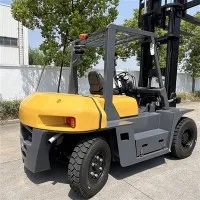
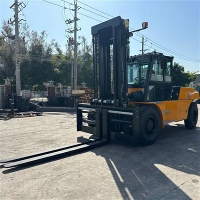
Introduction - The Growing Demand for Efficient Container Handling
As global trade continues expanding, container throughput at ports, logistics yards, rail terminals, and industrial facilities is increasing every year. Businesses handling heavy containers must ensure that their material handling equipment can support high efficiency, operational safety, and long working hours.
Among the available solutions, container handling forklifts-especially in the 16-ton class-have become a preferred choice for many operators because they combine strong lifting capacity, flexible movement, and relatively low infrastructure requirements. For operations that do not require large crane systems, these forklifts offer an ideal balance between performance and cost.
What Is a Container Handling Forklift?
A container handling forklift is a heavy-duty industrial vehicle designed specifically to lift, transport, and stack shipping containers. Unlike standard forklifts, these machines feature:
- Reinforced chassis structures
- Heavy-capacity masts
- Specialized spreaders or attachments
- High-torque engines
- Enhanced counterweight systems
Their engineering focuses on stability under extreme loads, which is critical when lifting containers weighing several tons.
Key Advantages of 16 Ton Container Forklifts
The 16-ton segment sits in a highly practical capacity range for many logistics operations. It offers enough lifting power for loaded containers while maintaining mobility and operational flexibility.
1. Strong Load Handling Capability
A 16-ton container forklift can safely handle heavy containers without strain on the drivetrain or hydraulic system. This ensures consistent performance during continuous operations.
2. Operational Flexibility
Unlike fixed cranes, container forklifts can move freely within yards, allowing operators to:
- Rearrange stacks quickly
- Load trucks directly
- Transfer containers between zones
This flexibility improves yard productivity significantly.
3. Lower Infrastructure Investment
Large container cranes require rails, foundations, and installation time. Container forklifts, on the other hand:
- Require minimal site preparation
- Can be deployed immediately
- Can be relocated easily
For small to medium terminals, this translates into faster ROI.
Typical Application Scenarios
Container handling forklifts are widely used across industries where heavy container movement is required:
Ports and Inland Container Depots
- Loading and unloading trucks
- Stacking containers
- Yard rehandling
Manufacturing Export Facilities
- Moving loaded containers between storage and shipping zones
Construction Logistics
- Handling containerized equipment and materials
Heavy Industry Yards
- Steel, stone, or machinery industries requiring containerized transport
Our Products


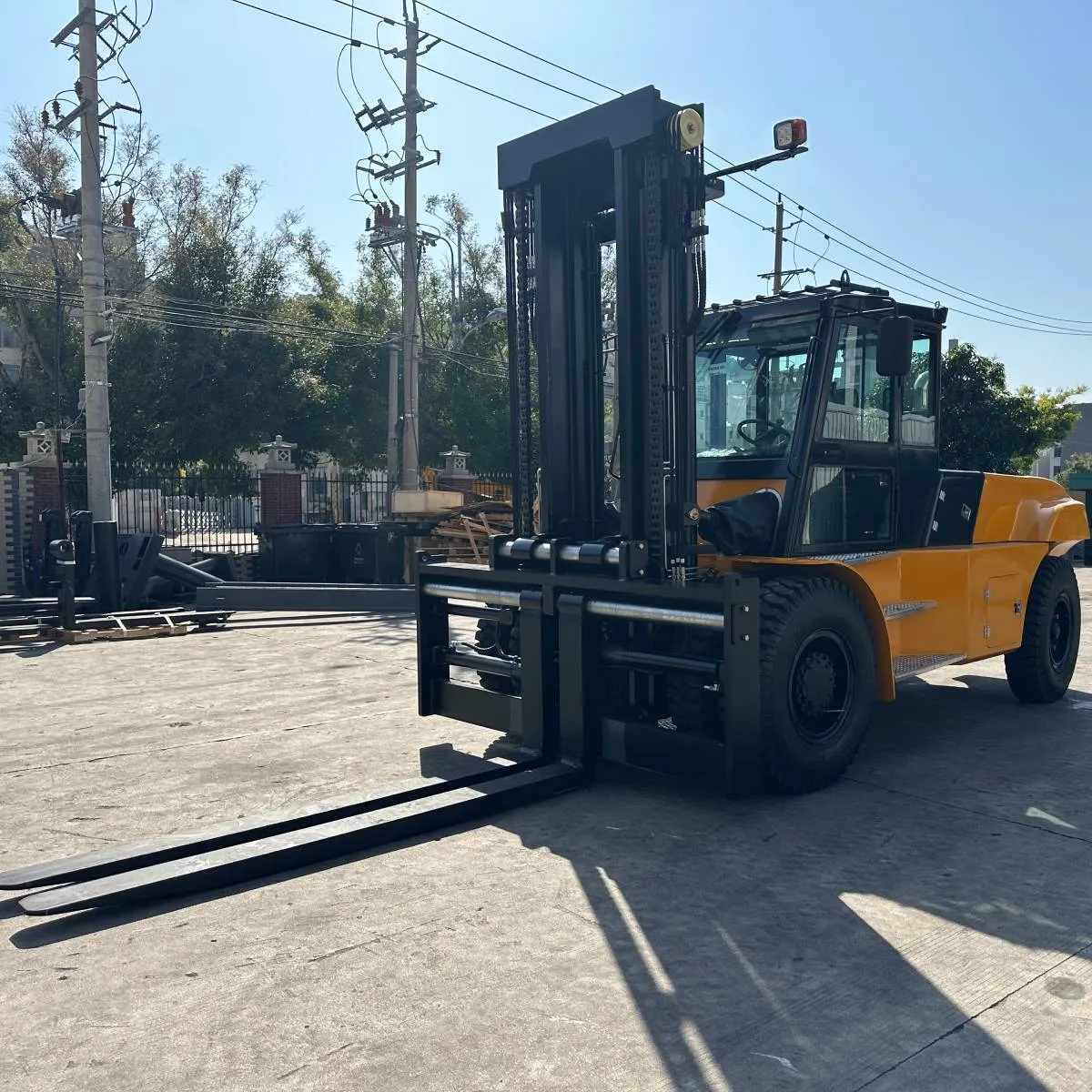
Why Many Buyers Choose Container Forklifts Over Reach Stackers
Although reach stackers dominate large terminals, container forklifts remain highly competitive for many operations.
Container Forklift Advantages
- Lower purchase cost
- Simpler maintenance
- Easier operator training
- Lower fuel consumption in medium-duty operations
Reach Stacker Advantages
- Higher stacking height
- Extended reach across rows
For facilities with moderate stacking requirements and limited yard space, container forklifts often provide the most practical solution.
Key Specifications Buyers Should Evaluate
Professional buyers should never choose a container handling forklift based on capacity alone. Critical technical parameters include:
- Rated load at load center
- Mast design and lifting height
- Engine power and torque output
- Hydraulic system pressure and response speed
- Transmission durability
- Cooling system capacity
- Tire type and axle strength
Evaluating these specifications ensures the forklift can perform reliably under real working conditions, not just laboratory ratings.
Operational Efficiency Benefits
When properly matched to an operation, a container forklift can significantly improve productivity:
- Faster loading cycles
- Reduced container handling time
- Improved yard flow
- Lower operator fatigue
- Reduced equipment downtime
In high-volume yards, even small improvements in handling speed can translate into major annual cost savings.
Maintenance and Lifecycle Considerations
Long-term performance depends heavily on maintenance design and serviceability. Buyers should prioritize machines that offer:
- Easy access to engine and hydraulic components
- Standardized spare parts
- Clear maintenance schedules
- Reliable technical support
Equipment designed for easier servicing typically achieves higher uptime and lower lifecycle cost.
Industry Trend: Mid-Capacity Heavy Forklifts on the Rise
Global logistics trends show increasing demand for mid-capacity heavy forklifts (12–18 ton range) because they:
- Fit more applications than ultra-heavy machines
- Require less space
- Cost less to operate
- Offer better maneuverability
As container handling becomes more decentralized-with inland depots and regional logistics hubs expanding-these machines are becoming essential equipment rather than optional assets.
Container handling forklifts, especially in the 16-ton class, provide a powerful combination of strength, mobility, efficiency, and cost control. For ports, logistics yards, industrial facilities, and export operations, they offer a practical solution that supports both productivity and long-term operational reliability.
Selecting the right machine requires careful evaluation of specifications, working conditions, and support capabilities-but when chosen correctly, a container handling forklift becomes one of the most valuable assets in any heavy material handling operation.