When a warehouse reaches 85% capacity, facility managers face a critical and expensive decision: lease a new, larger building, or figure out how to squeeze more pallets into the current footprint. In today's commercial real estate market, facility expansion will severely damage your operating expenses (Opex).
The most financially sound solution is upgrading your material handling fleet to reclaim wasted aisle space. For high-density storage, the debate usually comes down to two machines: the VNA articulated forklift vs reach truck.
Both are designed for narrow spaces, but their operational capabilities and financial returns are drastically different. Let's break down the engineering and operational facts so you can make the right procurement decision for your facility.
Aisle Width Requirements: The 1.8m vs. 2.8m Reality
The fundamental metric in warehouse design is the Aisle Stacking Width (AST). This dictates exactly how much empty space you need between your racks to safely pick and put away a pallet.
The Traditional Reach Truck:
A standard reach truck requires the operator to turn the entire chassis 90 degrees to face the racking. Because of this physical limitation, a standard reach truck requires an aisle width of approximately 2.8 to 3.0 meters (depending on the pallet dimensions).
An articulated forklift completely changes the geometry of the lift. The chassis remains straight in the aisle, while the front mast articulates (pivots) 90 degrees left or right to interact with the rack. This means an articulated VNA truck can comfortably operate in aisles as narrow as 1.6 to 1.8 meters.
- The Business Impact: Shrinking your aisles from 2.8m down to 1.8m allows you to physically install more rows of racking. In a standard 50,000 sq. ft. facility, this level of aisle space optimization typically yields a 30% to 50% increase in total pallet positions, without pouring a single yard of new concrete.


Indoor/Outdoor Versatility: Eliminating "Double Handling"
Evaluating VNA vs reach truck isn't just about indoor racking; it is about how the pallet gets from the delivery truck to the rack.
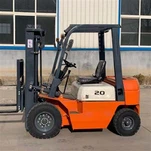
A traditional reach truck runs on small, hard polyurethane wheels. It is strictly an indoor machine designed for smooth, flat concrete. It cannot drive on asphalt or loading docks. Therefore, unloading a shipping container requires "double handling": a counterbalance forklift unloads the truck outdoors and drops the pallet in an indoor staging area, where the reach truck then picks it up to put it in the rack. This wastes time, labor, and floor space.
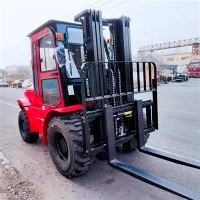
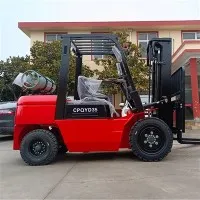
An articulated forklift is built on a heavy-duty counterbalance chassis with large, robust rubber tires. It is designed for both outdoor and indoor use. This enables the highly efficient "Dock-to-Rack" operation. The articulated truck drives directly out to the yard, unloads the heavy pallet from the delivery truck, drives indoors, navigates the 1.8m VNA aisle, and places the pallet directly onto the top rack. You eliminate the staging area and cut your handling time in half.
Initial Investment Capex vs. Long-Term ROI
Procurement managers often look at the initial sticker price and note that a VNA articulated forklift has a higher initial Capex than a standard indoor reach truck. However, comparing the sticker price alone is a critical financial mistake.
To calculate the true ROI, you must factor in the massive savings generated by the articulated truck:
- Real Estate Savings: You avoid the multi-million dollar cost of leasing or building a larger warehouse.
- Fleet Reduction: Because the articulated truck works both indoors and outdoors, you don't need to maintain two separate fleets (counterbalance trucks for the yard + reach trucks for the aisles).
- OEM Factory Direct Margins: Sourcing your VNA equipment directly from a Chinese source manufacturer drastically lowers your acquisition cost. Unlike buying legacy European brands with heavy markups, partnering with Xinghao Forklift ensures you get premium VNA technology at factory-direct wholesale pricing, accelerating your ROI even further.
Get Your Free Warehouse Layout & Equipment Plan
Before you commit to a major warehouse redesign or sign a contract for standard reach trucks, let the engineering team at Xinghao run the numbers for you.
As a direct OEM/ODM manufacturer of heavy-duty and specialized material handling equipment, we don't just sell machines; we provide comprehensive storage solutions. Send us your warehouse CAD drawings or current dimensions. Our technical sales team will provide a free aisle optimization layout and calculate exactly how many extra pallet positions you can gain by upgrading to a Xinghao VNA articulated forklift.
Stop paying for empty air. Contact our factory team today to request your free warehouse optimization analysis and exclusive dealer pricing.