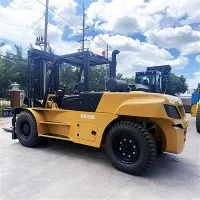
Construction sites rarely feature paved surfaces. During early and mid-phase development, the ground is covered in half-meter deep mud ruts, scattered demolition debris, and tight scaffolding clearances. If your material handling equipment gets stuck in a mud pit, it causes severe project delays, and forcibly towing it can tear the chassis apart. This brutal physical environment is exactly why modern heavy infrastructure projects abandon standard two-wheel-steer forklifts. In these conditions, survival and mobility depend entirely on the chassis's drivetrain and steering geometry.
The 3 Steering Modes of a Telehandler
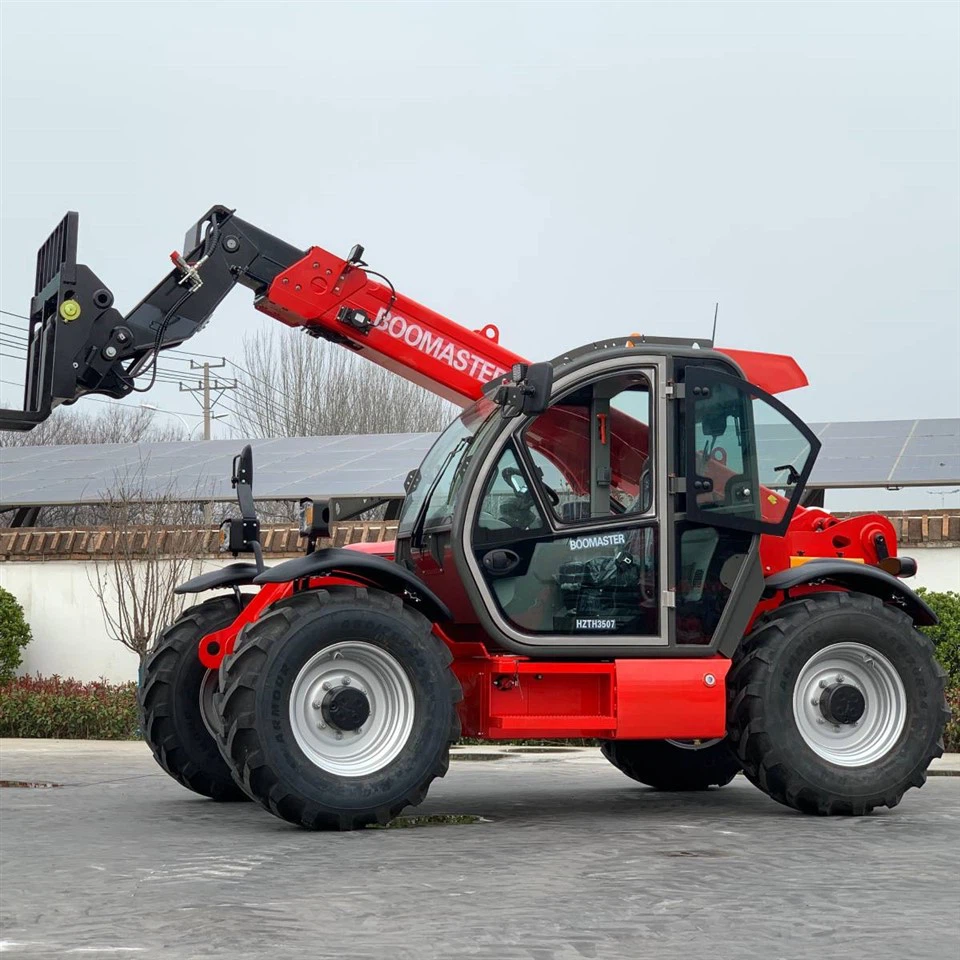
To qualify as a true 4WD construction forklift, a telescopic handler abandons a single steering tie rod. Instead, it equips both the front and rear axles with independent hydraulic steering cylinders. This allows the operator to switch between three distinct geometric steering logic modes directly from the cabin:
- Front-Wheel Steer: Only the front wheels pivot; the rear wheels remain locked. This mimics a standard highway truck, providing the most stable trajectory for high-speed cruising and long-distance transit across relatively flat site sections.
- 4-Wheel Steer (Circle Steer): Front and rear wheels pivot in opposite directions. This mode aggressively compresses the external turning radius (down to just 3.9 meters or 4.2 meters depending on the chassis size). It is designed for tight material yards, allowing the machine to perform U-turns in highly restricted spaces and easily maneuver around obstacles.
- Crab Steer: Front and rear wheels pivot in the identical direction. This is the ultimate micro-adjustment mode for heavy machinery, solving complex spatial alignment problems.
Our Products


How Crab Steer Prevents Wall Collisions
When you need to unload tons of building panels onto scaffolding sitting flush against an unfinished wall, traditional steering creates a fatal collision risk. With standard steering, turning the wheel near a wall inevitably swings the counterweight or rear chassis directly into the structure.
Telehandler crab steer completely resolves this geometric conflict. In crab mode, because all four wheels angle in the exact same direction, the massive chassis moves diagonally-sliding sideways like a crab. The operator can glide the machine laterally into the perfect unloading position while keeping the machine's longitudinal axis absolutely parallel to the wall. This eliminates any rear tail swing, reducing the risk of wall collisions or slipping into parallel trenches to zero. It also removes the need for dangerous, repetitive reversing maneuvers.
Heavy-Duty Pneumatic Tires vs. Foam-Filled
Advanced hydraulic steering means nothing without physical surface grip. When selecting tires for site equipment, fleet managers often debate between pneumatic (air-filled) off-road tires and foam-filled options.
For unpaved, deep-mud environments, we strongly specify heavy-duty pneumatic tires with aggressive treads (such as our factory-standard Michelin vacuum tires). Pneumatic tires possess superior surface deformation capabilities when hitting deep mud, trenches, and gravel. They "wrap" around ground irregularities, extracting maximum physical traction. More importantly, they filter out hard chassis impacts, protecting expensive hydraulic valve blocks and axle gears from vibration damage. Unless your site is heavily contaminated with sharp metal debris causing a high puncture rate, avoid foam-filled tires-they add massive dead weight and severely compromise the chassis's shock absorption.
Seeing the mechanics in action is the best proof of capability. Watch a real-world demonstration of our 14m telehandler's 3 steering modes, and contact our engineering team to get a direct factory quote for your fleet.