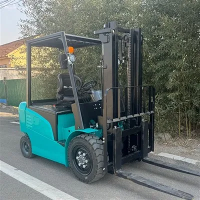
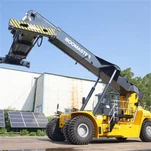
A 45 ton electric reach stacker is designed for handling loaded containers in ports, inland container depots, rail terminals, logistics parks, and container storage yards. For professional buyers, the key question is not simply whether the machine is electric. The real question is whether the equipment can maintain container handling productivity while reducing fuel consumption, maintenance workload, emission pressure, and long-term operating cost.
This buyer's guide explains how to evaluate a 45 ton electric reach stacker from a practical procurement perspective. It covers lifting capacity, load chart performance, battery configuration, charging strategy, hydraulic efficiency, duty cycle, total cost of ownership, and supplier evaluation. It is written for port operators, terminal managers, logistics companies, equipment distributors, and project buyers who need to compare electric reach stackers with diesel reach stackers before making an investment decision.
What Is a 45 Ton Electric Reach Stacker?
A 45 ton electric reach stacker is a heavy-duty container handling machine powered by an electric drive system instead of a diesel engine. It is mainly used to lift, move, stack, and transfer loaded 20ft, 40ft, and 45ft containers in container terminals and logistics yards.
The term "45 ton" usually refers to the rated lifting capacity under a defined operating condition. However, buyers should not assume that the machine can lift 45 tons at every boom extension, stacking height, or container row. Actual lifting performance depends on the load chart, boom position, counterweight design, wheelbase, spreader configuration, and stability margin.
Compared with a conventional diesel reach stacker, an electric reach stacker uses a battery system, electric drive motor, electric control system, and hydraulic lifting system. Its main advantages include zero tailpipe emissions, lower noise, reduced engine maintenance, and potentially lower energy cost per operating hour.
For ports and container yards under pressure to reduce emissions, electric reach stackers are becoming an important alternative to diesel-powered container handling equipment.
Our Products

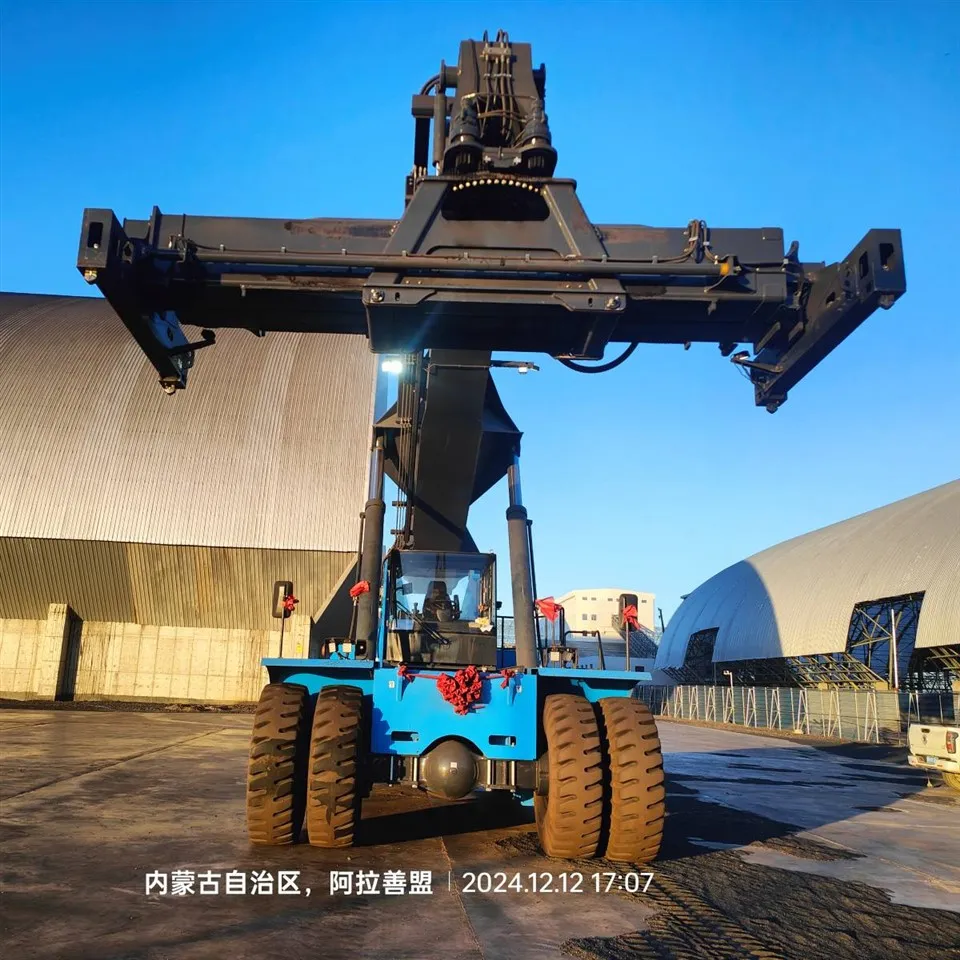

Where Is a 45 Ton Electric Reach Stacker Used?
A 45 ton electric reach stacker is suitable for applications where loaded containers need to be handled frequently and flexibly. Typical working environments include:
- Seaports and inland ports
- Intermodal rail terminals
- Inland container depots
- Bonded logistics zones
- Container freight stations
- Large warehousing and distribution yards
- Industrial parks with heavy container traffic
- Low-emission terminal projects
- Government or municipal green logistics projects
The biggest advantage of a reach stacker is flexibility. Unlike fixed rail-mounted gantry cranes, a reach stacker can move freely across the yard. It can handle containers in different positions, adjust to changing yard layouts, and support loading or unloading operations from trucks, trailers, and rail wagons.
For buyers managing mixed container operations, a 45 ton electric reach stacker can provide both environmental value and operational flexibility.
45 Ton Electric Reach Stacker vs Other Container Handling Equipment
Before purchasing, buyers should confirm whether a reach stacker is the correct equipment type for the application. Different container handling machines serve different purposes.
| Equipment Type | Best For | Key Limitation |
|---|---|---|
| 45 Ton Electric Reach Stacker | Loaded container handling in ports, rail yards, and container depots | Requires suitable charging infrastructure |
| Diesel Reach Stacker | High-intensity container handling where diesel service is already mature | Higher fuel cost, emissions, and engine maintenance |
| Empty Container Handler | Stacking and transferring empty containers | Not suitable for loaded container handling |
| Heavy-Duty Forklift | General heavy cargo and palletized industrial loads | Less flexible for high container stacking |
| Rubber-Tyred Gantry Crane | High-density container stacking | Higher infrastructure and yard planning requirements |
| Rail-Mounted Gantry Crane | Fixed terminal container handling | Limited flexibility outside designed rail area |
If the project requires flexible movement, loaded container handling, and lower emission operation, a 45 ton electric reach stacker is often a practical choice.
Key Specifications Buyers Should Check Before Quotation
A professional quotation should not be based only on the model name or rated capacity. Buyers should request a full technical specification sheet and compare the following parameters carefully.
| Specification | Why It Matters for Buyers |
|---|---|
| Rated Capacity | Confirms whether the machine can handle loaded containers safely |
| Capacity at 1st, 2nd, and 3rd Row | Determines real yard stacking flexibility |
| Maximum Lifting Height | Affects container stacking layers and yard density |
| Wheelbase | Impacts stability and maneuverability |
| Turning Radius | Important for narrow container yards |
| Battery Capacity | Affects working time per charge |
| Charger Power | Determines charging speed and downtime |
| Drive Motor Power | Influences acceleration, travel speed, and gradeability |
| Hydraulic System | Affects lifting speed, energy efficiency, and operating smoothness |
| Spreader Type | Determines compatibility with 20ft, 40ft, and 45ft containers |
| Tire Type | Impacts stability, durability, and ground suitability |
| Control System | Affects energy management, diagnostics, and safety protection |
| Climate Protection | Important for coastal, dusty, hot, cold, or humid environments |
For importers and distributors, these specifications are also useful when comparing different electric reach stacker manufacturers or suppliers. A lower purchase price may not be meaningful if the machine has insufficient battery capacity, limited load chart performance, weak after-sales support, or an underconfigured hydraulic system.
Load Chart Performance: Do Not Judge Only by "45 Ton"
One of the most important documents buyers should request is the official load chart. A reach stacker's actual lifting capacity changes according to boom extension, container position, stacking height, and working radius.
A machine may be rated for 45 tons in the first row, but its capacity may be lower when handling containers in the second or third row. This is normal for reach stackers, but it must be clearly understood before purchase.
Before confirming a model, buyers should verify:
- Maximum capacity in the first row
- Capacity in the second row
- Capacity in the third row
- Maximum stacking height
- Maximum container weight in the target application
- Ground condition and yard slope
- Required safety margin
- Spreader compatibility with container sizes
For example, a port terminal handling fully loaded 40ft containers may need different performance from an inland depot that mainly handles medium-weight containers. A rail yard that requires second-row container handling should pay particular attention to the load chart at longer reach.
A reliable electric reach stacker supplier should be able to provide clear load chart data instead of only giving a general rated capacity.
Battery Capacity and Charging Strategy
The battery system is one of the most important differences between an electric reach stacker and a diesel reach stacker. Buyers should evaluate the battery not only by capacity, but also by safety, cycle life, charging speed, cooling system, and serviceability.
For heavy-duty port machinery, lithium iron phosphate battery systems are commonly used because of their thermal stability and long cycle life. However, battery configuration must still be matched to the actual operating scenario.
Key questions buyers should ask include:
- What is the battery capacity?
- What is the expected working time under typical operating conditions?
- What charger power is recommended?
- Does the machine support fast charging?
- Can it support opportunity charging during breaks or shift changes?
- Is the battery protected against overheating?
- Is the battery system suitable for humid, dusty, or coastal environments?
- What is the expected battery service life?
- What battery warranty is provided?
The right charging strategy depends on the working schedule.
| Operating Scenario | Recommended Charging Strategy |
|---|---|
| Single 8-Hour Shift | Overnight charging may be sufficient |
| Two-Shift Operation | Fast charging during lunch breaks or shift changes may be required |
| 24/7 Port Operation | High-power charging and backup charging planning are necessary |
| Remote Container Yard | Grid capacity should be checked before purchase |
| Low-Utilization Yard | Standard charging may be enough, but battery size should not be overconfigured |
For high-utilization terminals, charging infrastructure should be planned before the machine arrives. Buyers should confirm local voltage, power supply capacity, charger installation space, cable routing, safety distance, and operator charging procedures.
A common purchasing mistake is to focus only on the machine price and ignore charging infrastructure. For an electric reach stacker, the charger and power supply are part of the complete operating system.
Hydraulic Efficiency and Energy Recovery
Container handling requires repeated lifting, lowering, steering, braking, and traveling. The hydraulic system has a direct impact on productivity, energy consumption, and operator experience.
A well-designed electric reach stacker should provide stable lifting speed, smooth lowering control, precise boom movement, and efficient power distribution. Some electric systems can recover energy during braking or lowering, helping reduce total energy consumption during repetitive yard operations.
Buyers should evaluate:
- Lifting speed under load
- Lowering control stability
- Hydraulic pump configuration
- Hose and valve quality
- Cooling system design
- Energy recovery function
- Maintenance accessibility
- Diagnostic capability
Hydraulic performance should not be treated as a secondary issue. In container terminals, slow lifting speed or unstable boom movement can reduce handling efficiency even if the machine has sufficient rated capacity.
Electric vs Diesel Reach Stacker: TCO Comparison
The purchase price of an electric reach stacker is usually higher than that of a diesel reach stacker. However, the total cost of ownership may be lower in suitable working conditions.
TCO should include energy cost, maintenance cost, downtime, spare parts, labor, emission compliance, and infrastructure investment.
| Cost Item | Diesel Reach Stacker | Electric Reach Stacker |
|---|---|---|
| Energy Cost | Diesel fuel consumption | Electricity consumption |
| Engine Maintenance | Oil, filters, belts, engine parts, exhaust system | No diesel engine maintenance |
| Hydraulic Maintenance | Required | Required |
| Brake Wear | Depends on operating conditions | May be reduced with regenerative systems |
| Emission Compliance | May require aftertreatment or restrictions | Zero tailpipe emission |
| Noise Level | Higher | Lower |
| Initial Investment | Usually lower | Usually higher |
| Charging Infrastructure | Not required | Required |
| Long-Term Operating Cost | Higher in fuel-intensive operations | Potentially lower in high-utilization operations |
The final TCO advantage depends on local diesel prices, electricity rates, working hours, maintenance labor cost, spare parts availability, charging infrastructure investment, and equipment utilization rate.
For low-utilization yards, the payback period may be longer. For busy ports and rail terminals with high daily operating hours, the energy and maintenance savings can become more significant over the machine's service life.
When Does an Electric Reach Stacker Make Financial Sense?
An electric reach stacker is usually a strong investment when the operating environment has one or more of the following conditions:
- High daily utilization
- Expensive diesel fuel
- Strict emission requirements
- Stable electricity supply
- Planned charging infrastructure
- High maintenance cost for diesel machines
- Indoor or semi-enclosed operating areas
- Low-noise operation requirements
- Government or customer pressure for low-carbon logistics
- Long-term fleet electrification strategy
However, electric reach stackers may not be the best choice for every project. Buyers should be cautious if:
- The site has unstable power supply
- Charging infrastructure cannot be installed
- The machine is used only occasionally
- The operating area is extremely remote
- There is no local technical support plan
- The buyer only compares purchase price, not lifecycle cost
A responsible manufacturer should not simply push electric machines to every buyer. The correct approach is to review the working conditions first, then recommend the suitable power system, battery size, charger configuration, and service plan.
Safety Considerations for Electric Reach Stackers
Safety is critical for heavy container handling equipment. A 45 ton electric reach stacker should be evaluated not only for power and capacity, but also for safety protection.
Important safety features may include:
- Load moment protection
- Stability monitoring
- Emergency stop system
- Battery management system
- Over-temperature protection
- High-voltage safety protection
- Reverse alarm and warning lights
- Camera or radar assistance
- Operator visibility design
- Anti-slip access steps
- Fire safety planning for charging areas
For electric machines, high-voltage system safety is especially important. Buyers should check whether the battery system, wiring harness, connectors, controller, and charging interface are designed for heavy-duty industrial use.
Operators and maintenance technicians should also receive proper training before the equipment is put into service.
Supplier Evaluation Checklist for Importers and Distributors
Choosing the right supplier is as important as choosing the right machine. For heavy port machinery, buyers should evaluate the supplier's engineering capability, customization ability, documentation quality, spare parts supply, and after-sales support.
Before placing an order, professional buyers should ask the supplier to provide:
- Complete technical specification sheet
- Official load chart
- Battery and charger specification
- Hydraulic system configuration
- Electrical system description
- Spreader specification
- Warranty terms
- Spare parts list
- Operator manual
- Maintenance schedule
- Packing and shipping plan
- Optional configuration list
- Product photos and videos
- Factory inspection support
- Remote technical support plan
For importers and distributors, it is also important to confirm whether the supplier can support local market requirements, including voltage configuration, documentation, labeling, spare parts stocking, and operator training materials.
A reliable China electric reach stacker manufacturer should be able to discuss technical details clearly, not only quote a low price.
Factory Manufacturer vs Trading Company: What Is the Difference?
For heavy-duty container handling equipment, working directly with a factory-level supplier can reduce communication errors and configuration risks.
A professional electric reach stacker factory can usually support:
- Technical configuration matching
- Battery and charger selection
- Spreader customization
- Hydraulic system adjustment
- Climate protection options
- Spare parts planning
- Engineering documentation
- Production quality control
- Direct technical troubleshooting
A trading company may be useful for general sourcing, but when the project requires customized configuration, technical drawings, long-term parts support, or application-specific engineering, a factory-level supplier often provides stronger value.
For port machinery, price comparison alone is not enough. Buyers should confirm whether the supplier understands container handling applications, electric power systems, yard operation, charging planning, and after-sales service.
RFQ Checklist: What Buyers Should Provide Before Requesting a Quote
To receive an accurate quotation, buyers should provide clear operating information. Without this information, suppliers may only offer a general model, which may not be fully suitable for the actual working condition.
| Information Needed | Example |
|---|---|
| Container Type | 20ft, 40ft, or 45ft containers |
| Container Weight | Empty, medium loaded, or fully loaded containers |
| Maximum Required Capacity | Up to 45 tons |
| Stacking Height | 3-high, 4-high, or 5-high |
| Row Requirement | First row, second row, or third row handling |
| Working Hours | 8 hours, 16 hours, or 24 hours per day |
| Travel Distance | Average moving distance per cycle |
| Yard Surface | Concrete, asphalt, compacted ground |
| Yard Space | Aisle width and turning area |
| Power Supply | Available voltage and grid capacity |
| Charging Plan | Overnight charging, fast charging, or opportunity charging |
| Climate | Coastal, hot, cold, dusty, humid, or rainy environment |
| Destination Country | For shipping, voltage, and documentation planning |
| Required Documents | CE, ISO-related documents, manuals, inspection reports |
The more detailed the working condition, the more accurate the machine configuration and quotation will be.
Common Purchasing Mistakes to Avoid
When buying a 45 ton electric reach stacker, buyers should avoid the following mistakes:
1. Comparing Only the Purchase Price
The lowest price may come with a smaller battery, weaker charger, limited load chart performance, or insufficient after-sales support. Buyers should compare total configuration and lifecycle cost.
2. Ignoring the Load Chart
Rated capacity alone is not enough. Always check actual capacity at different boom extensions and stacking positions.
3. Underestimating Charging Requirements
Charging infrastructure must be planned before delivery. A machine with excellent battery capacity can still cause operational problems if the charger or power supply is insufficient.
4. Choosing Battery Size Without Duty Cycle Analysis
Oversized batteries increase cost, while undersized batteries reduce productivity. Battery configuration should match actual working hours and operating cycles.
5. Ignoring Spare Parts Availability
Heavy machinery downtime is expensive. Buyers should confirm spare parts availability and technical support before purchase.
6. Not Checking Supplier Documentation
A professional supplier should provide technical documents, manuals, specifications, and service guidance. Poor documentation often indicates weak engineering support.
FAQ: 45 Ton Electric Reach Stacker
Q: What is a 45 ton electric reach stacker used for?
A: A 45 ton electric reach stacker is used for handling loaded containers in ports, rail terminals, inland container depots, logistics yards, and container storage facilities. It can lift, move, stack, and transfer containers while producing zero tailpipe emissions.
Q: Can an electric reach stacker replace a diesel reach stacker?
A: Yes, in many port and logistics applications an electric reach stacker can replace a diesel reach stacker, especially where charging infrastructure is available and emission reduction is important. However, buyers should evaluate working hours, charging windows, container weight, and yard layout before making the decision.
Q: How long can a 45 ton electric reach stacker work per charge?
A: Working time depends on battery capacity, container weight, lifting frequency, travel distance, terrain, temperature, and operator behavior. Buyers should provide actual duty cycle information so the supplier can recommend the correct battery and charger configuration.
Q: Is an electric reach stacker cheaper than a diesel reach stacker?
A: The initial purchase price of an electric reach stacker is usually higher. However, electricity cost and maintenance cost may be lower than diesel operation. In high-utilization terminals, the long-term total cost of ownership can be more competitive.
Q: What should buyers check before purchasing an electric reach stacker?
A: Buyers should check the load chart, rated capacity, battery capacity, charger power, hydraulic system, spreader configuration, safety system, warranty terms, spare parts supply, and supplier service capability.
Q: What information is needed for a quotation?
A: Buyers should provide container weight, container size, stacking height, row requirement, working hours, yard layout, travel distance, power supply condition, destination country, and required documents or certifications.
Q: Is fast charging necessary for a 45 ton electric reach stacker?
A: Fast charging is useful for two-shift or 24/7 operations. For single-shift applications, overnight charging may be enough. The correct charging solution depends on working schedule and site power capacity.
Q: Can electric reach stackers be customized?
A: Yes. Depending on the manufacturer, electric reach stackers can be customized with different battery capacities, charger options, spreader types, climate protection packages, camera systems, warning systems, and other application-specific configurations.
Final Buying Advice
A 45 ton electric reach stacker should not be purchased only because it is electric. It should be selected because it matches the buyer's container handling workload, yard layout, charging conditions, safety requirements, and long-term cost objectives.
Before making a purchase decision, buyers should first confirm the actual working condition. Then they should review the load chart, battery capacity, charger configuration, hydraulic performance, safety system, and supplier support capability. Only after these technical factors are clear does price comparison become meaningful.
For ports, rail terminals, container depots, and logistics yards planning to reduce diesel fuel use and improve environmental performance, a properly configured electric reach stacker can be a practical long-term investment.
If you are evaluating a 45 ton electric reach stacker for your container terminal, port yard, rail depot, or logistics project, send us your container weight, stacking height, working hours, yard layout, and destination country. Xinghao Forklift can help review your application and recommend a suitable electric reach stacker configuration for your project.